Connect with us

Pakistan

Lowari Tunnel: A Gateway to Northern Pakistan

Published

on

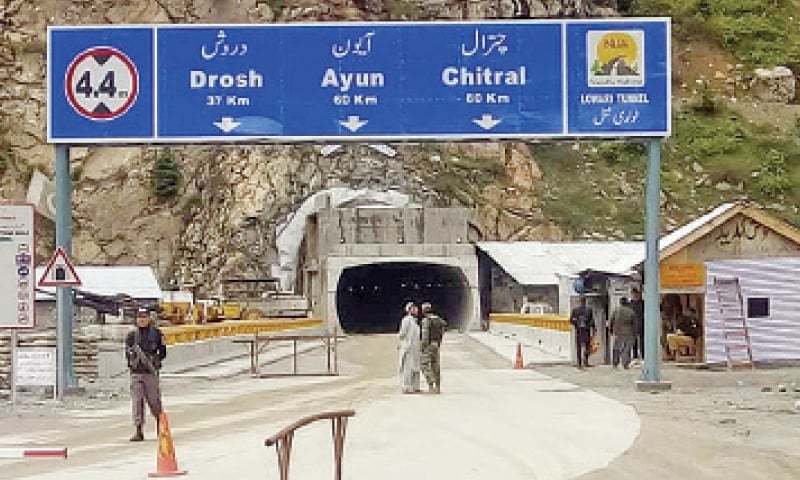
The Lowari Tunnel is a vital transportation passage in Pakistan’s Khyber Pakhtunkhwa province, connecting Dir District with Chitral District. This tunnel plays a crucial role in improving accessibility, boosting trade, and fostering tourism in the region. Before its construction, Chitral remained cut off from the rest of the country for almost five months each year due to heavy snowfall on the Lowari Pass. The tunnel now ensures year-round connectivity, making life easier for thousands of people.


Historical Background

The idea of a tunnel through Lowari Pass was first proposed in the 1950s, but construction didn’t start until 1975 under the government of Prime Minister Zulfikar Ali Bhutto. However, the project was halted due to political and financial constraints. It remained incomplete for decades, leaving the people of Chitral dependent on the dangerous Lowari Pass and Afghanistan’s routes for travel.

In 2005, the National Highway Authority (NHA) revived the project, and after multiple delays, the tunnel was finally inaugurated on July 20, 2017, by Prime Minister Shahid Khaqan Abbasi. The completion of this project was a historic milestone for Chitral and surrounding areas.


Technical Specifications of Lowari Tunnel

FeatureDetails
LocationKhyber Pakhtunkhwa, Pakistan
Length10.4 km (6.5 miles)
Height7.1 meters
Width7.5 meters
Speed Limit40 km/h
CostApproximately PKR 27 billion
Completion Year2017
Operated ByNational Highway Authority (NHA)

The 10.4 km tunnel is the longest road tunnel in Pakistan, surpassing the Khojak Tunnel (3.91 km) in Balochistan. It is designed to withstand harsh weather conditions and includes ventilation, drainage, and lighting systems for safety.


Importance of the Lowari Tunnel

1. Year-Round Connectivity

Before the tunnel, Chitral remained inaccessible for five months due to heavy snowfall on the Lowari Pass (3,118 meters above sea level). People had to take a long and dangerous detour through Afghanistan, which posed security risks. The tunnel now provides safe and reliable access to Chitral throughout the year.

2. Economic and Trade Benefits

The tunnel has significantly boosted trade and commerce by connecting Chitral with the rest of Pakistan. Businesses can now transport goods more easily, reducing costs and time. The tourism industry has also seen growth, with more visitors coming to explore Chitral, Kalash Valley, and Shandur Pass.

3. Reduced Travel Time & Cost

  • Before the Tunnel: Travelers had to cross the Lowari Pass, which was dangerous and took 4–5 hours.
  • After the Tunnel: Travel time through Lowari Tunnel is now only 15–20 minutes, making trips faster, safer, and more convenient.

4. Emergency and Health Benefits

Chitral’s population previously struggled with medical emergencies, as patients could not reach Peshawar or other major cities during winter. The tunnel has made it easier for ambulances, rescue teams, and supply trucks to reach Chitral without delay.

5. Strengthening National Security

The tunnel has improved the security and strategic importance of the region by allowing the Pakistan Army and other law enforcement agencies to move quickly in case of any threats.


Challenges and Issues

Despite its advantages, the Lowari Tunnel still faces some challenges:

1. Limited Hours of Operation

Initially, the tunnel was only open for a few hours per day, causing long traffic jams. However, efforts have been made to extend operational hours.

2. Poor Traffic Management

Many drivers do not follow traffic rules, leading to congestion inside the tunnel. Authorities need to enforce strict regulations to prevent accidents.

3. Need for Additional Infrastructure

To fully utilize the tunnel’s potential, better roads, parking areas, and service stations should be built near the entrance and exit points.

4. Harsh Weather Conditions

Snowfall and landslides around the tunnel entrance sometimes cause disruptions. Regular maintenance is required to keep the tunnel operational year-round.


Future Prospects and Recommendations

To enhance the benefits of the Lowari Tunnel, the government should consider:

24/7 Tunnel Operation – Ensure unrestricted access for travelers and traders.
Traffic Management System – Implement cameras, speed monitoring, and strict lane discipline.
Road Expansion – Improve roads leading to the tunnel to accommodate increasing traffic.
Emergency Services – Establish medical centers and emergency response units near the tunnel.
Promoting Tourism – Develop hotels, rest stops, and tourist attractions to encourage more visitors.


Pakistan

Dr. Abdul Qadeer Khan: 90 Years of Legacy, Strength, and National Pride

Published

on

By

Today, April 1, 2026, marks the 90th birth anniversary of Abdul Qadeer Khan — the renowned scientist widely celebrated as the “Father of Pakistan’s Nuclear Program.”

On this day, the nation remembers not just a scientist, but a symbol of determination, resilience, and national sovereignty. His name is deeply etched in the history of Pakistan as the man who transformed the country’s strategic future and strengthened its defense.


Early Life and Education

Dr. Abdul Qadeer Khan was born on April 1, 1936, in Bhopal, then part of British India. After the partition of 1947, his family migrated to Pakistan, where his journey of excellence began.

With a strong passion for science and engineering, he pursued higher education in Europe, specializing in metallurgy and nuclear science. His academic journey equipped him with the expertise that would later change the destiny of Pakistan.


The Defining Mission

The turning point in Dr. Khan’s life came after the 1971 war, which exposed Pakistan’s strategic vulnerabilities. At a time when the nation needed strength and confidence, Dr. Khan stepped forward with a vision.

He returned to Pakistan and joined efforts to develop the country’s nuclear capability. Through his leadership, dedication, and scientific brilliance, Pakistan moved closer to achieving strategic deterrence.


Building a National Capability

Dr. Khan played a central role in establishing the Kahuta Research Laboratories, later named in his honor. His work focused on uranium enrichment, a critical component of nuclear technology.

Despite facing:

  • International pressure
  • Limited resources
  • Technological challenges

He and his team worked tirelessly, driven by a single goal: to ensure Pakistan’s security and independence.


A Historic Milestone

On May 28, 1998, Pakistan conducted its nuclear tests, becoming the first Muslim nuclear power and the seventh nuclear state in the world.

This historic achievement marked a defining moment in Pakistan’s history. It was seen as a demonstration of national strength and scientific capability, and Dr. Abdul Qadeer Khan became a national hero.


A Complex but Powerful Legacy

Dr. Khan’s life was not without controversy. His later years were marked by international scrutiny and political challenges. However, within Pakistan, he remained a deeply respected figure.

For millions, he symbolized:

  • National dignity
  • Scientific achievement
  • Strategic independence

His contributions sparked important discussions about science, ethics, and national security.


A Human Story Behind the Scientist

Beyond his scientific achievements, Dr. Khan was known for his simplicity and connection with the people. He often spoke about education, self-reliance, and national pride.

He believed that the true strength of a nation lies not only in its defense but in the character and unity of its people.


Lessons for the Future

On his 90th birth anniversary, Dr. Abdul Qadeer Khan’s life offers powerful lessons:

  • Vision can change destiny
  • Knowledge is power
  • Nations rise when their people believe in themselves

For the youth of Pakistan, his journey is a reminder that dedication and purpose can shape history.

Continue Reading

Pakistan

Nation celebrates Pakistan Day today

Published

on

By

Pakistan Day is being celebrated with great enthusiasm and national unity across the country today.

The nation is renewing its resolve today to demonstrate more hard work, unity and sacrifice for the development, stability and prosperity of Pakistan.

The day dawned with thirty-one-gun salute in the federal capital and twenty-one-gun salute in provincial capitals.

These salutes were given as a symbol of national dignity, sovereignty and the professional capabilities of the Pakistan’s armed forces.

After Fajr prayer, special prayers were offered for the security, development, prosperity and national unity of the country as well as for the elevation of the ranks of the martyrs.

The national flag was hoisted on important government buildings, which is a symbol of national dignity and cohesion.

On the occasion of Pakistan Day, the entire nation is united and adorned with the noble resolve to work together for the progress and prosperity of the country.

Continue Reading

Pakistan

MOTTO:- Iman, Taqwa, Jihad-fi-Sabilillah.

Published

on

By

AikQaum Identity Caption

“AikQaum stands on three timeless principles: Iman (Faith), Taqwa (Integrity), and Jihad-fi-Sabilillah (Striving in the path of Allah).

Iman: To have faith and trust in Allah and consider oneself a follower of none but Allah, and a follower of none but his messenger.
Taqwa: The fear of Allah. Guarding ones tongue, hands and heart from evil. Righteous, piety and good conduct.
Jihad-fi-Sabilillah: The real objective of Islam is to shift the lordship of man over man to the lordship of Allah on the earth and to stake one’s life and everything else to achieve this sacred purpose.

Source:- https://ispr.gov.pk/

Continue Reading

Most Popular

English اردو