Pakistan
Balochistan offers Desert Safari in Jhal Magsi
Published
5 years agoon
The nature spot Balochistan offers a diversified range of enchanting and alluring sites for tourists. Balochistan has no measure of beaches, mountains, deserts, and lakes that present breathtaking views. It is well said that Balochistan is a land of mysteries, some are explored and many are yet to be explored. This land holds invaluable heritage, civilization, tradition, and different other cultural aspects. All these aspects combine together and make Balochistan the most natural tourist spot.
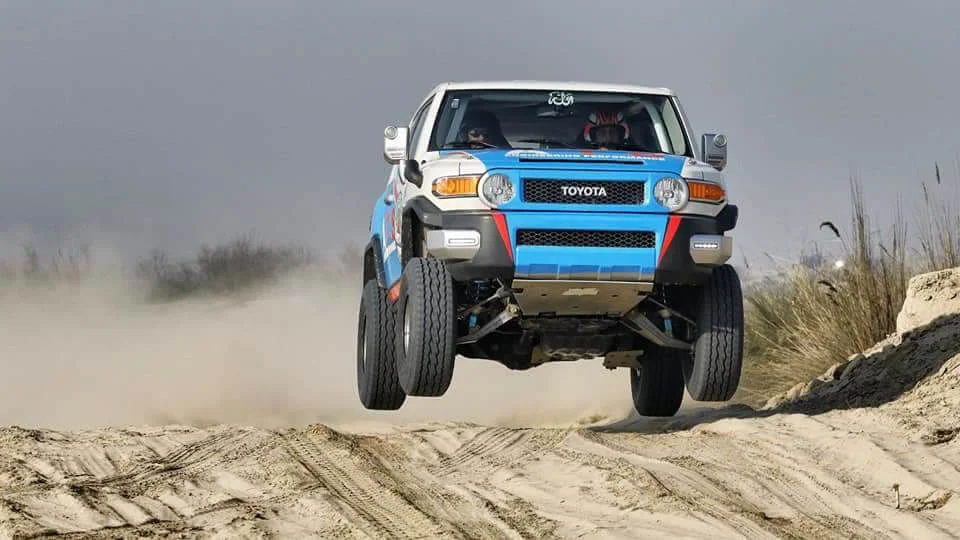
However, one of its astonishing spots is that of Jhal Magsi which is no less than a natural paradise usually famous for desert safari. This place invites thousands of fans of the desert to rally in the pleasantness of nature when the sunsets are splendid, the weather is genial and the plain desert-like Safari accentuates the aura unique to Balochistan. This rally carter huge crowds, investors, and rally enthusiasts from all over Pakistan and round them up in one place to stay until the rally ends to explore the beauty and diversity of the desert. The safari in Jhal Magsi offers the best route in Pakistan for individuals who like to off-road.
The Desert of Safari in Jhal Magsi was a site unknown to all. In 2005, a rally was commenced where people came to know about this place and its nerve-wracking fascination. It has been going on for 14 years and has evolved with great and renowned racers taking part in it every year. Previously, the importance of Jhal Magsi was known only to archaeologists due to its key location during Arab rule and the Bhil dynasty of India. Now, Jhal Magsi is predominantly acknowledged for its colossal rally event.
Travelling Route
One can travel to Desert Safari in Jhal Magsi through three different routes; from Quetta, via Kolpur; the route that passes through the majestic Bolan valley, and Mach. The second route is suitable for travelers from Sindh, passing through Sibi, Sukkhur, Noutal, and Shaddad Kot, ultimately ending at sub-division Jhal and finally Dadar, the district headquarters of Bolan.
Desert Safari Rally
In the desert safari rally, innumerable cars compete. The 200km rallies were joined by people from across Pakistan. The motor race has been divided into 2 stages, where the starting point would be Stage 1, ending at 78 km and race drivers can take a break. Whereas the length of Stage 2 is 142 km. With more than 50 participants, the Jhal Magsi rally has 9 categories i.e. Category A, B, C, and D; Stock Category A, B, C, and D, and the Women Category. When the year is on the verge of ending, sunsets turn glorious and salmon-pink, the grand city of Jhal Magsi is admissibly roaring with joy and excitement. People especially young boys are fascinated by the range of vehicles arriving in town. Spectators come from every corner of Balochistan, mostly from the Naseerabad zone, and from other parts of Pakistan.
These people take out time from their busy schedules just to witness the adrenaline-rushing motor race. The Participants of the Jeep Rally are assorted and ever-increasing. Often jeep enthusiasts, motorsport fanatics, young generation from the local tribes who have a good understanding of their land, respectable tribal heads with a history of winning streaks, and professional off-road drivers zealous about cruising on dusty tracks take part.
Jhal Magsi desert is considered to have one of the best racing tracks in the whole country. From the muddy terrain to gravel and waterbed, Jhal Magsi gives a thrilling experience of rally driving. The rally is one of the most relentless and safest race tracks in the world, observing international standards.
Participation in the Rally
Burcu Cetinkaya, the female driver from turkey who took part in 2016 praised the tracks of desert Safari. It is the most adventurous experience where women have also given full participation which shows the positive side of this rally. In the recent rally events, many renowned international rally drivers; Abdo Feghali and his wife Roni Patel from Lebanon came to Pakistan to experience and witness the fascinating experience. In 2018, from 13 -19 December, National Motor Sports hosted the Jhal Magsi Desert Challenge where 4×4 SUV racers came to race from all over the country. Chief Minister Balochistan was the chief visitor in the last service of the Jeep Rally.
More than 60 drivers and globe-trotters from the country overtook interest in the Jhal Magsi Desert Jeep Rally. Nadir Khan Magsi, a local of the area remained victorious in the pre-period A-Category and won the rally. Babar Shah from KPK province was in the second position while Asif Faisal Chaudhary secured third place. Nadir Magsi, the gladiator of sport said, “With proper support from government, sponsors, and media we can organize even better events, as Pakistan has a topographical advantage which offers very diversified and challenging terrain”.
Furthermore, these cheap but entertaining events can have a refreshing impact on tourists not only from Pakistan but from all over the world. Such events can also portray a positive image of Pakistan on the international level. Thus, this place has a lot of potentials to become the best destination for tourism, as tourism in Balochistan is a developing industry.
We are indebted to Kainat Riaz a researcher for sharing all the above useful information with us. The purpose of editing this piece is to educate people more about our country. There are many more hidden treasures that need to be explored and need a sincere look from the high authorities to promote tourism inside our country.
You may like
Pakistan
Lalak Jan; The living hero of the Kargil war
Fariyal Mir
Published
2 weeks agoon
July 7, 2026By
Editor
Lalak Jan the living hero of this land can never be forgotten. The legend was a Havaldar in the Pakistan Army who was in the Northern Light Infantry regiment during the Kargil battle fought between Pakistan and India from May to July 1999. Lalak Jan lost his temporary life in the war but gained forever life eternally and also in the heart of the people. And he was awarded Pakistan’s highest rank military award, Nishan-e-Haider. Today on his death anniversary people are paying tributes to him. It has been almost 22 years of his death but he is living in the heart of Pak-army and all the nation. As ISPR has paid homage to Lalak Jan on his great day.
ISPR stated that: “Nation pays homage to Havaldar Lalak Jan, NH, who laid his life defending the motherland against (great) odds in most challenging battlefield environment during the Kargil conflict on 7 July 99. His fortitude and selflessness will keep inspiring the indomitable defenders of Pak for times to come.”
Lalak Jan belonged to Gilgit Baltistan but he is the legend of the nation. Indeed Lalak Jan can never be replaced by anyone but there are many Lalak Jan for our piece of land. We are one nation (AikQaum), we are Pakistanis.
Article
Captain Karnal Sher Khan Shaheed: The Invader
Fariyal Mir
Published
2 weeks agoon
July 5, 2026
Captain Karnal Sher Khan Shaheed had fought no less than an invader during the Kargil war at the Line of Control. He defended five strategic posts and countered the continuous attack by chasing and raids.
The face of bravery was born on the 1st of January 1970. He belonged to the land of Swabi in KPK and from there he completed his intermediate from Government Post-Graduate College Swabi and then joined Pakistan Army. He was commissioned in the 27th Sind Regiment on 14 October 1994. Captain Karnal Sher Khan emerged as the symbol of mettle and courage during the Kargil conflict at the Line of Control. He set up personal examples of bravery and inflicted heavy losses on the enemy.
He defended five strategic posts, which he established with his soldiers at the height of 17,000 feet in the Gultary area. On 5 July 1999, Indians, with the help of two battalions, managed to capture some portion of one of his posts. Despite facing all odds, he led a counter-attack and re-captured the lost portion. Captain Karnal Sher Khan also chased the enemy and conducted many raids in the enemy area. During one such raid, he went inside the enemy camp where he inflicted heavy losses. During the battle, he received a burst of fire in the chest and embraced ‘SHAHADAT’ on 5 July 1999.
He was awarded Nishan-e-Haider for all his bravery. The notion of all martyrs is well described in this verse:
“Ham Haq Par Jan Lutayan Ga Ham Shoq-e-Shahadad Wala Hay
Wo Sath Hamara Tarak Karda Jo Mout Sa Darnay wala Hay.”
Article
Markhor: The Majestic National Animal of Pakistan
Published
3 weeks agoon
June 29, 2026By
EDITOR
The Markhor, Pakistan’s national animal, is a symbol of the country’s natural beauty, resilience, and strength. With its striking, spiral horns and graceful stature, the Markhor is one of the most distinctive and remarkable wild goats found in the mountainous regions of northern and western Pakistan. As a creature of both cultural significance and ecological importance, the Markhor represents Pakistan’s commitment to preserving its wildlife and natural heritage.
Physical Characteristics: Nature’s Masterpiece
The Markhor is renowned for its majestic, corkscrew-shaped horns, which can grow up to 1.5 meters (5 feet) in length in males. These horns are its most striking feature and distinguish it from other wild goats. The animal’s name, “Markhor,” is believed to be derived from the Persian words “Mar” (snake) and “Khor” (eater), referring to the belief that the animal has the ability to kill or fight off snakes, though this is more folklore than fact.
Male Markhors are larger than females, and their horns are more prominent and elaborately twisted. They also have a longer coat, especially during the colder months, with a thick beard that gives them a regal appearance. Females, while smaller and with less prominent horns, are equally agile and graceful.
Habitat: Mountainous Majesty
The Markhor thrives in rugged, mountainous terrains at elevations ranging from 600 to 3,600 meters (1,970 to 11,800 feet). It is primarily found in the northern and western regions of Pakistan, particularly in the Himalayas, Hindu Kush, and Karakoram mountain ranges. The provinces of Gilgit-Baltistan, Khyber Pakhtunkhwa, and parts of Balochistan serve as key habitats for these wild goats.
Adapted to the harsh, rocky landscapes of these regions, the Markhor is a skilled climber, able to traverse steep cliffs and narrow ridges with ease. This agility not only helps it evade predators but also aids in foraging for food in difficult terrain.
Conservation Status: A Story of Recovery
The Markhor was once on the brink of extinction, largely due to illegal hunting, habitat loss, and competition with domestic livestock. By the late 20th century, its population had dwindled alarmingly, and the species was classified as endangered by the International Union for Conservation of Nature (IUCN).
In response, the government of Pakistan, along with international conservation organizations, launched several initiatives to protect the Markhor. Strict hunting regulations were imposed, and community-led conservation programs were introduced. These efforts have been remarkably successful, leading to a gradual recovery in the Markhor population. In 2015, the IUCN downgraded the Markhor’s status from “endangered” to “near-threatened,” recognizing the positive impact of conservation efforts.
One of the most successful conservation models has been the community-based trophy hunting program. Local communities are given a quota for limited hunting permits, which are auctioned to international hunters. A significant portion of the revenue generated goes back to the local communities, providing them with a financial incentive to protect the Markhor and its habitat.
Cultural and National Significance
The Markhor holds a special place in the cultural and national identity of Pakistan. As the country’s national animal, it represents the resilience, strength, and beauty of Pakistan’s wilderness and people. Its unique appearance and ability to survive in challenging environments resonate with the values of courage and endurance.
In local folklore, the Markhor is often seen as a creature with mystical powers. The spiral horns are sometimes viewed as a symbol of wisdom and leadership, reflecting the Markhor’s status as the “king” of the mountain goats. Additionally, the animal is associated with bravery and strength, qualities that align with the spirit of Pakistan.
The image of the Markhor is also featured prominently in various emblems and logos throughout Pakistan, including the insignia of the Pakistan Army’s elite Special Services Group (SSG). Its representation in official symbols highlights the national pride and reverence the country has for this majestic animal.
Behavior and Diet: A Survivor of Harsh Environments
Markhors are primarily herbivores, feeding on grasses, leaves, and shrubs, depending on the season. During the summer, they graze on a variety of plants found in the high-altitude meadows. In the winter months, when food is scarce, they move to lower altitudes, foraging for any available vegetation, including leaves, twigs, and bark.
They are social animals, often found in small herds, typically consisting of females and their young. Males tend to be solitary, except during the mating season, when they join the herds to compete for mates. The rutting season, which occurs in the winter, is marked by intense competition among males, with dramatic horn clashes that can last for hours.
Challenges and Future of the Markhor
Despite the success of conservation efforts, the Markhor still faces significant challenges. Habitat loss due to deforestation, expanding agriculture, and infrastructure development continues to threaten the regions where they live. Additionally, climate change poses a long-term risk, potentially altering the ecosystems that support the Markhor.
Continued conservation efforts are crucial to ensuring the long-term survival of the Markhor. Sustainable management of its habitat, strict enforcement of anti-poaching laws, and ongoing community involvement in conservation programs are all vital to maintaining and expanding the Markhor population.
Conclusion: A Symbol of Pakistan’s Natural Heritage
The Markhor is more than just a wild goat; it is a symbol of Pakistan’s natural beauty and the country’s commitment to preserving its unique wildlife. Its recovery from the brink of extinction is a testament to the power of conservation and the importance of protecting the natural world for future generations. As Pakistan’s national animal, the Markhor stands as a proud representation of the country’s strength, resilience, and rich ecological heritage.
To see the Markhor thriving in the mountains of northern Pakistan is to witness nature at its most magnificent—a reminder of the beauty that still exists in our world and the responsibility we all share to protect it.
Lalak Jan; The living hero of the Kargil war
Captain Karnal Sher Khan Shaheed: The Invader

