Connect with us

Pakistan

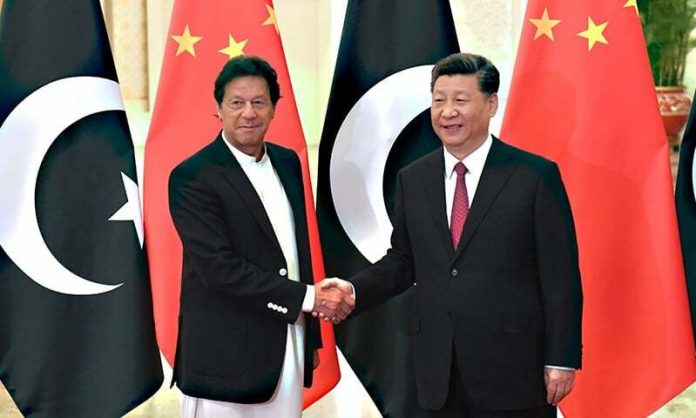
PM, President Xi review Pak-China bilateral cooperation

Published

on

BEIJING, (China) Feb 6 (APP): Prime Minister Imran Khan and Chinese President Xi Jinping Sunday reviewed the entire gamut of Pakistan-China bilateral cooperation and exchanged views on regional and global issues of mutual interest, in a warm and cordial atmosphere.

Both leaders held a meeting at the Great Hall of People. This was the first meeting of the two leaders since the Prime Minister’s visit to China in October 2019.
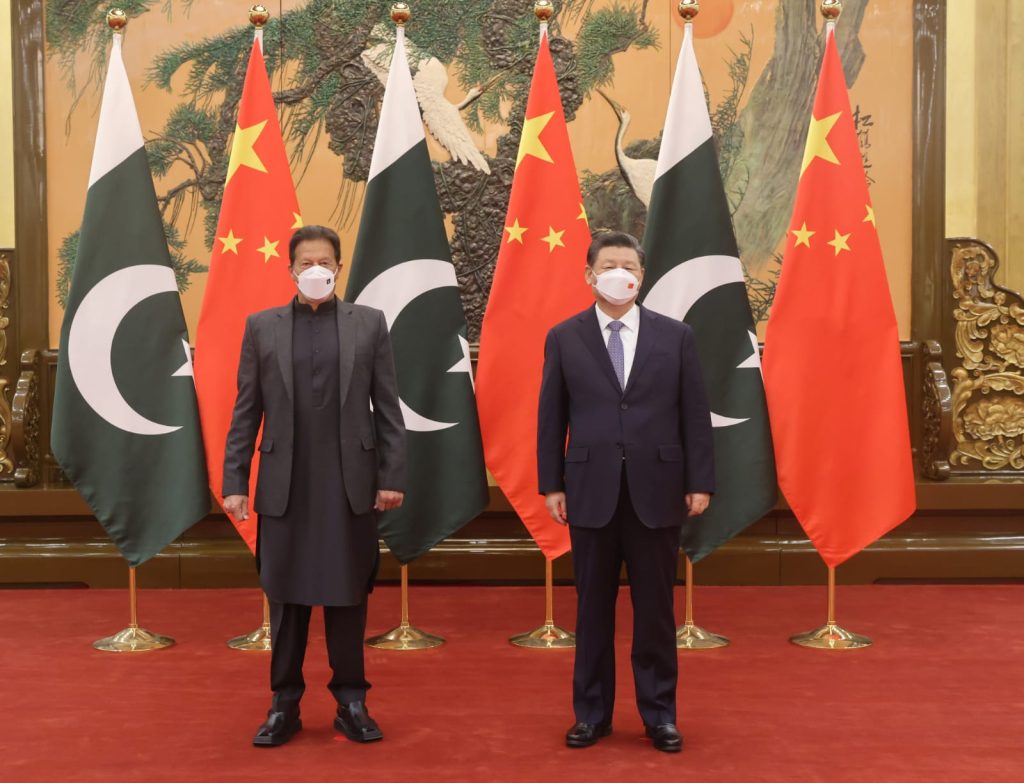
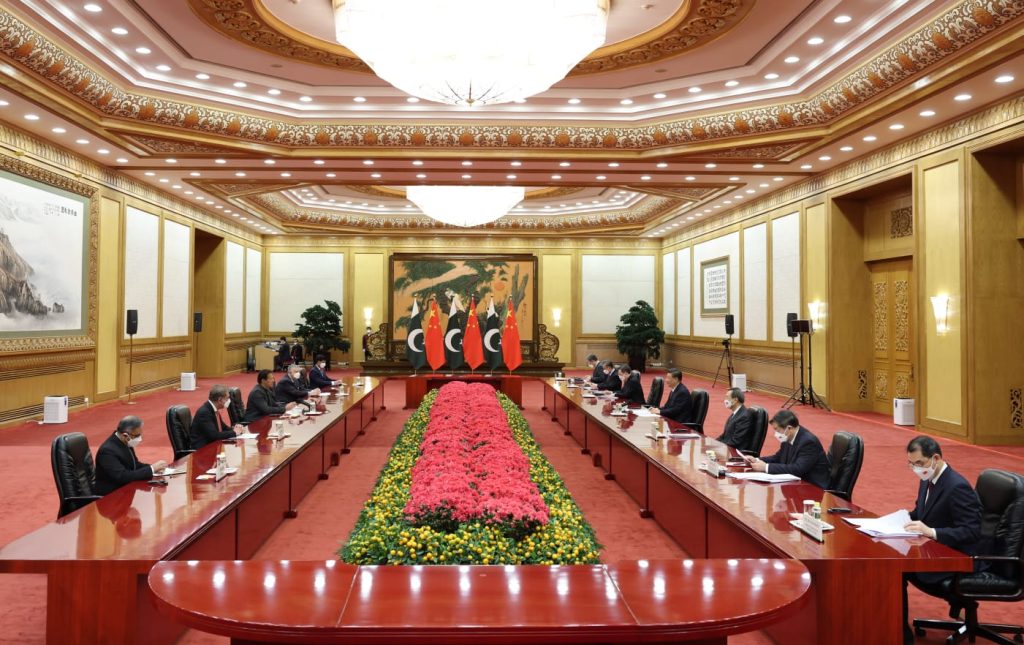
The prime minister underscored that China was Pakistan’s steadfast partner, staunch supporter, and ‘Iron Brother’.

The all-weather strategic cooperative partnership between Pakistan and China had withstood the tests of times and the two nations firmly stood side by side in realizing their visions and shared aspirations of peace, stability, development, and prosperity, he added.

The prime minister briefed president Xi on a people-centered geo-economics vision and his government’s policies for Pakistan’s sustained growth, industrial development, agricultural modernization, and regional connectivity.

He lauded China’s continued support and assistance to Pakistan’s socio-economic development which had greatly benefitted from the high-quality development of the China Pakistan Economic Corridor (CPEC).

Prime Minister Khan welcomed increased Chinese investments in CPEC’s Phase-II which centered on industrialization and improving people’s livelihoods.

He shared his views with president Xi on growing polarization in the world which threatened to unravel of global developmental gains and posed serious risks to the developing countries.

He highlighted that insurmountable challenges like climate change, health pandemics, and growing inequalities could only be tackled through unqualified cooperation of all nations in accordance with the purposes and principles of the UN Charter.

In this regard, he lauded President Xi’s visionary Belt and Road and Global Development Initiatives which called for collective action for sustainable development and win-win outcomes.

The prime minister highlighted the atrocities being perpetrated in the Indian Illegally Occupied Jammu and Kashmir (IIOJK), and the persecution of minorities in India in advancing the Hindutva mindset of RSS-BJP, was a threat to regional peace and stability.

He said that the rapid militarization of India was undermining regional stability.

Prime minister Khan highlighted that partnership between Pakistan and China was an anchor for peace and stability in the region and thanked China for its unwavering support to Pakistan’s sovereignty, territorial integrity, independence, and national development.

He also reaffirmed Pakistan’s full support to China on all issues of its core interest.

Both leaders acknowledged that a peaceful and stable Afghanistan would promote economic development and connectivity in the region and called on the international community to promptly assist the Afghan people in averting a humanitarian catastrophe.

Both leaders appreciated the signing of a number of agreements covering industrial cooperation, space cooperation, and vaccine cooperation.

The two leaders reaffirmed their resolve to the building of the Pakistan-China community for a shared future in the new era.

Prime minister Imran Khan congratulated the leadership and people of China on the successful hosting of the 24th Olympic Winter Games in Beijing and extended his best wishes on the Chinese Lunar New Year.

He also renewed his invitation to President Xi Jinping to undertake a visit to Pakistan at his early convenience.

Continue Reading

Pakistan

Dr. Abdul Qadeer Khan: 90 Years of Legacy, Strength, and National Pride

Published

on

By

Today, April 1, 2026, marks the 90th birth anniversary of Abdul Qadeer Khan — the renowned scientist widely celebrated as the “Father of Pakistan’s Nuclear Program.”

On this day, the nation remembers not just a scientist, but a symbol of determination, resilience, and national sovereignty. His name is deeply etched in the history of Pakistan as the man who transformed the country’s strategic future and strengthened its defense.


Early Life and Education

Dr. Abdul Qadeer Khan was born on April 1, 1936, in Bhopal, then part of British India. After the partition of 1947, his family migrated to Pakistan, where his journey of excellence began.

With a strong passion for science and engineering, he pursued higher education in Europe, specializing in metallurgy and nuclear science. His academic journey equipped him with the expertise that would later change the destiny of Pakistan.


The Defining Mission

The turning point in Dr. Khan’s life came after the 1971 war, which exposed Pakistan’s strategic vulnerabilities. At a time when the nation needed strength and confidence, Dr. Khan stepped forward with a vision.

He returned to Pakistan and joined efforts to develop the country’s nuclear capability. Through his leadership, dedication, and scientific brilliance, Pakistan moved closer to achieving strategic deterrence.


Building a National Capability

Dr. Khan played a central role in establishing the Kahuta Research Laboratories, later named in his honor. His work focused on uranium enrichment, a critical component of nuclear technology.

Despite facing:

  • International pressure
  • Limited resources
  • Technological challenges

He and his team worked tirelessly, driven by a single goal: to ensure Pakistan’s security and independence.


A Historic Milestone

On May 28, 1998, Pakistan conducted its nuclear tests, becoming the first Muslim nuclear power and the seventh nuclear state in the world.

This historic achievement marked a defining moment in Pakistan’s history. It was seen as a demonstration of national strength and scientific capability, and Dr. Abdul Qadeer Khan became a national hero.


A Complex but Powerful Legacy

Dr. Khan’s life was not without controversy. His later years were marked by international scrutiny and political challenges. However, within Pakistan, he remained a deeply respected figure.

For millions, he symbolized:

  • National dignity
  • Scientific achievement
  • Strategic independence

His contributions sparked important discussions about science, ethics, and national security.


A Human Story Behind the Scientist

Beyond his scientific achievements, Dr. Khan was known for his simplicity and connection with the people. He often spoke about education, self-reliance, and national pride.

He believed that the true strength of a nation lies not only in its defense but in the character and unity of its people.


Lessons for the Future

On his 90th birth anniversary, Dr. Abdul Qadeer Khan’s life offers powerful lessons:

  • Vision can change destiny
  • Knowledge is power
  • Nations rise when their people believe in themselves

For the youth of Pakistan, his journey is a reminder that dedication and purpose can shape history.

Continue Reading

Pakistan

Nation celebrates Pakistan Day today

Published

on

By

Pakistan Day is being celebrated with great enthusiasm and national unity across the country today.

The nation is renewing its resolve today to demonstrate more hard work, unity and sacrifice for the development, stability and prosperity of Pakistan.

The day dawned with thirty-one-gun salute in the federal capital and twenty-one-gun salute in provincial capitals.

These salutes were given as a symbol of national dignity, sovereignty and the professional capabilities of the Pakistan’s armed forces.

After Fajr prayer, special prayers were offered for the security, development, prosperity and national unity of the country as well as for the elevation of the ranks of the martyrs.

The national flag was hoisted on important government buildings, which is a symbol of national dignity and cohesion.

On the occasion of Pakistan Day, the entire nation is united and adorned with the noble resolve to work together for the progress and prosperity of the country.

Continue Reading

Pakistan

MOTTO:- Iman, Taqwa, Jihad-fi-Sabilillah.

Published

on

By

AikQaum Identity Caption

“AikQaum stands on three timeless principles: Iman (Faith), Taqwa (Integrity), and Jihad-fi-Sabilillah (Striving in the path of Allah).

Iman: To have faith and trust in Allah and consider oneself a follower of none but Allah, and a follower of none but his messenger.
Taqwa: The fear of Allah. Guarding ones tongue, hands and heart from evil. Righteous, piety and good conduct.
Jihad-fi-Sabilillah: The real objective of Islam is to shift the lordship of man over man to the lordship of Allah on the earth and to stake one’s life and everything else to achieve this sacred purpose.

Source:- https://ispr.gov.pk/

Continue Reading

Most Popular

English اردو