Connect with us

Pakistan

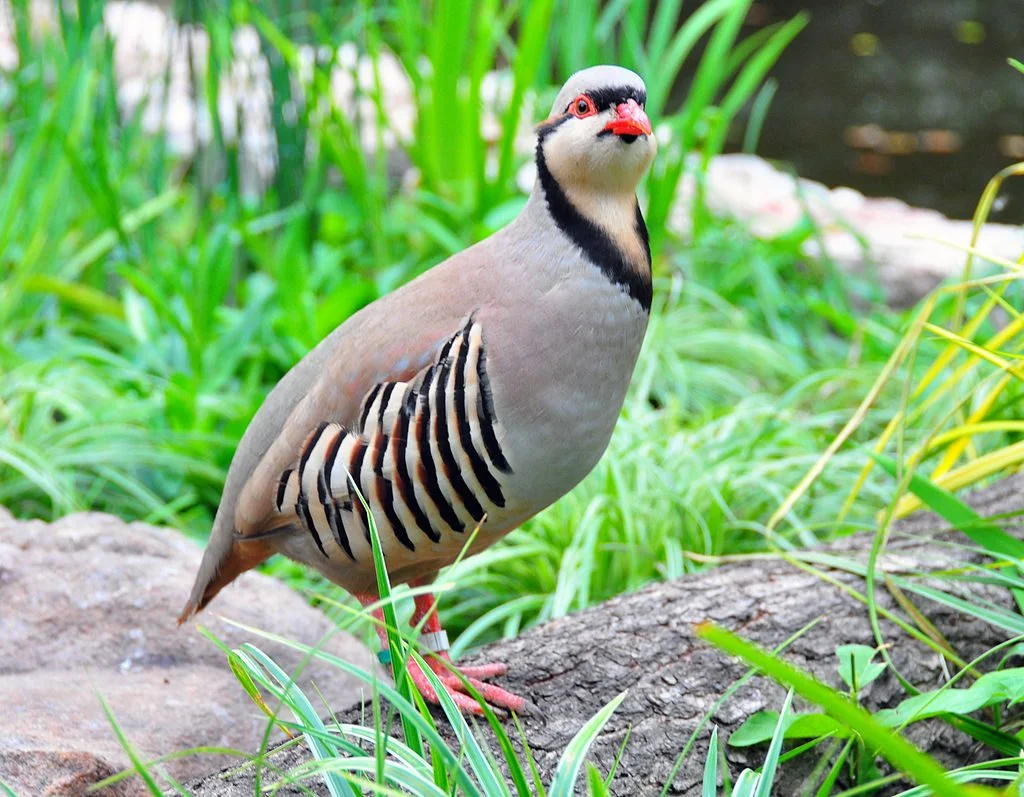
Our National Bird Chakor (Partridge) is the sign of Good Luck and symbol of Love

Published

on

Pakistan is full of natural beauty. It has enclosed love, passion, and care in every block and that binds it together. Pakistan is an independent country with all its worth and presents to the world with its national specifications. We do have our national sport, food, color, animal, flower, bird, and many others. Today we will look for our national bird which is Chakor.

Chakor is about 32-35 com long bird that preferably lives in deserts, mountainous and rocky areas in hot weather. This bird is a mixture of brown-black with a grey breast and sandy belly. Whereas its legs are red in color and hold a white face. Its tail consists of 14 feathers.

Chakor is considered a superspecies and complex among birds and are well called a ‘game bird’ around the globe. Chakors are originated from Eurasia. And the species are now found in western North America, Hawaii, and New Zealand as well.

Chukars are national birds of Pakistan and Iraq and are considered a sign of good luck in native culture. The word Chakor in Pakistan is derived from the Sanskrit word Chakoor which means intense love. The word Chakor is often used in Pakistan and India to refer to someone loved. In Indian mythology, Chukars are presumed to be in love with the moon and are found mostly gazing at the moon. Preserve our national bird so that it can fly over and represent us around the universe

Pakistan

Youm-e-Takbeer being observed today in remembrance of nuclear tests

Published

on

By

“Youm-e-Takbeer” is being observed today in remembrance of nuclear tests conducted by Pakistan on May 28, 1998, which made the defence of the country invincible.

On this day, Pakistan became the seventh nuclear nation of the world and the first Muslim state having the nuclear arsenal in its defence stockpile.

The team of Pakistan’s scientists led by founder of Pakistan’s nuclear programme, Dr Abdul Qadeer Khan, and Dr Samar Mubarakmand carried out nuclear tests in the RasKoh Hills in the Chaghai District of Balochistan.

These tests not only demonstrated the resolve of the Pakistani nation to safeguard Pakistan’s territorial integrity, independence and sovereignty, but also the desire to preserve strategic balance in South Asia.

By resisting the mounting external pressures, the then Prime Minister of Pakistan Muhammad Nawaz Sharif went for taking the bold decision to test the Pakistani nukes in response to Indian nuclear tests and thus balancing the strategic slanting power in the region.

Pakistan is committed to the promotion of environment of peace and stability in South Asia, while preserving its capability to thwart aggression or adventurism in any form.

Continue Reading

Pakistan

Dr. Abdul Qadeer Khan: The Real Hero of Pakistan

Published

on

By

Dr. Abdul Qadeer Khan, affectionately known as A.Q. Khan, is widely celebrated as the “Father of Pakistan’s Nuclear Program.” His contributions to science and defense not only elevated Pakistan to a new level of self-reliance but also safeguarded the nation’s sovereignty in a volatile region. For many Pakistanis, Dr. Khan is more than a scientist—he is a national hero whose legacy of patriotism, brilliance, and resilience continues to inspire generations.

Early Life and Education

Dr. Abdul Qadeer Khan was born on April 1, 1936, in Bhopal, India. In the aftermath of the partition in 1947, his family migrated to Pakistan. After completing his early education, Khan pursued higher studies in Europe, earning a degree in metallurgy from the Netherlands and later, a doctorate in metallurgical engineering from Belgium.

His education in Europe allowed him to work with some of the most advanced technology of the time. He gained valuable experience working at a European uranium enrichment facility, where he learned the intricacies of centrifuge technology—a technology that would play a pivotal role in his future efforts to develop Pakistan’s nuclear capabilities.

Contribution to Pakistan’s Nuclear Program

In the early 1970s, following Pakistan’s defeat in the 1971 war and India’s successful nuclear test in 1974, the need for Pakistan to develop its nuclear deterrent became urgent. It was at this crucial juncture that Dr. A.Q. Khan offered his services to the government of Pakistan.

Khan’s return to Pakistan marked the beginning of a transformative era in the country’s defense strategy. He was given charge of the Kahuta Research Laboratories (now called Khan Research Laboratories), where he spearheaded Pakistan’s uranium enrichment efforts. Despite limited resources and immense international pressure, Dr. Khan and his team achieved remarkable success. Under his leadership, Pakistan conducted its first successful nuclear test on May 28, 1998, in response to India’s earlier tests, making it the first Muslim-majority country to possess nuclear weapons.

Safeguarding Pakistan’s Sovereignty

Dr. Khan’s role in the successful development of nuclear technology is widely regarded as a crucial factor in maintaining Pakistan’s security and sovereignty. His work ensured that Pakistan had a credible deterrent against external aggression, particularly in light of the hostile relations with its neighbor, India.

The achievement not only bolstered Pakistan’s standing in the global community but also instilled a sense of pride and security within the nation. For many, Dr. Khan became a symbol of national pride, courage, and determination in the face of adversity.

National Hero and Legacy

Dr. Abdul Qadeer Khan passed away on October 10, 2021, leaving behind a legacy that will forever be etched in the history of Pakistan. His funeral was attended by thousands, including political leaders, military officials, and citizens from all walks of life. He was laid to rest with full state honors, a testament to the nation’s deep respect and gratitude for his services.

Dr. Khan’s work ensured that Pakistan remained secure in an unpredictable geopolitical landscape. His contributions to science and defense transformed the country, empowering it with a nuclear deterrent that still serves as a cornerstone of its defense strategy today.

Dr. Abdul Qadeer Khan will always be remembered as a visionary who dedicated his life to serving Pakistan. His brilliance as a scientist, his unwavering commitment to his country, and his determination to see Pakistan rise as a strong, independent nation make him a true national hero. His legacy is a reminder that through perseverance, knowledge, and love for one’s country, even the most daunting challenges can be overcome. Dr. Abdul Qadeer Khan will forever remain the “Real Hero of Pakistan.”

Continue Reading

Pakistan

Pakistan Currency Heritage Frames

Published

on

By

Original Notes. National Legacy. Museum-Grade Presentation.

An Exclusive Heritage Design & Concept Collection by AikQaum.com

The Pakistan Currency Heritage Frame Project has been launched as a self-sustaining national initiative to support and sustain AikQaum.com — a platform committed to preserving Pakistan’s history, identity, and narrative through culture, facts, and heritage. We keep integrity closest to our heart, patriotism on top of our mind, and Pakistan’s sovereignty at the core of our purpose. Rather than relying on donations or external influence, AikQaum follows a dignified, value-driven model, where meaningful heritage products fund independent national storytelling, research, exhibitions, and cultural documentation. Every frame purchased directly contributes to keeping AikQaum.com independent, credible, and Pakistan-first.

This is not décor.
This is Pakistan’s economic history preserved in its original form.

The Pakistan Currency Heritage Frame by AikQaum brings together authentic Pakistani banknotes in UNC / AUNC condition, carefully curated and professionally framed to museum standards. Each frame captures the story of Pakistan’s journey—from its early years to landmark commemorative issues—through the very currency that built the nation.

WHAT MAKES THIS FRAME EXCEPTIONAL

  • Original Pakistani Banknotes (UNC / AUNC – Uncirculated / Almost Uncirculated)
  • Front & Back Display – complete historical visibility
  • Museum-style premium framing
  • Digital-printed historical note details
  • 350-gram protective packing cover
  • Designed for long-term preservation, not temporary décor

You are not buying paper. You are acquiring preserved national memory.

Preserved Memories. Timeless Heritage.
Order your premium Pakistan Currency Heritage Frames at: order@aikqaum.com

Rs. 1

Single Note Heritage Frame Series.  Rs. 1 | Rs. 2 | Rs. 5 | Rs. 10. Frame Size: 8×12 Inches
2 Original Notes (Front & Back Display). Original Uncirculated Condition (UNC)
Premium Packing Included. order@aikqaum.com

Rs. 2

Rs. 5

Rs. 10

Included Denominations: Rs. 1 • Rs. 2 • Rs. 5 • Rs. 10.

Frame Size: 12×18 Inches. 8 Original Notes (Front & Back Display). Original Uncirculated Condition (UNC). Premium Secure Packing Included.

order@aikqaum.com

Included Denominations: Rs. 50 • Rs. 100.

Frame Size: 12×18 Inches. 4 Original Notes (Front & Back Display). Original Uncirculated Condition (UNC). Premium Packing Included.

Included Denominations: Rs. 500 • Rs. 1000.

Frame Size: 12×18 Inches. 4 Original Notes (Front & Back Display). Original Uncirculated Condition (UNC). Premium Packing Included

Rs. 5 (1997) Rs. (2022)

Featuring the iconic Rs. 5 Golden Jubilee Note (1997) Pakistan’s first commemorative banknote — alongside the historic Rs. 75 Platinum Jubilee Note (2022), beautifully preserved in our Pakistan Currency Heritage Frames.
Frame Size: 12×18 Inches, 4 Original Notes (Front & Back Display), Original Uncirculated Condition (UNC), Premium Packing Included.
A tribute to the nation’s pride, heritage, and 75 years of independence.
Design & Concept by AikQaum.com

Rs. 100 Pakistan First Banknote featuring the portrait of Quaid-e-Azam Muhammad Ali Jinnah (1957)

In 1957, Pakistan introduced its first banknote carrying the portrait of Quaid-e-Azam Muhammad Ali Jinnah — marking a defining moment in the nation’s monetary and historical identity.

This historic currency note represented more than financial value; it reflected the vision, sacrifice, and leadership behind the creation of Pakistan. Today, it remains one of the most important collectibles in Pakistan’s currency history.

At AikQaum.com, we preserve such timeless pieces of national heritage through premium collectible frames designed for historians, collectors, patriots, and future generations. 🇵🇰

#PakistanHistory #QuaidEAzam #CurrencyCollection #PakistanCurrency #NationalHeritage #AikQaum #VintagePakistan #HeritageFrames.

Continue Reading

Most Popular

English اردو