


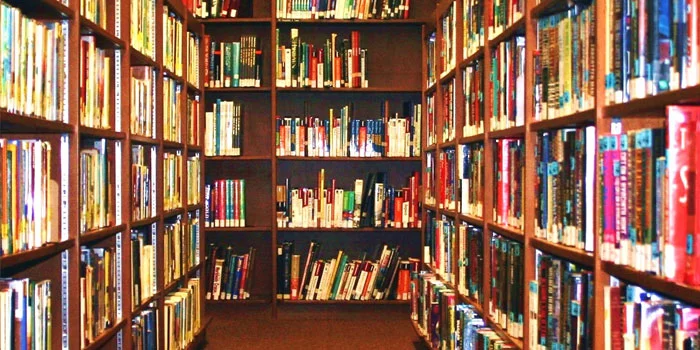
The word library comes from Latin “liber” which means books or documents. So the library is defined as the collection and preservation of documents and books. It is about the assemblage of books and documents in various forms in a room or shelves. Such stock and arrangement of the reading and knowledge material are well known as a library. Libraries are never the material keeper rather they are the places for study. Rita Dove well defined the term library: “The Library is an arena of possibility, opening both a window into the soul and a door onto the world.”
Origin:
The history of libraries emerges from the collection of documents. The first library was filled with the clay tablets with the inscription. It is about back 2600 BC. During the 5th century, classical Greece introduced libraries. Whereas in the 6th-century libraries of Constantinople and Alexandria marked the history. The libraries of Timbuktu were also built during that period.
Moreover, the Fatimids (909-1200) also had great libraries within their domains. The historian Ibn Abi Tayyi’ describes their palace library, which probably contained the largest collection of literature on earth at the time, as a “wonder of the world”. But unfortunately, all their collections were destroyed along with a great massacre.
Types of Libraries:
Libraries are majorly divided into four types which are as follows:
- Academic libraries
Academic libraries are the serving libraries in colleges and universities. These libraries are divided into different sections specifically to different fields of study. A full-fledged academic library should comprise of different books, journals, newspapers, publications, digital setup, soft materials, and a librarian. There must be a proper sitting arrangement and an environment of studying.
- Public libraries
Public libraries are the ones that facilitate the common public irrespective of any specification. Such libraries are the great possession of the knowledge seeker. These libraries are full of books from every field of studies and general books. It is accessible to all.
- School libraries
School libraries are the libraries to serve students from Kindergarten to grade 12. These libraries are mostly comprised of student’s related materials. And the best places to develop reading habits among the age group.
- Special libraries
As the name indicates special libraries are built-in specialized environments, such as hospitals, corporations, museums, the military, private business, and the government. These libraries are specific both in regards to materials and also readership.
Moreover, technological advancements have given origin to the Digital library. Digital libraries play a vital role in the preservation of reading materials. So that the data can be retrieved everywhere and many times.
Libraries are the best among buildings and peaceful among the environment. The development of libraries has turned the concept of the world to a larger extend. It has educated people and engaged them in the world of knowledge.


