


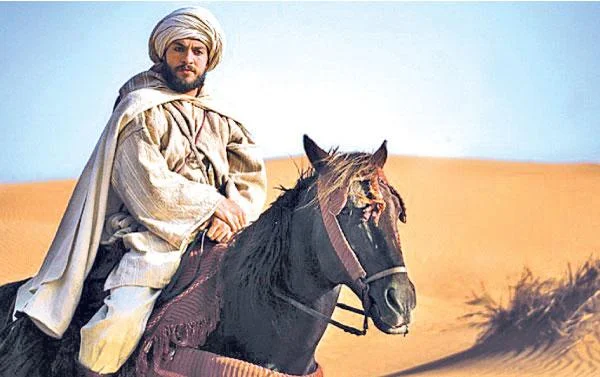
Muslims are not behind in the pathway of traveling and exploring. The greatest of Muslims traveler Ibn Battutah in full Abu Abd Allah Muhammad Ibn Abd Allah al-Lawati al-Tanji Ibn Battutah was born in 1304. The brilliant personality not just traveled but also produced a write-up in which he had described his far going travels to the Muslim countries. His book “Rihlah” is known to be the most famous travel book. He belonged to the family of Muslim judges (qadis) and got an education from his native town Tangier.
He started his journey of traveling at the age of 21 with the mind to visit all the Muslim’s sacred places. His first visit was to Mecca by undertaking the pilgrimage (hajj). The pious traveler aimed to fulfill his religious duties at first and then to seek from the famous scholars in Egypt, Syria, and the Hejaz (western Arabia). He accomplished his aims and named himself in the listed rank. The born traveler reached Egypt by the land route through Tunis and Tripoli which is not less than achievement. Ibn Battutah traveled by the notion that “never to travel any road a second time.” People used to travel at that time but for their purposes such as trade, pilgrimage, and education. However, the unique personality did it for its own sake and continue to learn about new countries and new people.
The passionate traveler started his journey from Cairo and went out through Upper Egypt to the Red Sea and then returned to Syria. There he joined a caravan for Mecca and accomplished his pilgrimage in 1326. During that time he crossed the Arabian Desert to Iraq, southern Iran, Azerbaijan, and Baghdad. The longest of his stay time was in Mecca from 27-1330. Then he sailed from Jiddah to Yemen and there crossed by land and then sailed to Aden. He had visited Kilwa which was famous for trade at that time. He reversed his journey to Mecca from southern Arabia, Oman, Hormuz, southern Persia, and across the Persian Gulf and reached back in 1332. He struggled a lot to reach out to Delhi to visit the sultan of Delhi. He reached out to the Black Sea to the Crimean Peninsula, northern Caucasus, and Saray on the lower Volga River at the time of Golden Horde, Oz Beg. He went to Constantinople and his description of the Byzantine capital is vivid. The untiring traveler had visited India, which took him the longest visits to several other places like central Asia (Bukhara, Samarkand, and Balkh), and then he took the complicated routes through Khorasan and Afghanistan and after crossing the Hindu Kush mountain ranges he arrived at the frontiers of India.
The religious Ibn Battuta claimed to be “the traveler of Islam” and his traveling is estimated that he has been wandering for some 75000 miles (120000 km) which is a high number and no one has crossed him. The greatest of his contribution was the description of the Muslim countries in his book. The great traveler passed away in 1368 in his birthplace Morocco.


