


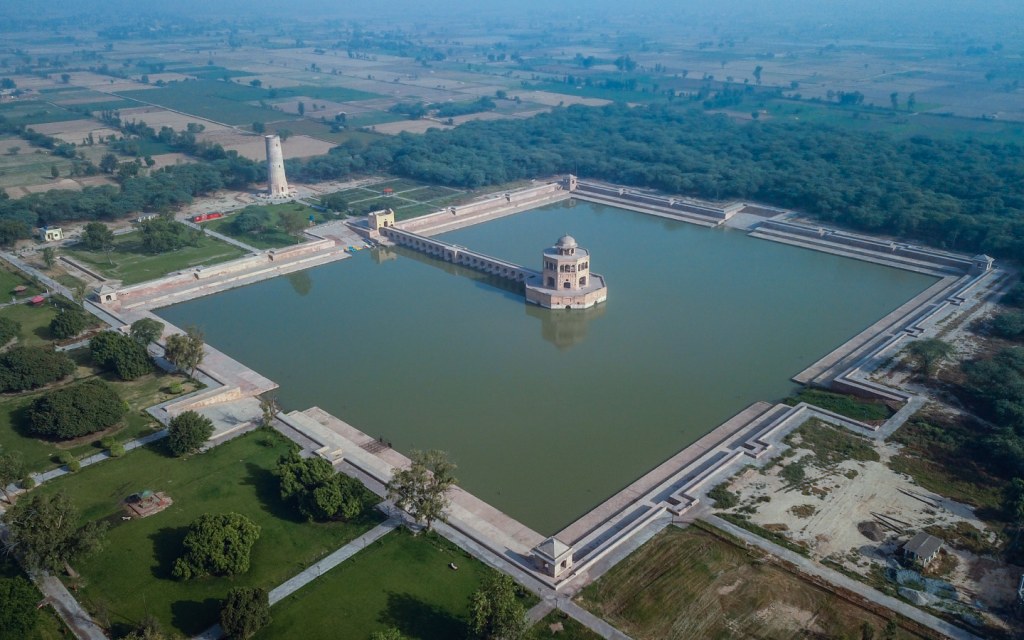
symbol of Mughal architecture and artistic legacy. This historical structure, built in the early 17th century, is not only a testament to the grandeur of the Mughal Empire but also a unique expression of their love for animals, nature, and sophisticated design.
Historical Significance
Hiran Minar was constructed during the reign of Emperor Jahangir (1605–1627) to honor his beloved antelope named Mansraj, a rare gesture of devotion. The minar, or tower, is believed to have been erected at the site where Mansraj once roamed, reflecting the emperor’s compassion and affection for animals. This architectural masterpiece served as a hunting retreat and leisure spot for the royal family.
Architectural Features
Hiran Minar is an exemplary blend of function and aesthetics. It comprises the following key features:
- The Tower: The centerpiece of the site, the tower stands 100 feet tall, decorated with intricate stone carvings. Circular in shape, it symbolizes the emperor’s tribute to his cherished pet.
- The Water Tank: Surrounding the tower is a large rectangular water tank, approximately 750 feet long and 890 feet wide. This massive reservoir not only added to the scenic beauty of the site but also served as a water source for animals and birds in the area.
- The Causeway and Pavilion: A stone causeway connects the tower to a beautifully designed baradari (pavilion) in the middle of the water tank. This pavilion, supported by pillars, served as a royal resting area and added an ethereal charm to the site.
- Hunting Grounds: The area around Hiran Minar was developed as a royal hunting park or game reserve, known as Shikargah, highlighting the Mughals’ love for nature and wildlife.
Cultural and Tourist Importance
Today, Hiran Minar attracts history enthusiasts, architects, and tourists from across the world. It is recognized as one of the finest examples of Mughal engineering, blending utility with artistic grandeur. Visitors are drawn to its serene ambiance, the reflection of the tower in the water, and the lush green surroundings that offer a glimpse into the past.

UNESCO World Heritage Potential
Hiran Minar is on Pakistan’s tentative list of UNESCO World Heritage Sites. Its unique historical narrative, architectural design, and ecological significance make it a strong contender for international recognition. Preservation efforts are ongoing to maintain its structural integrity and historical charm.
A Legacy of Compassion and Grandeur
Hiran Minar is more than a historical structure; it is a symbol of the Mughal emperor’s love for nature and animals, combined with their architectural ingenuity. For Pakistan, it remains a priceless cultural treasure, linking the present with its rich past.
Whether you’re a history lover or simply seeking a peaceful retreat, Hiran Minar offers a journey back in time, reminding us of an era when nature, art, and humanity thrived in harmony.


