Article
Batura Glacier: A Majestic Ice Giant in Pakistan’s Karakoram Range
Published
2 years agoon
By
EDITOR
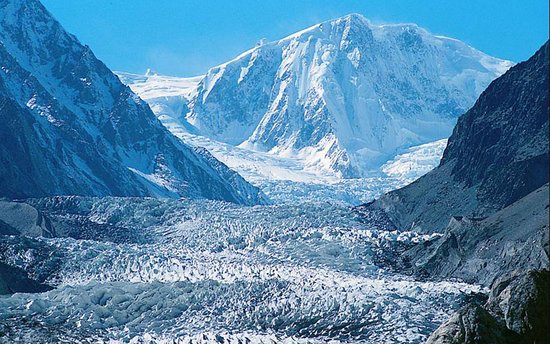
The Batura Glacier, one of the longest and most impressive glaciers in the world, is situated in the remote Gilgit-Baltistan region of northern Pakistan. Stretching over 57 kilometers (35 miles) in length, the glacier is nestled within the towering peaks of the Karakoram Range, offering adventurers a spectacular journey into some of the most pristine and unspoiled landscapes on Earth. As one of the largest glaciers outside the polar regions, the Batura Glacier stands as a symbol of the immense power and beauty of nature, drawing trekkers, climbers, and nature lovers from around the globe.
Geographical Significance and Location
The Batura Glacier lies in the Hunza Valley, west of the famous Karakoram Highway and not far from the picturesque village of Passu. The glacier forms part of the mighty Batura Muztagh, a subrange of the Karakoram, and is surrounded by some of the world’s highest peaks. The most notable among these are Batura I (7,795 meters/25,574 feet), Batura II (7,762 meters/25,465 feet), and Passu Peak (7,478 meters/24,534 feet). These majestic mountains provide a dramatic backdrop to the glacier, creating a landscape that is as challenging as it is beautiful.
The glacier flows from the western reaches of the Karakoram towards the east, gradually descending into the Hunza Valley. Its length, sheer size, and accessibility make the Batura Glacier one of the most remarkable glacial formations in the Karakoram Range, second only to a few larger glaciers like the Baltoro and Siachen in the region.
Trekking and Adventure Opportunities
The Batura Glacier Trek is considered one of the most rewarding yet challenging trekking experiences in Pakistan. This trek is a paradise for adventure seekers, offering breathtaking views of towering peaks, stunning ice formations, and lush green alpine meadows. Unlike other treks in the Karakoram, which often require technical climbing skills, the Batura Glacier Trek is accessible to trekkers with moderate experience, making it an attractive option for a wider range of adventurers.
The trek typically begins in Passu or the nearby village of Borath, taking trekkers along the glacier’s southern edge through the beautiful Batura Valley. The journey involves crossing glaciers, navigating rocky moraines, and walking alongside glacial streams, all while being surrounded by some of the most magnificent mountain scenery in the world.
One of the highlights of the trek is the opportunity to witness the Batura Wall, an awe-inspiring series of peaks that line the northern side of the glacier. Along the way, trekkers can also encounter traditional Gujjar herding communities, who graze their livestock in the high pastures during the summer months, offering a unique cultural experience.
Environmental Importance
The Batura Glacier is not only a natural wonder but also plays a crucial role in the regional ecosystem. Like other glaciers in the Karakoram, it serves as an essential source of freshwater, feeding into the rivers and streams that sustain agriculture and communities in the Hunza Valley and beyond. The meltwater from the glacier contributes to the Hunza River, which is a critical part of the Indus River system, one of Pakistan’s most vital water sources.
Despite the region’s remote location, the impact of climate change is a growing concern for the Batura Glacier and its surrounding environment. While the Karakoram Anomaly—a phenomenon where some glaciers in the Karakoram have remained stable or even advanced slightly—has provided a buffer against the rapid glacial retreat seen in other parts of the world, the long-term effects of global warming are still uncertain. Monitoring the health of the Batura Glacier is essential for understanding how climate change may affect the water supply for millions of people downstream.
Challenges and Conservation Efforts
The Batura Glacier, like many of the world’s glaciers, faces challenges related to environmental degradation and human activity. While the glacier’s remote location has protected it from large-scale tourism and pollution, the increasing popularity of trekking and mountaineering in the Karakoram raises concerns about the potential impact on this fragile ecosystem.
Sustainable tourism practices are crucial to preserving the pristine nature of the Batura Glacier and its surroundings. Local and international organizations are working to promote responsible trekking by encouraging visitors to minimize their environmental footprint, properly dispose of waste, and respect local wildlife and ecosystems.
Additionally, conservation efforts focus on protecting the glacier from the long-term effects of climate change. These efforts include scientific research aimed at monitoring the glacier’s health, understanding its behavior in response to global temperature changes, and developing strategies to mitigate the impact on the communities that depend on its meltwater.
Cultural and Historical Significance
The area surrounding the Batura Glacier is not only known for its natural beauty but also for its rich cultural heritage. The Hunza Valley is home to a unique blend of cultures, languages, and traditions that have been shaped by centuries of trade, migration, and adaptation to life in the high mountains. The local communities, primarily of Wakhi and Burusho descent, have maintained their traditional ways of life despite the increasing influence of modernity.
Visitors to the Batura Glacier have the opportunity to experience this vibrant culture firsthand, whether by interacting with local herders, visiting ancient forts and settlements, or participating in traditional festivals. The region’s history of exploration and mountaineering also adds to its allure, with numerous expeditions having passed through the Batura Glacier on their way to some of the highest and most challenging peaks in the world.
Conclusion
The Batura Glacier stands as a testament to the power and beauty of nature, offering a once-in-a-lifetime experience for those who venture into its remote and majestic landscape. As one of the longest glaciers in the Karakoram Range, it not only provides adventure and wonder for trekkers and mountaineers but also plays a vital role in sustaining the environment and communities of northern Pakistan.
However, with the increasing pressures of climate change and human activity, preserving the Batura Glacier’s pristine environment is more important than ever. By promoting sustainable tourism and supporting conservation efforts, we can ensure that this natural wonder continues to inspire and support future generations.
Whether you are a seasoned adventurer seeking the challenge of high-altitude trekking or a nature lover drawn to the untouched beauty of the Karakoram, the Batura Glacier promises an unforgettable journey into one of the world’s most awe-inspiring and pristine wilderness areas.
You may like
-
Lalak Jan; The living hero of the Kargil war
-
Captain Karnal Sher Khan Shaheed: The Invader
-
Markhor: The Majestic National Animal of Pakistan
-
Our National Bird Chakor (Partridge) is the sign of Good Luck and symbol of Love
-
Jasmine: The National Flower of Pakistan – A Symbol of Purity, Humility, and Peace
-
Pakistan’s “King of Fruits” — Mango Season Begins
Article
Captain Karnal Sher Khan Shaheed: The Invader
Fariyal Mir
Published
2 weeks agoon
July 5, 2026
Captain Karnal Sher Khan Shaheed had fought no less than an invader during the Kargil war at the Line of Control. He defended five strategic posts and countered the continuous attack by chasing and raids.
The face of bravery was born on the 1st of January 1970. He belonged to the land of Swabi in KPK and from there he completed his intermediate from Government Post-Graduate College Swabi and then joined Pakistan Army. He was commissioned in the 27th Sind Regiment on 14 October 1994. Captain Karnal Sher Khan emerged as the symbol of mettle and courage during the Kargil conflict at the Line of Control. He set up personal examples of bravery and inflicted heavy losses on the enemy.
He defended five strategic posts, which he established with his soldiers at the height of 17,000 feet in the Gultary area. On 5 July 1999, Indians, with the help of two battalions, managed to capture some portion of one of his posts. Despite facing all odds, he led a counter-attack and re-captured the lost portion. Captain Karnal Sher Khan also chased the enemy and conducted many raids in the enemy area. During one such raid, he went inside the enemy camp where he inflicted heavy losses. During the battle, he received a burst of fire in the chest and embraced ‘SHAHADAT’ on 5 July 1999.
He was awarded Nishan-e-Haider for all his bravery. The notion of all martyrs is well described in this verse:
“Ham Haq Par Jan Lutayan Ga Ham Shoq-e-Shahadad Wala Hay
Wo Sath Hamara Tarak Karda Jo Mout Sa Darnay wala Hay.”
Article
Markhor: The Majestic National Animal of Pakistan
Published
3 weeks agoon
June 29, 2026By
EDITOR
The Markhor, Pakistan’s national animal, is a symbol of the country’s natural beauty, resilience, and strength. With its striking, spiral horns and graceful stature, the Markhor is one of the most distinctive and remarkable wild goats found in the mountainous regions of northern and western Pakistan. As a creature of both cultural significance and ecological importance, the Markhor represents Pakistan’s commitment to preserving its wildlife and natural heritage.
Physical Characteristics: Nature’s Masterpiece
The Markhor is renowned for its majestic, corkscrew-shaped horns, which can grow up to 1.5 meters (5 feet) in length in males. These horns are its most striking feature and distinguish it from other wild goats. The animal’s name, “Markhor,” is believed to be derived from the Persian words “Mar” (snake) and “Khor” (eater), referring to the belief that the animal has the ability to kill or fight off snakes, though this is more folklore than fact.
Male Markhors are larger than females, and their horns are more prominent and elaborately twisted. They also have a longer coat, especially during the colder months, with a thick beard that gives them a regal appearance. Females, while smaller and with less prominent horns, are equally agile and graceful.
Habitat: Mountainous Majesty
The Markhor thrives in rugged, mountainous terrains at elevations ranging from 600 to 3,600 meters (1,970 to 11,800 feet). It is primarily found in the northern and western regions of Pakistan, particularly in the Himalayas, Hindu Kush, and Karakoram mountain ranges. The provinces of Gilgit-Baltistan, Khyber Pakhtunkhwa, and parts of Balochistan serve as key habitats for these wild goats.
Adapted to the harsh, rocky landscapes of these regions, the Markhor is a skilled climber, able to traverse steep cliffs and narrow ridges with ease. This agility not only helps it evade predators but also aids in foraging for food in difficult terrain.
Conservation Status: A Story of Recovery
The Markhor was once on the brink of extinction, largely due to illegal hunting, habitat loss, and competition with domestic livestock. By the late 20th century, its population had dwindled alarmingly, and the species was classified as endangered by the International Union for Conservation of Nature (IUCN).
In response, the government of Pakistan, along with international conservation organizations, launched several initiatives to protect the Markhor. Strict hunting regulations were imposed, and community-led conservation programs were introduced. These efforts have been remarkably successful, leading to a gradual recovery in the Markhor population. In 2015, the IUCN downgraded the Markhor’s status from “endangered” to “near-threatened,” recognizing the positive impact of conservation efforts.
One of the most successful conservation models has been the community-based trophy hunting program. Local communities are given a quota for limited hunting permits, which are auctioned to international hunters. A significant portion of the revenue generated goes back to the local communities, providing them with a financial incentive to protect the Markhor and its habitat.
Cultural and National Significance
The Markhor holds a special place in the cultural and national identity of Pakistan. As the country’s national animal, it represents the resilience, strength, and beauty of Pakistan’s wilderness and people. Its unique appearance and ability to survive in challenging environments resonate with the values of courage and endurance.
In local folklore, the Markhor is often seen as a creature with mystical powers. The spiral horns are sometimes viewed as a symbol of wisdom and leadership, reflecting the Markhor’s status as the “king” of the mountain goats. Additionally, the animal is associated with bravery and strength, qualities that align with the spirit of Pakistan.
The image of the Markhor is also featured prominently in various emblems and logos throughout Pakistan, including the insignia of the Pakistan Army’s elite Special Services Group (SSG). Its representation in official symbols highlights the national pride and reverence the country has for this majestic animal.
Behavior and Diet: A Survivor of Harsh Environments
Markhors are primarily herbivores, feeding on grasses, leaves, and shrubs, depending on the season. During the summer, they graze on a variety of plants found in the high-altitude meadows. In the winter months, when food is scarce, they move to lower altitudes, foraging for any available vegetation, including leaves, twigs, and bark.
They are social animals, often found in small herds, typically consisting of females and their young. Males tend to be solitary, except during the mating season, when they join the herds to compete for mates. The rutting season, which occurs in the winter, is marked by intense competition among males, with dramatic horn clashes that can last for hours.
Challenges and Future of the Markhor
Despite the success of conservation efforts, the Markhor still faces significant challenges. Habitat loss due to deforestation, expanding agriculture, and infrastructure development continues to threaten the regions where they live. Additionally, climate change poses a long-term risk, potentially altering the ecosystems that support the Markhor.
Continued conservation efforts are crucial to ensuring the long-term survival of the Markhor. Sustainable management of its habitat, strict enforcement of anti-poaching laws, and ongoing community involvement in conservation programs are all vital to maintaining and expanding the Markhor population.
Conclusion: A Symbol of Pakistan’s Natural Heritage
The Markhor is more than just a wild goat; it is a symbol of Pakistan’s natural beauty and the country’s commitment to preserving its unique wildlife. Its recovery from the brink of extinction is a testament to the power of conservation and the importance of protecting the natural world for future generations. As Pakistan’s national animal, the Markhor stands as a proud representation of the country’s strength, resilience, and rich ecological heritage.
To see the Markhor thriving in the mountains of northern Pakistan is to witness nature at its most magnificent—a reminder of the beauty that still exists in our world and the responsibility we all share to protect it.
Article
Jasmine: The National Flower of Pakistan – A Symbol of Purity, Humility, and Peace
Published
3 weeks agoon
June 29, 2026By
EDITOR
Jasmine, known as “Chambeli” in Urdu, holds a special place in the hearts of Pakistanis. Declared the national flower of Pakistan, the jasmine flower is not just admired for its aesthetic beauty but also for the deep symbolism it carries. In a nation marked by diversity and cultural richness, jasmine reflects the country’s values of simplicity, peace, purity, and resilience.
Botanical Features of Jasmine
Jasmine is part of the Oleaceae family, and there are more than 200 species of this delicate flower. The flower is typically white, though some species also bloom in yellow. Jasmine thrives in warm, tropical, and subtropical climates, making it perfectly suited for Pakistan’s environment. The plant is famous for its sweet and captivating fragrance, which intensifies at night, filling the air with its pleasant aroma.
Jasmine can be grown as a shrub or climbing vine, depending on the variety. It is easy to cultivate, requiring little more than well-drained soil, regular watering, and ample sunlight, which explains its widespread growth in home gardens, parks, and public spaces across the country.
Symbolism of Jasmine
Jasmine carries significant symbolism not just in Pakistan, but also across the world. Its sweet fragrance, simple beauty, and delicate petals have made it a symbol of many virtues. In Pakistan, the jasmine flower represents:
- Purity and Modesty:
The delicate white petals of the jasmine flower are seen as a representation of purity and innocence. This reflects Pakistan’s cultural emphasis on simplicity, modesty, and moral integrity. - Humility:
Despite its overwhelming beauty and fragrance, jasmine is a humble flower. It grows abundantly, often unnoticed in gardens and along fences. This humility resonates with Pakistan’s values of kindness, humility, and resilience. - Peace:
In a country that has gone through numerous struggles for peace and unity, jasmine symbolizes the enduring quest for harmony and calm. Its gentle nature and tranquil fragrance remind the nation of the importance of peace in society and the beauty of coexisting with one another. - Resilience:
Despite being delicate, jasmine is a resilient flower that can thrive in challenging climates. In many ways, this mirrors the spirit of Pakistan, a country that has faced and overcome various challenges, demonstrating great strength and resilience.
Cultural Significance of Jasmine in Pakistan
Jasmine has a significant cultural presence in Pakistan. It is often used in religious ceremonies, weddings, and festivals. Brides wear garlands of jasmine to symbolize beauty and purity. The flower is also used to decorate homes and mosques during various celebrations, including Eid and other national holidays. Jasmine garlands are frequently gifted to honor guests, showing hospitality and respect.
The fragrance of jasmine is also highly valued in the production of perfumes and oils in Pakistan. Jasmine oil, known for its therapeutic properties, is used in aromatherapy to reduce stress and promote relaxation.
Jasmine as the National Flower
In 1961, the jasmine was officially declared the national flower of Pakistan. Its selection was a reflection of the nation’s aspiration to embody the qualities of purity, simplicity, and unity in its national identity. As the country has developed over the years, jasmine remains a timeless symbol of the country’s beauty and resilience.
In addition to being the national flower, jasmine plays a vital role in promoting tourism in Pakistan. Jasmine-themed souvenirs, decorations, and fragrances are popular among tourists, symbolizing their connection to the country’s rich natural beauty and cultural heritage.
Jasmine in Poetry and Literature
Jasmine has often been used as a metaphor in Pakistani poetry and literature, symbolizing beauty, love, and longing. Renowned poets of Pakistan, including Faiz Ahmed Faiz, have used the image of jasmine to evoke powerful emotions of hope, love, and purity. Its fragrant presence in Pakistani gardens and homes has inspired countless poets and writers to include jasmine in their works, making it a beloved element of Pakistan’s literary tradition.
Conservation and Cultivation of Jasmine
Pakistan’s climate is naturally suited to jasmine cultivation. However, due to rapid urbanization and loss of green spaces, efforts have been made to promote its cultivation both in rural and urban areas. Many public parks and botanical gardens in major cities like Islamabad, Lahore, and Karachi feature beautifully maintained jasmine plants, and the flower remains a popular choice for home gardens due to its low maintenance and high aesthetic value.
Furthermore, campaigns have been launched to plant jasmine across the country as part of Pakistan’s reforestation and environmental conservation efforts. The flower not only adds to the aesthetic beauty of Pakistan’s landscapes but also contributes to the preservation of biodiversity.
Conclusion
Jasmine, the national flower of Pakistan, is more than just a delicate and fragrant bloom. It represents the nation’s essence, symbolizing purity, peace, humility, and resilience. As Pakistan continues to evolve in the modern world, the enduring presence of jasmine serves as a reminder of the nation’s core values and aspirations.
Whether growing in the gardens of homes or woven into the poetry and culture of the people, jasmine remains a deeply cherished and symbolic flower for all Pakistanis. It is a beacon of the beauty and strength that define the country, bringing with it a message of peace and hope for a prosperous future.
Lalak Jan; The living hero of the Kargil war
Captain Karnal Sher Khan Shaheed: The Invader

