


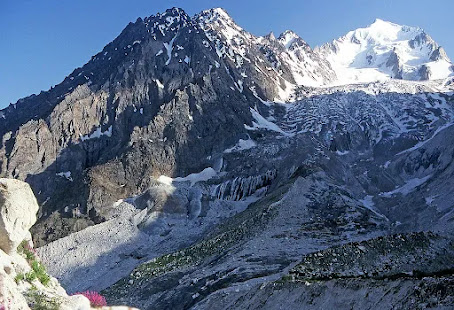
The Barum Glacier is one of the most stunning yet relatively less known glaciers located in the Chitral District of Pakistan’s Khyber Pakhtunkhwa province. Nestled within the formidable Hindu Kush mountain range, Barum Glacier is a vital source of fresh water for the region and a natural wonder that plays a crucial role in the local ecology. Its significance is manifold, encompassing geographical, environmental, and hydrological importance. The glacier is also a key feature of Chitral’s breathtaking landscape, which draws adventurers and trekkers from around the world.
Geographic Location
Barum Glacier is situated in the Upper Chitral area of the Hindu Kush, a region characterized by towering peaks, deep valleys, and rugged terrain. The glacier lies close to the more famous Tirich Mir, the highest peak of the Hindu Kush range, making it part of one of the world’s most dramatic mountain environments.
- Coordinates: Approximately 36° N latitude and 72° E longitude.
- Elevation: The glacier sits at an elevation of around 4,000 meters (13,000 feet) above sea level, making it a high-altitude feature that influences the climate and hydrology of the region.
Physical Characteristics
The Barum Glacier stretches over several kilometers, descending through the valley with its thick, icy mass. It is a valley glacier, meaning it forms within a valley and is fed by the accumulation of snow from surrounding peaks.
- Length and Width: The glacier extends for several kilometers, with widths that vary depending on the topography of the valley. While it is not the largest glacier in Chitral, its length and width still make it a significant glacial feature.
- Surface Features: Like many glaciers in the Hindu Kush, Barum Glacier’s surface is marked by crevasses, seracs (towering blocks of ice), and moraines (ridges formed by glacial debris). These features are typical of glaciers undergoing constant movement and changes due to climatic conditions.
Hydrological Importance
Barum Glacier is a crucial water source for the Chitral region. Its meltwater feeds into rivers that support agriculture, livestock, and drinking water needs for local communities. The glacier’s role in the regional water cycle is vital, especially in the arid and semi-arid landscapes of northern Pakistan, where rainfall is limited.
- Water Supply: As the glacier melts, it contributes to the Barum River, which eventually merges with larger river systems such as the Yarkhun River and the Kunar River. These rivers are essential for the livelihoods of the people living in the valleys below, providing irrigation for crops like wheat, barley, and fruits.
- Impact on Ecosystems: The meltwater from the glacier also sustains local ecosystems, supporting alpine meadows, forests, and various species of wildlife that thrive in the harsh yet beautiful environment of the Hindu Kush.
Climate Change and Glacial Retreat
Like many glaciers around the world, Barum Glacier is under significant threat from climate change. Rising global temperatures are causing glaciers to melt at unprecedented rates, and Barum is no exception.
- Glacial Retreat: Over the past decades, the glacier has shown signs of retreat, with its snout (the end of the glacier) gradually receding. This is a concerning trend as it impacts long-term water availability for the region. Reduced snowfalls in winter and increased summer temperatures are accelerating the melting process.
- Impact on Water Resources: As the glacier shrinks, it could lead to reduced meltwater availability, which would directly affect the water supply for local communities. This poses a risk to agriculture, which depends on the steady flow of water from glaciers during the growing season.
Adventure and Exploration
Although less famous than glaciers like Batura or Rupal, Barum Glacier offers a unique opportunity for adventure seekers and explorers. The rugged beauty of the glacier and its surrounding landscape make it an appealing destination for trekking and mountaineering.
- Trekking: Treks to and around the Barum Glacier are challenging due to the high altitude and difficult terrain, but they offer spectacular views of the Hindu Kush peaks and a chance to experience the untouched wilderness of northern Pakistan. Trekkers need to be well-prepared, as the remote location requires careful planning and experienced guides.
- Mountaineering: For mountaineers, the glacier provides access to some of the high-altitude peaks of the Hindu Kush, including nearby peaks that rise over 6,000 meters. These climbs are technically demanding but offer the reward of breathtaking vistas and a deep connection with nature.


