Connect with us

Culture

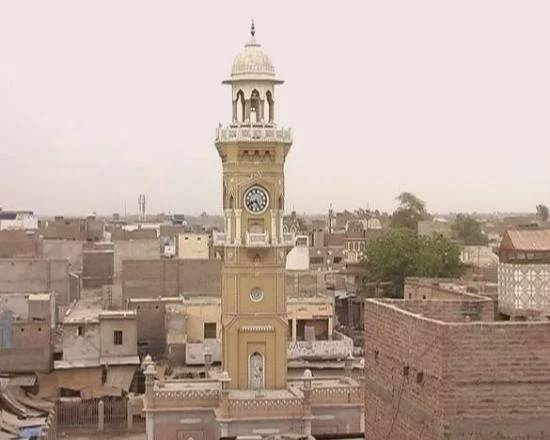
Jacobabad – A hot city

Zarbab Ayesha Malik

Published

on

Sindhi culture is very famous all over the world such as Sindhi arts and crafts and heritage. The tradition of Sindhi craftwork reflects the cumulative influence of 5000 years of invaders and settlers whose various modes of art were eventually assimilated into the culture. Sindh has Ajrak, pottery, leatherwork, carpets, textiles, and silk cloths which, in design and finish.

The city is divided into eight union councils. Jacobabad became a city on the site of an existing village and is crossed by Pakistan’s railways and many main roads of the province. It is the 43rd most populous city of Pakistan. It is known as the upper Sindh Frontier district.  The Frontier Crimes Regulations were repealed in the year 1952 where-after it was named as Jacobabad district. Nasirabad sub-division of Sibi agency was added to the Jacobabad district on 1st May 1961, which as of present no more in the district. It is bounded by the Dera Ghazi Khan district of the Punjab province in the north-cast and by the Sibi/Nasirabad district of Balochistan province in the north. In the south lie the districts of Sukkur, Larkana, and Shikarpur. Sukkur district also forms the eastern border of Jacobabad along the river Indus which flows with a varying course and does not maintain the dividing line between Jacobabad and Sukkur. The total area of the district is 5, 278 square kilometers.

The city is one of the hottest places on earth. Summer temperature regularly rises to a mean temperature of 37 degrees C. This city was named after John Jacob. He was a British administrator. The city became popular for constantly having high temperatures.

Jacobabad has a hot desert climate. It has extremely hot summers with mild winters. The highest temperature recorded was 52.8 degrees C. Rainfall is low and mostly occurs in the monsoon season.

The city was incorporated as a municipality in 1875. Manufacturers include Cotton carpets, lacquered wooden toys and lamps, and embroidery. Grain markets and milling mark Jacobabad’s position at the center of the rice and grain cultivating region. The city has few public parks. Jacobabad is the hottest city in Pakistan and also probably one of the hottest in the world. The temperatures are rising and next year it will increase more. It may become difficult to keep living in the area.  Summer in Sindh province is no joke, some people even die out of hot weather. So many people even pass out few times from the heat. Most days, the Jacobabad district, population 1 million, suffers from power outages that can last as long as 12 hours. Even when there is electricity, few households can afford an air conditioner. Locals rely on traditional remedies, like that, a supposedly cooling tonic made from ground poppy seeds mixed with spices, rose-­flavored syrup, and iced water. They also dress right for the weather, the women wearing shalwar kameez suits made of cotton lawn, a light, airy fabric. The loose trousers billow out from the waist, the long-sleeved tunic protects the arms, and a scarf covers the head. The men wear something similar, though without the vibrant patterns. These are the few things that set Jacobabad apart from any other place in the world.

Continue Reading

Culture

Renowned Balochi folk artist Ustad Noor Bakhsh enthrals audience in music concert

Published

on

By

Arts Council of Pakistan, Karachi Organized a musical concert featuring renowned Balochi folk artist Ustad Noor Bakhsh, showcasing the vibrant colors of Balochi culture at the open-air theatre.

Arts Council of Pakistan, Karachi Organized a musical concert featuring renowned Balochi folk artist Ustad Noor Bakhsh, showcasing the vibrant colors of Balochi culture at the open-air theatre.

A large number of music enthusiasts attended the event, where Ustad Noor Bakhsh delivered a lively and captivating performance on the banjo, earning widespread applause from the audience. His distinctive singing style and mesmerizing melodies kept the audience engaged, with many swaying to the rhythm. He also performed the popular track “Laila O Laila,” which received an enthusiastic response from attendees. The event witnessed remarkable excitement among lovers of Balochi culture, as the open-air theatre was packed to capacity.

During the concert, participants energetically performed the traditional Balochi dance “Dochapi” to the rhythmic beats of the banjo, adding further color and vibrancy to the memorable evening.

Continue Reading

Culture

Death anniversary of renowned Urdu poet Mohsin Naqvi observed

Published

on

By

The 30th death anniversary of renowned Urdu poet Mohsin Naqvi was observed on Thursday.

Born in Dera Ghazi Khan in 1947, Mohsin Naqvi made a lasting contribution to Urdu literature through his remarkable works, including Azaab-e-Deed, Khaima-e-Jaan, and Berg-e-Sehra.

In recognition of his services to Urdu literature and films, he received several awards.

Mohsin Naqvi passed away in Lahore on this day in 1996.

Continue Reading

Article

Beauty is in the eye of the Beholder while Pakistan comes into every Eye (Episode 6)

Fariyal Mir

Published

on

Hello… Welcome back with the hope that you all will be fine and doing great. If some have got some issue even then no worries ups and downs are part of life. We all wish for the betterment of each other and everything will be alright. Anyhow you must be waiting for the next episode of our visual tour. Before going into visualization I want to tell you that always do remember that everything happens for something better. So keep your struggle and hope for the best. As Quaid once said: “Expect the best, Prepare for the worst”.

Now, what do you think to have a visualization of our northern area? I believe whenever you hear northern area the name of Hunza comes to your mind. So let us know something about the forts of Hunza valley.

Altit Fort              

Hey ….! This is the Altit Fort located in Karimabad in the Hunza valley in Gilgit Baltistan. This fort was home to the hereditary rulers of the Hunza state. They were known to be the Mir. You know it is one of our antiques as it is about 900 years old. That means it is the oldest monument in Gilgit–Baltistan. Some decades back it was in great disrepair. But Aga Khan Trust for Culture has graciously restored it. And then it has been open to the public since 2007. You can see the antiques preserved from the Mir kingdom. Oh, how lovely are old things.

Altit Fort

A fort under the clear blue sky, high mountains, and down valley is just an ideal to many but it is present. Nature is shouting from every angle. Now just mend your imaginative steps toward Baltit Fort that is not far from the Altit Fort.

Baltit Fort

So here we have reached our second destination of today’s trip. This fort is also near the Karimabad town Hunza Valley. Let’s know a bit about its history.  It was founded in the 8th century CE, it has been on the UNESCO World Heritage Tentative list since 2004. In the past, the survival of the feudal regime of Hunza was ensured by the impressive fort, which overlooks Karimabad. The foundations of the fort date back to 700 years ago, with rebuilds and alterations over the centuries. In the 16th century, the local prince married a princess from Baltistan who brought master Balti craftsmen to renovate the building as part of her dowry. All this information is so interesting, aren’t they?

You all know there is a level of our kings or Mirs so far the Mir of Hunza also abandoned the fort in 1945 and moved to a new palace down the hill. The fort started to decay which caused concern that it might possibly fall into ruin. But fortunately, the Royal Geographical Society of London initiated a restoration program and was supported by the Aga Khan Trust for Culture Historic Cities Support Program. The program was completed in 1996 and the fort is now a museum run by the Baltit Heritage Trust. You can see it has preserved the rich heritage of Mirs of Hunza. How finely everything has been restored. You can see its architecture is far different and unique.

Baltit Fort

I think we should have to stop it here so that we have some more to visit and to visualize some other day. We will be covering the whole of our country. And for that, we would like to thank digital to bring us together and making this visualized tour. Bye, Bye for today.

Continue Reading

Most Popular

English اردو