Connect with us

Education

PBC starts four-hour RadioSchool transmission

Published

on

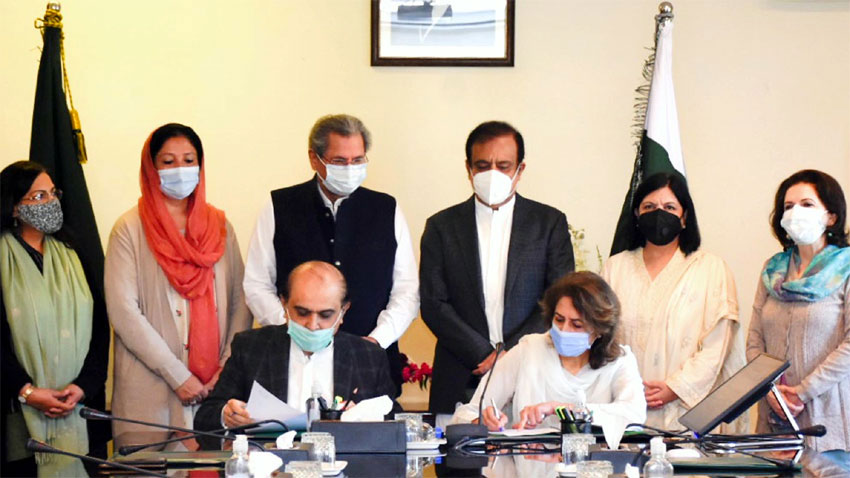
Radio Pakistan has started a four-hour RadioSchool test run transmission to promote distant learning in the country.  To this effect, a Memorandum of Understanding was singed between Radio Pakistan and the Ministry of Federal Education and Professional Training to promote distant learning in the country. The MoU was signed by Director General Radio Pakistan Ms. Ambreen Jan and Additional Secretary Ministry of Education and Professional Training Mr. Mohyuddin Ahmad Wani in Islamabad last Friday.

Under the MoU, Ministry of Federal Education and Professional Training will provide the content of the transmission to impart primary level education to children.

These educational programmes will be broadcast from various medium wave and FM networks of Radio Pakistan from 10:00 am to 12:00 noon and then as repeat broadcast from 2:00 pm to 4:00 pm seven days a week.

RadioSchool is an important initiative taken in light of Prime Minister Imran Khan’s vision to impart education to the children of far flung and backward areas and address the issue of providing education to children during the pandemic. It will also help ensure provision of education to less privileged children and girls.

As Radio Pakistan covers every nook and corner of Pakistan, the children from Gilgit to Gwadar will be able to get education from this initiative.

Besides broadcast of RadioSchool’s educational programmes, this facility will also be available on mobile apps, which can be downloaded via Apple App Store and Google Play Store. For information pertaining frequency to tune Radio Pakistan network for respective cities, please refer to our website www.radio.gov.pk.

Article

Build Libraries and develop Reading Culture

Fariyal Mir

Published

on

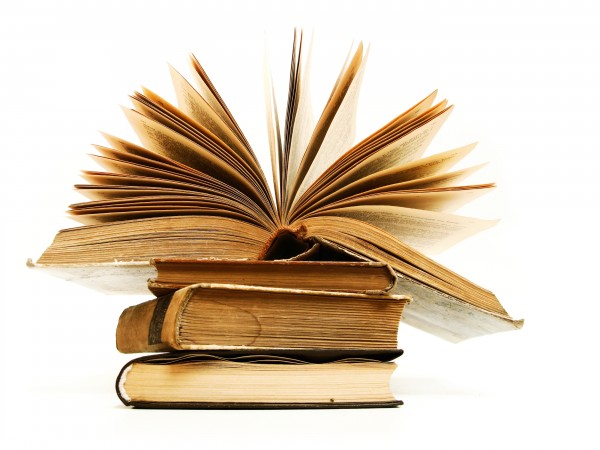
Reading is the strategy to relieve you from conflicts and libraries are the guardhouses for reading. It is the best policy that can lead you everywhere. One can easily move to the history of many centuries ago and can visualize the exact scenario. It takes to the trip of imagination and far beyond. Reading allows meeting with imaginative characters. They are able to talk and walk with the products of imagination. It has the strongest power to strengthen your opinion.  I would like to quote George R.R Martin who says that: “A reader lives a thousand lives before he dies.”

Moreover, reading introduces you to an unknown world where you can find the flavor of your life. It is the best friend of escapism. Reading books bless you with the treasure of knowledge. Garrison Keillor well said about the book: “A book is a gift you can open again and again.” Reading is a culture and it has led developed countries towards their developments. So why not develop this culture among the people.

Hence, to develop this culture there must a range of libraries. Libraries are the places that can motivate people toward reading culture. Building libraries do not charge that much amount but become the liveliest buildings. Such buildings are museums in themselves and engage people from reality to imagination. The walls decorated with books give the feeling of excitement and curiosity. Because once you become habitual of reading you can leave the world but not your reading habit.

Moreover, reading lets you put your feet in someone else shoes and walk on their behalf. It makes you like to feel things, to learn more, and to grasp a lot of experiences. In this way, it teaches you things before time. Foremost, it allows you to explore the world. Empower you to conquer the world through your imagination. Arouses your emotion and makes you a human being.

Every society, community, and family needs a building of books. There must be at one public library if not more than that so that the people can make their mind towards reading culture. A proper library setup can persuade most people toward reading culture. I grantee you when the people are engrossed into reading culture then there is no power to distract them. And every household will furnish their one wall for books. That would be amazing.

Continue Reading

Education

Father of Modern Surgery, Abū al-Qāsim al-Zahrāwī

Published

on

Early Life:

The well-known Muslim scientist Abū al-Qāsim al-Zahrāwī, also spelled Abul Kasim, in full Abū al-Qāsim Khalaf ibn ʿAbbās al-Zahrāwī, Latin Albucasis, was born in 936, near Córdoba Spain. He had his origin from the Medinan tribe of Al-Ansar. He lived most of his life in Cordoba. It is also where he studied, taught, and practiced medicine and surgery. He was a medieval surgeon of Andalusian Spain, whose comprehensive medical text, combining Middle Eastern and Greco-Roman classical teachings, shaped European surgical procedures until the Renaissance.

The Surgical Man        

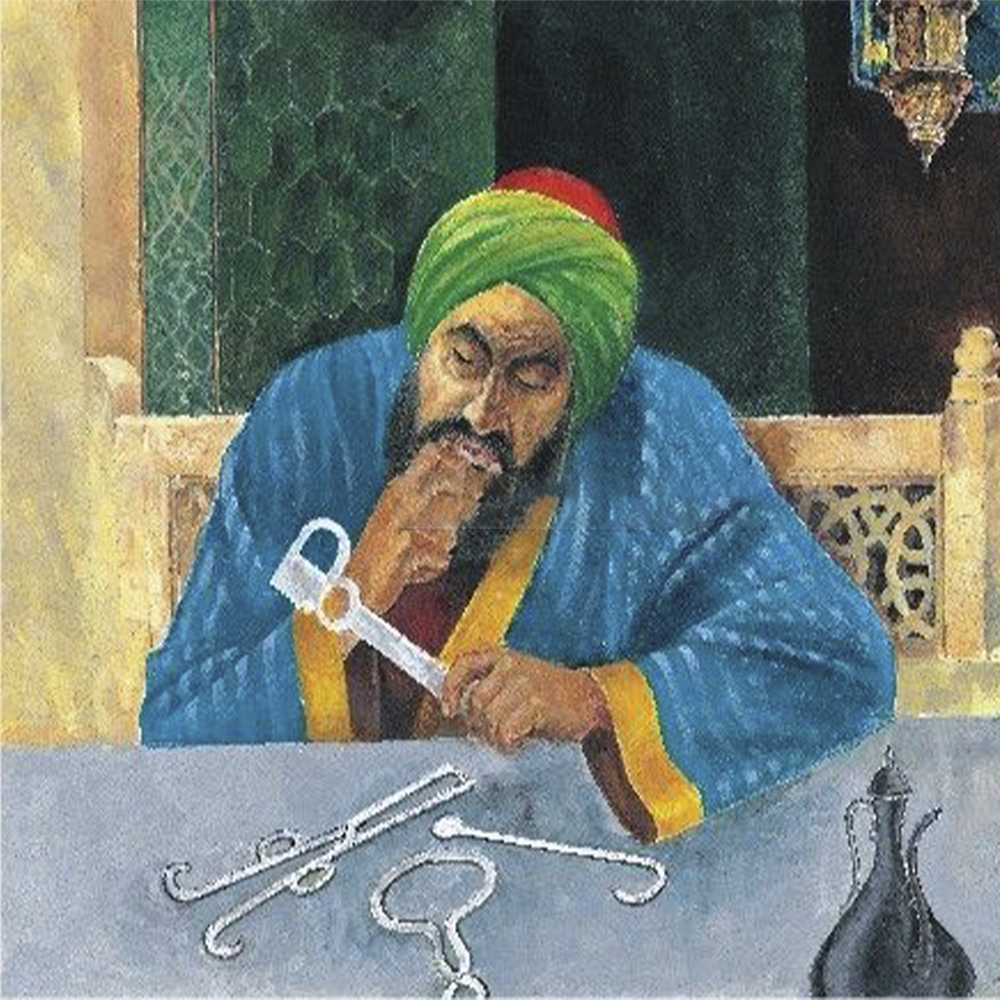
Al-Zahrawi remained the greatest surgical man. He specialized in curing disease by cauterization. And invented several devices used during surgery, for purposes such as inspection of the interior of the urethra. He also used surgical devices in applying and removing foreign bodies from the throat, the ear, and other body organs. The man of cure is ranked as the first to illustrate the various cannulae and the first to treat a wart with an iron tube and caustic metal as a boring instrument. He had performed laryngotomy on a slave girl without any experience but became successful and called it not dangerous.

Moreover, Al-Zahrawi is also considered to be pioneered neurosurgery and neurological diagnosis. He is known to have performed surgical treatments of head injuries, skull fractures, spinal injuries, hydrocephalus, subdural effusions, and headache. Al-Zahrawi had given the first clinical description of an operative procedure for hydrocephalus. And clearly described the evacuation of superficial intracranial fluid in hydrocephalic children. Other than this he had written a complete code of surgical conduct that is used by modern surgeons. He had made many surgical tools that became the base for the development of advanced tools.

His Book Kitab al-Tasrif

 Al-Zahrawi’s Kitab al-Tasrif is a medical encyclopedia comprised of thirty volumes that he completed in the year 1000. It covered a broad range of medical topics, including surgery, medicine, orthopedics, ophthalmology, pharmacology, nutrition, dentistry, childbirth, and pathology. The first volume in the encyclopedia is concerned with general principles of medicine, the second with pathology, while much of the rest discuss topics regarding pharmacology and drugs. The last treatise and the most celebrated one is about surgery. Al-Zahrawi stated that he chose to discuss the surgery in the last volume because surgery is the highest form of medicine, and one must not practice it until he becomes well-acquainted with all other branches of medicine.

The work contained data that had accumulated during a career that spanned almost 50 years of training, teaching, and practice. In it, he also wrote of the importance of a positive doctor-patient relationship and wrote affectionately of his students, whom he referred to as “my children”. He also emphasized the importance of treating patients irrespective of their social status. He encouraged the close observation of individual cases in order to make the most accurate diagnosis and the best possible treatment.

The wise surgeon once said about anatomy: “Before practicing surgery one should gain knowledge of anatomy and the function of organs so that he will understand their shape, connections, and borders. He should become thoroughly familiar with nerves muscles bones arteries and veins. If one does not comprehend anatomy and physiology one can commit a mistake that will result in the death of the patient. I have seen someone incise into a swelling in the neck thinking it was an abscess when it was an aneurysm and the patient dying on the spot.”

In short, he had given complete documentation and procedure along with a description. He has made the world of surgery.

Continue Reading

Education

Death anniversary of poet Ahmed Faraz observed

Published

on

By

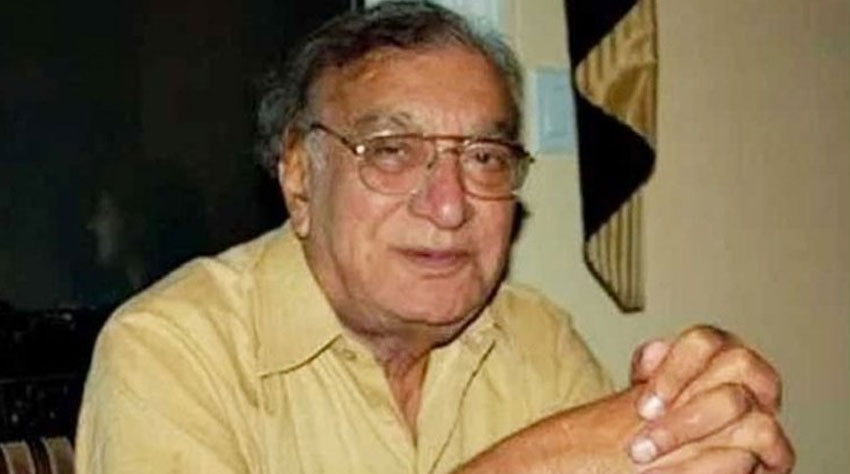
The 16th death anniversary of renowned Urdu poet, Ahmed Faraz was observed today.

Ahmad Faraz was born on January 12, 1931 in Kohat. The real name of Ahmad Faraz was Syed Ahmad Shah.

He started his career as a script writer with Radio Pakistan Peshawar and later joined Peshawar University as a lecturer.

Tanha Tanha, Be-awaz Gali Kuchon mian, Sab Awazain meri hai and Shab-e-Khoon are among his literary works.

He was a member of the Progressive Writers Movement.

The great Urdu poet was decorated with a number of national and international awards including the Nigar Award, Sitara-e-Imtiaz and Hilal-e-Imtiaz.

Ahmed Faraz died on this day in 2008, due to kidney failure and was buried in Islamabad.

Continue Reading

Most Popular

English اردو