Connect with us

Pakistan

Pakistan should join digital development process for speedy growth: President

Published

on

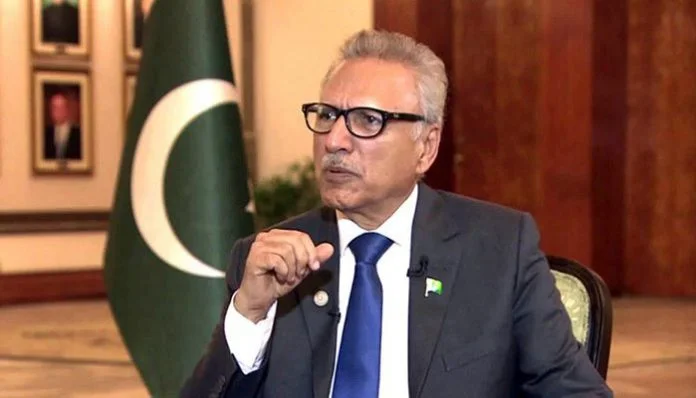
KARACHI, Jul 12 (APP): President Dr. Arif Alvi on Monday said Pakistan should join the light-pace journey of digital development for its speedy progress as Information Technology (IT) was the optimum growing sector in the world.

He was addressing the signing ceremony of a contract between Universal Service Fund (USF) and Pakistan Telecommunication Company Limited (PTCL) for installation of Optic Fiber Cable (OFC) in Nausheroferoze, Shaheed Benazirabad and Khairpur, jointly hosted by MoIT and USF at a hotel here.

He said that IT Infrastructure development was also important because the world was ready and people were fully prepared to move on the digital highways to attain goals of progress.

President Dr. Arif Alvi said that seamless Internet connectivity was imperative for growth of information technology (IT) sector which had the potential to materialize dream of exponential development in the current era.

The USF has awarded contract for installation of OFC to the PTCL for providing smooth and uninterrupted Internet connectivity in Nausheroferoze, Shaheed Benazirabad and Khairpur Districts.

Dr. Arif Alvi said people across the globe did convey their thinking and approach to the world through digital highways. The digital economy was growing very quickly and digital avenues of development were also being opened in Pakistan, he added.

He said that Federal Minister for Information Technology and Telecommunication (MoIT) Syed Aminul Haq had been entrusted with responsibility for the development of IT sector since people had formal exchange of views and ideas on digital highways.

He said that the COVID-19 situation has made the world realize the fact that a lot of knowledge was available on the Internet and added the younger generation was receiving quick knowledge through digital highways.

President Dr. Arif Alvi said the IT exports of the country would eventually increase if the IT sector promptly achieved new milestones.

He said that “Pakistan is second to none in the intellectual battle and we just need to teach latest skills to our youths at par with the modern era to make them our strength.”
President Dr. Arif Alvi also stressed the need to further improve IT education at all
levels in the country.

Speaking on the occasion, Federal Minister for Information Technology and Telecommunication (MoIT) Syed Aminul Haq said Internet connectivity was first pillar of the Digital Pakistan initiative.

He said that the huge amount of Rs 31 billion was being spent for providing broadband Internet facility to the far-flung and under-developed areas of the country.

He pointed out over 80 percent of work had already been completed on OFC installation and infrastructure development in Dadu and Jamshoro.

Syed Aminul Haq informed the gathering that work was underway for establishing IT Park in Karachi near the Karachi Airport.

He said “We want to launch 5G Internet facility in Pakistan by December 2022.”
Earlier, President Dr. Arif Alvi along with Syed Aminul Haq witnessed the signing of contract by Chief Executive Officer of USF, Haris Mehmood Chaudhry and Group Chief Finance Officer PTCL Mohammad Nadeem Khan.

Expressing his views during the ceremony, CEO USF, Haaris Mahmood Chaudhary said : “I am happy to share that, we have also expanded our OFCs project to the level of Union Councils on the direction of our Federal Minister of IT and Telecommunication. Today, as we speak, this project is a part of the entire program.”

He said that this project worth Rs 2.1 billion had been awarded to PTCL in recognition of their efforts for connecting millions of people across the country.

Under this project, a total of 101 towns and Union Councils will be connected through 709.5 km of optic fiber cable, benefiting a population of 2.8 million residents of these areas, enabling the communities and ecosystem, on a broader scale, , e said and added this project would ensure economic prosperity, social inclusiveness, and general networking between communities.

On the occasion, GCFO, PTCL Nadeem Khan said: “PTCL, being the backbone of connectivity in Pakistan, continues to serve the country’s communication needs nationwide. Our continued collaborations with USF have played a key role in ensuring that we reach far-flung rural areas to provide services to underserved communities.”

He said “We are glad to extend our Optical Fiber network to even more districts in Sindh including Naushahro Feroze, Shaheed Benazirabad and Khairpur. With our aim to turn Digital Pakistan into a reality, we are committed to play our role as a national carrier to support the progress of the country by empowering our communities socially and economically.”

Continue Reading

Pakistan

Pakistan’s “King of Fruits” — Mango Season Begins

Published

on

By

As summer deepens across Pakistan, a much-awaited delight arrives with it—the mango season. Revered as the “King of Fruits,” the mango is more than just a seasonal treat; it is a symbol of Pakistan’s agricultural strength, cultural richness, and global identity.

A Natural Bond Between Pakistan and Mangoes

Pakistan ranks among the world’s leading mango-producing countries. The fertile lands of Punjab and Sindh, combined with an ideal climate, create perfect conditions for cultivating premium-quality mangoes. Regions like Multan, Rahim Yar Khan, Mirpur Khas, and Hyderabad are internationally recognized for producing some of the finest varieties.

Iconic Varieties — Every Taste Tells a Story

Pakistan offers an extraordinary range of mango varieties, each with its own flavor profile, aroma, and texture:

  • Chaunsa — exceptionally sweet, juicy, and globally loved
  • Sindhri — large in size, aromatic, and smooth-textured
  • Anwar Ratol — small but intensely sweet and flavorful
  • Dussehri — soft, fragrant, and delicately textured
  • Langra — unique taste with a balanced sweet-tangy note

These varieties are cherished both locally and internationally, making Pakistani mangoes a global favorite.

Exports — Sharing Pakistan’s Sweetness with the World

Every year, Pakistan exports thousands of tons of mangoes to the Middle East, Europe, the United Kingdom, and North America. Their natural sweetness, rich aroma, and superior quality give them a competitive edge in international markets.

For overseas Pakistanis, mangoes are more than fruit—they are a taste of home, a memory of childhood, and a connection to their roots.

Agricultural Value and Farmers’ Dedication

Mango cultivation is a labor-intensive process that requires:

  • Careful orchard management
  • Protection from extreme weather
  • Timely harvesting
  • Proper packaging and logistics

Pakistani farmers are increasingly adopting modern techniques to improve yield and maintain global quality standards, ensuring sustainability and competitiveness.

Cultural Significance — More Than Just a Fruit

In Pakistan, mangoes are not merely eaten—they are celebrated:

  • Family gatherings often revolve around mango feasts
  • Traditional “mango parties” are a seasonal highlight
  • Generations share memories tied to this beloved fruit

Mangoes hold a special place in the country’s cultural fabric.

Health Benefits

Beyond their irresistible taste, mangoes offer numerous health benefits:

  • Rich in Vitamins A and C
  • Boost immunity
  • Aid digestion
  • Provide natural energy

A Season of Celebration

From June to August, Pakistan transforms into a vibrant mango hub:

  • Markets overflow with golden hues
  • The fragrance fills streets and homes
  • People travel far to buy the best quality mangoes

“This is not just a mango—it is the taste of Pakistan, reaching the world.”

Continue Reading

Pakistan

Dr. Abdul Qadeer Khan: 90 Years of Legacy, Strength, and National Pride

Published

on

By

Today, April 1, 2026, marks the 90th birth anniversary of Abdul Qadeer Khan — the renowned scientist widely celebrated as the “Father of Pakistan’s Nuclear Program.”

On this day, the nation remembers not just a scientist, but a symbol of determination, resilience, and national sovereignty. His name is deeply etched in the history of Pakistan as the man who transformed the country’s strategic future and strengthened its defense.


Early Life and Education

Dr. Abdul Qadeer Khan was born on April 1, 1936, in Bhopal, then part of British India. After the partition of 1947, his family migrated to Pakistan, where his journey of excellence began.

With a strong passion for science and engineering, he pursued higher education in Europe, specializing in metallurgy and nuclear science. His academic journey equipped him with the expertise that would later change the destiny of Pakistan.


The Defining Mission

The turning point in Dr. Khan’s life came after the 1971 war, which exposed Pakistan’s strategic vulnerabilities. At a time when the nation needed strength and confidence, Dr. Khan stepped forward with a vision.

He returned to Pakistan and joined efforts to develop the country’s nuclear capability. Through his leadership, dedication, and scientific brilliance, Pakistan moved closer to achieving strategic deterrence.


Building a National Capability

Dr. Khan played a central role in establishing the Kahuta Research Laboratories, later named in his honor. His work focused on uranium enrichment, a critical component of nuclear technology.

Despite facing:

  • International pressure
  • Limited resources
  • Technological challenges

He and his team worked tirelessly, driven by a single goal: to ensure Pakistan’s security and independence.


A Historic Milestone

On May 28, 1998, Pakistan conducted its nuclear tests, becoming the first Muslim nuclear power and the seventh nuclear state in the world.

This historic achievement marked a defining moment in Pakistan’s history. It was seen as a demonstration of national strength and scientific capability, and Dr. Abdul Qadeer Khan became a national hero.


A Complex but Powerful Legacy

Dr. Khan’s life was not without controversy. His later years were marked by international scrutiny and political challenges. However, within Pakistan, he remained a deeply respected figure.

For millions, he symbolized:

  • National dignity
  • Scientific achievement
  • Strategic independence

His contributions sparked important discussions about science, ethics, and national security.


A Human Story Behind the Scientist

Beyond his scientific achievements, Dr. Khan was known for his simplicity and connection with the people. He often spoke about education, self-reliance, and national pride.

He believed that the true strength of a nation lies not only in its defense but in the character and unity of its people.


Lessons for the Future

On his 90th birth anniversary, Dr. Abdul Qadeer Khan’s life offers powerful lessons:

  • Vision can change destiny
  • Knowledge is power
  • Nations rise when their people believe in themselves

For the youth of Pakistan, his journey is a reminder that dedication and purpose can shape history.

Continue Reading

Pakistan

Nation celebrates Pakistan Day today

Published

on

By

Pakistan Day is being celebrated with great enthusiasm and national unity across the country today.

The nation is renewing its resolve today to demonstrate more hard work, unity and sacrifice for the development, stability and prosperity of Pakistan.

The day dawned with thirty-one-gun salute in the federal capital and twenty-one-gun salute in provincial capitals.

These salutes were given as a symbol of national dignity, sovereignty and the professional capabilities of the Pakistan’s armed forces.

After Fajr prayer, special prayers were offered for the security, development, prosperity and national unity of the country as well as for the elevation of the ranks of the martyrs.

The national flag was hoisted on important government buildings, which is a symbol of national dignity and cohesion.

On the occasion of Pakistan Day, the entire nation is united and adorned with the noble resolve to work together for the progress and prosperity of the country.

Continue Reading

Most Popular

English اردو