
Health
Guava Nutrition Facts and Health Benefits

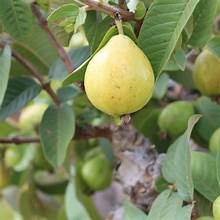
Guava is the fruit of a small tree that is grown in Mexico, Central America, the Caribbean, South America, and the southern United States. Known as a tropical fruit, guava’s origin is uncertain although many list southern Mexico or Central America as its birthplace.
Guava can now be found worldwide in many grocery stores, although availability may vary with the seasons. This sweet fruit provides a healthy dose of fiber and other nutrients. If you’re looking to add more interesting fruits to your diet, guava is a smart choice.
Guava Nutrition Facts
The USDA provides the following nutrition information for 1 cup (165g) of guava.
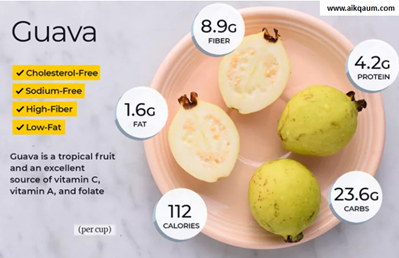
- Calories: 112
- Fat: 1.6g
- Sodium: 3.3mg
- Carbohydrates: 23.6g
- Fiber: 8.9g
- Sugars: 14.7g
- Protein: 4.2g
Carbs
A full 1-cup serving of guava provides 112 calories and over 23 grams of carbohydrate. Most of the carbs come from naturally occurring sugar (14.7g) but you’ll also benefit from almost 9 grams of fiber. There is no starch in guava.
One scientific study of the glycemic index of guava found it was around 33 for subjects with type 2 diabetes and 31 for healthy subjects, with no significant difference between the two groups.2 The glycemic index indicates how much a specific food raises your blood sugar level in comparison to pure glucose, which has a glycemic index ranking of 100. With a GI in the 30s, guava is considered a low-glycemic food.
Fats
There is just a small amount of fat in guava. A cup of the fruit provides just 1.6 grams of poly- and mono-unsaturated fats.
Protein
For a fruit, guava is relatively high in protein, providing over 4 grams per serving.
Vitamins and Minerals
As with many tropical fruits, guava is an excellent source of vitamin C. It is also high in folate and in beta carotene, which the body partially converts to vitamin A. Guava is a good source of potassium and provides smaller amounts of other vitamins and minerals.
Health Benefits
Increasing your fruit intake with varieties like guava can provide a range of health benefits.
Aids Cell Protection and Repair
Guavas contain phytonutrients, including carotenoids and polyphenols, and the vitamin C in guava acts as a powerful antioxidant in the body.
Antioxidants can help protect or delay your body’s cells from oxidative damage caused by free radicals. Our bodies make free radicals but we are also exposed to toxins in our environment. Experts believe this damage may lead to inflammation and disease.3
Benefits of Phytonutrients in the Body
Promotes Skin Health
The vitamin C in guava is responsible for the production of collagen, the main protein in your skin. Vitamin C provides antioxidant benefits to your skin and protects against age-related skin decline and UV-induced photodamage.4
Authors of a research review published in a 2017 issue of Nutrients noted that healthy skin is positively associated with higher fruit and vegetable intake in a number of studies. Although they note that the active component in the fruit and vegetables responsible for the observed benefit can’t be specifically identified, they note that vitamin C availability in the fruits and veggies may be a factor.4
Supports Weight Control
Weight loss and weight management experts often advise the inclusion of more fruits and vegetables in our diets. Fruits like guava provide important vitamins and minerals for relatively few calories and also provide fiber which can help boost satiety.
In one limited study on the health benefits of eating guava, a group of 14 women and 31 men showed a decreased body mass index (BMI) after eating guava with or without the peel. However, little information about the participants’ diet was discussed in the published report.5It’s important to note that there are no super foods when it comes to weight loss. Losing weight cannot be reliant on one food source.
Promotes Better Heart Health
Another good reason to include fruits like guava in your diet is that there is significant evidence that eating more fruits and vegetables provides heart-healthy benefits.
In one large meta-analysis published in a 2017 issue of the International Journal of Epidemiology, scientists evaluated a wide body of research to understand more about the relationship between fruit and vegetable intake and improved cardiovascular health. They determined that there was substantial evidence to support an intake of fruits and veggies of 200 to 800 grams per day for a significant reduction in your risk for cardiovascular disease. That’s about a half pound to two pounds of produce per day.6
May Aid Disease Prevention
The same study that evaluated cardiovascular benefits also evaluated how eating more fruits and vegetables might impact your risk for cancer and mortality. The threshold was lower for this outcome. They found that increasing your intake up to 600 grams per day (1.3 pounds) of fruits and vegetables may help to decrease your risk for cancer.
The researchers went on to say that “an estimated 5.6 and 7.8 million premature deaths worldwide in 2013 may be attributable to a fruit and vegetable intake below 500 and 800 grams per day, respectively, if the observed associations are causal.”6 Since fruit consumption carries few (if any) side effects for most people, the findings offer a good reason to include more fruit, like guava, in your diet.
Allergies
While there are reports of allergic reactions to other tropical fruits like mango, there are very limited reports of guava allergy in the published medical literature. In the one published account, it is not clear that guava was the cause of a potential reaction.7
If you suspect an allergy to guava or experience a reaction after eating the fruit, seek the advice of your healthcare provider.
Varieties
The common guava has a light green or yellow skin, with flesh that ranges from white to pink or red to a deep salmon color. They can be round, pear-shaped, or ovoid and can grow to 2 to 4 inches.
In addition to the common guava, other varieties are also available in some parts of the world. You might find wild strawberry guava in some markets. Some studies have shown that wild strawberry guavas (Psidium cattleianum) possess better antimicrobial activity than common guavas.8 And you might also see a fruit called pineapple guava (sometimes called feijoa), but this fruit is not technically guava, though it’s related.
When It’s Best
Guava is a winter fruit and is harvested in late November through April. You should try to buy guava just as it ripens. Immediately before it becomes ripe, guava can be hard, gummy inside, and very astringent. Ripe guava has a sweet odor and should be soft.
To choose the best guava, look for a fruit that doesn’t have blemishes and is between a light green to yellow color. A slight tinge of pink means that guava was picked at its peak.
Storage and Food Safety
Guavas have a very short shelf life. Keep the fruit at room temperature after you bring it home from the store. As little as two days after a soft, ripe guava is purchased, it is likely to go bad
Once you’ve sliced the fruit, you can keep it refrigerated, but only for a few days. You can also freeze guava. Slice it or cube it and keep it in air-tight freezer bags for up to eight months.
How to Prepare
After rinsing guava under cold water, pat it dry with paper towels. Cut it in half and slice it like you would slice an apple. The peel is edible if you desire.
Strawberry guavas, which are usually about 2 to 4 centimeters in diameter, can be eaten straight from the tree if you’re growing them. Some people like to eat just the flesh without the thin skin. They are often used in jams and jellies.
Some people dip guava slices in salty condiments like soy sauce, sea salt, or even vinegar. But the fruit is also delicious fresh, added to salads, or in salsa. Guava makes a great addition to smoothies or cold beverages and can make a sweet topping for oats or porridge.









Calories, Carbs, and Health Benefits of Orange Juice
Drinking orange juice is a very popular way to consume oranges and the drink is often served with breakfast. While it does contain naturally occurring sugar, the beverage is also high in vitamins, minerals, and antioxidants.
Nutrition Facts
The following nutrition information is provided by the USDA for 1 cup (8oz) of orange juice.1Included below are the approximate values of a cup of orange juice. Be aware that different brands will have slightly different amounts of each nutrient.
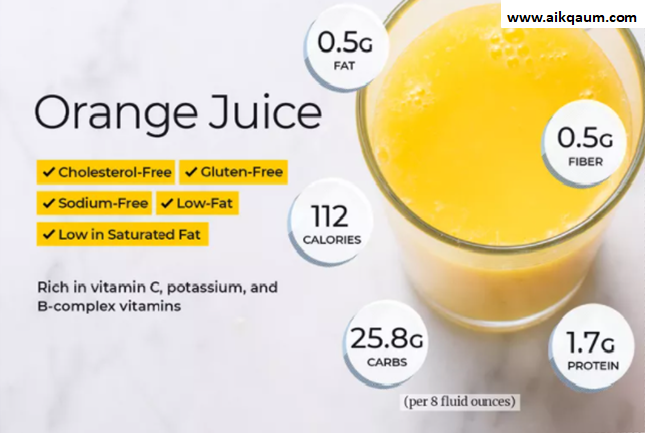
- Calories: 110
- Fat: 0g
- Sodium: 9.6mg
- Carbohydrates: 27g
- Fiber: 0.96g
- Sugars: 20g
- Protein: 2g
Carbs in Orange Juice
Most of the calories in orange juice come from carbohydrates. There is almost no fiber or starch in orange juice. This means that most of the carbs in orange juice are provided in the form of sugar.
Pure orange juice provides naturally-occurring sugar. That is sugar (fructose in this case) that occurs naturally in foods such as fruit. However, some brands of orange juice may add extra sugar. That sugar is called “added sugar” and health experts recommend that we watch our added sugar consumption. Also, pure fruit juice may offer additional health benefits, but more research needs to be done to determine exactly what these are.2
The glycemic index of orange juice (containing no added sugars) is estimated to be 50.3 Keep in mind that the glycemic index takes serving size into account. So if you drink more than a single serving (one cup) the GI will be higher.
Fats in Orange Juice
There is almost no fat in orange juice
Protein in Orange Juice
Orange juice is not a good source of protein, providing less than two grams per serving.
Micronutrients in Orange Juice
One serving of orange juice has all the vitamin C you need for a whole day. Orange juice is also high in potassium, and it’s a good source of folate and thiamine, two of the B-complex vitamins.
Health Benefits
The vitamin C found in orange is essential for healthy blood vessel walls and connective tissue that lies below your skin. It’s also essential for normal immune system function.4 Vitamin C is also an antioxidant that is thought to have health benefits by protecting your cells from free radical damage. More research is needed to determine all of the specific health-protective roles fruit juices may play in our bodies.2
Orange juice is also a good source of folate that’s necessary for red blood cell formation and to help prevent a birth defect called spina bifida. And it’s high in two important minerals, potassium, and iron. Potassium is essential for nerve and muscle function, and it works against sodium to maintain body fluid balance and blood pressure.
Keep in mind that you’ll gain many of the health benefits of orange juice if you simply consume an orange. By comparison, one average-sized orange has about 60 calories, 15 grams of carbohydrates, and 3 grams of fiber.5 But it also only has 70 milligrams of vitamin C. That’s still a substantial amount, but you’ll get more vitamin C with a glass of orange juice.
Eating oranges is an excellent way to get your daily dose of vitamin C and potassium, plus fiber. Although most oranges are consumed as juice at breakfast time, there are plenty of ways to get more fresh oranges into your day. For example, you can eat an orange out of your hand as an afternoon snack, or add orange sections to a salad served with a tangy citrus vinaigrette.
Common Questions About Orange Juice
Can orange juice prevent or cure a cold?
Probably not. While vitamin C is essential for immune system function, there isn’t any evidence that drinking orange juice will help prevent a cold nor will it make your cold go away any faster.4 It is important to stay hydrated when you’re not feeling well and drinking orange juice can help with that.
Can drinking orange juice prevent cancer?
It’s possible that some of the compounds in orange juice may help prevent cancer, but so far the only research has been done on lab animals so it’s not known if drinking orange juice will prevent or delay any types of cancer.6
Will drinking orange juice make a person gain weight?
As long as you keep your daily caloric intake where it needs to be so that you maintain or lose weight, drinking orange juice won’t cause you to gain weight. If you consume more calories than you burn every day, then you’ll gain weight no matter if the calories are from orange juice or something else. Keep serving sizes in mind and budget your calories appropriately.
Should I just eat an orange instead of drinking juice?
An orange has fewer calories and carbs than orange juice, and it has more fiber. But it doesn’t have as much vitamin C. As long as you get enough vitamin C from other sources such as strawberries, peppers, and other fruits and veggies, the whole fruit is probably the way to go.
Is freshly squeezed orange juice more nutritious than store-bought?
Yes, it is. Ounce for ounce, freshly squeezed orange juice can have about 50 percent more vitamin C and almost twice as much folate and thiamine.
Should I drink calcium-fortified orange juice? If you feel that you often fall short in your calcium intake from foods such as dairy products, nuts, seeds, and green leafy vegetables, then drinking calcium-fortified orange juice can help you meet your calcium needs.7 Be sure to read the Nutrition Fact label on the product to see how much extra calcium you’ll get from each serving. Note that some brands also add vitamin D as well



Lalak Jan; The living hero of the Kargil war

Captain Karnal Sher Khan Shaheed: The Invader

Markhor: The Majestic National Animal of Pakistan