Connect with us

Tech

Pakistan becomes the smartphone exporter

Zarbab Ayesha Malik

Published

on

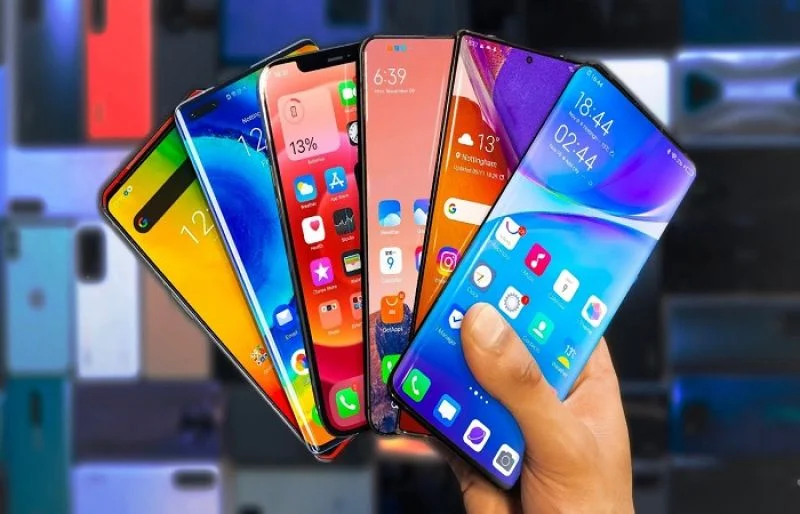
Pakistan telecom authority authorization holder Inovi Telecom has begun exporting smartphones to other countries. The first consignment of 5,500 units of 4G smartphones carrying the “Manufactured in Pakistan” tag was exported to UAE. Within four months, the company manages to export ‘Manufactured in Pakistan’ phones.

The Pakistan Telecommunication Auth­ority on Saturday congratulated the company for the achievement and hoped the exports of smartphones would increase further. “This is the result of concerted efforts for the development of the mobile device manufacturing ecosystem in the country,” said the regulator in a statement.

However, the local manufacturers of mobile phone sets have stressed the need for an export supportive policy, allowing Pakistan to beat competitors in the Middle East region.

Inovi Telecom Pvt Ltd was issued authorization for mobile device manufacturing in April and it has managed to fulfill its first export order within four months. Chief Executive Zeeshan MianNoor said that their main target was to penetrate low-end markets of the Middle East including Iraq, Iran, and Afghanistan.

“We are manufacturing the Chinese brands and there are many expat workers in the Gulf countries,” he said, adding the high-end consumers of Gulf countries prefer top world-class mobile brands and we should not even try to get involved in that market.”

IT and Telecom Minister Syed Amin ul Haque told Dawn that favorable government policies have helped achieve the milestone of transforming Pakistan from a net mobile phone importer to an exporting country.

The minister added that the local manufacturers would eventually start moving towards assembling high-end phones too after the production of spare parts for mobile sets commences next year.

Transsion Tecno Electronics CEO Amir Allahwala said that overall exports of the mobile set by China are over $140bn, but that was only due to low labor cost, which has now increased significantly.

“The Chinese are moving towards high-tech items and shifting their mobile set manufacturing to countries like India, Vietnam, Indonesia, and Bangladesh,” he said.

Now Pakistan is the only player left to compete with Bangladesh, but is the government ready to provide the same level of facilities to us too?” he asked. “We have proved that investors can meet the targets but the future of mobile set exports depends on the government policies,” he remarked

Continue Reading

Tech

The 1.44 MB Floppy Disk Frame: Preserving the Icon of the Digital Revolution

Published

on

By

A Timeless Piece of Computing History

Before cloud storage, USB drives, and smartphones, there was the 1.44 MB Floppy Disk—a symbol of the early digital age that transformed how the world stored and shared information. For millions of people, the floppy disk was their first experience with digital storage, carrying school assignments, office documents, software programs, games, and precious memories.

Today, this iconic piece of technology has become a collectible artifact, representing an era that laid the foundation for the modern digital world.

The Legacy of the 1.44 MB Floppy Disk

Introduced as one of the most widely used storage mediums of its time, the 3.5-inch floppy disk became a global standard throughout the 1980s and 1990s. Although its storage capacity of 1.44 MB may seem tiny by today’s standards, it was once considered revolutionary.

Students carried their projects on floppy disks. Businesses stored important files and records. Computer enthusiasts exchanged software and games using these small plastic squares that became an essential part of everyday life.

A Nostalgic Tribute for the Digital Generation

The 1.44 MB Floppy Disk Heritage Frame transforms this historic technology into a premium display piece. Carefully mounted within an elegant 8×12-inch frame, it serves as a reminder of a simpler and pioneering era of computing.

Whether displayed in an office, study room, technology lab, or home, the framed floppy disk sparks conversations about innovation, creativity, and the remarkable journey of digital technology.

Perfect for Collectors and Tech Enthusiasts

This heritage frame is ideal for:

  • Technology Collectors
  • IT Professionals
  • Software Developers
  • Computer Engineers
  • Gamers
  • Digital Creators
  • Corporate Offices
  • Technology Museums
  • Educational Institutions

It is more than a decorative item—it is a tribute to the tools that shaped the digital revolution.

Product Features

💾 Original 1.44 MB Floppy Disk
🖼️ Premium 8×12 Inch Frame
📀 Protective Disk Cover Display
✨ Elegant Heritage Presentation
🎁 Perfect Gift for Tech Lovers and Collectors
📦 Premium Packaging Included

Preserving Digital Heritage

Just as nations preserve historical artifacts and currencies, the world of technology deserves its own heritage preservation. The 1.44 MB Floppy Disk Frame captures a moment in technological history and celebrates the innovation that paved the way for today’s digital age.

For those who remember saving files one disk at a time, this frame is more than a collectible—it is a memory, a conversation piece, and a tribute to the beginnings of modern computing.

“Before Gigabytes and Terabytes, There Was 1.44 MB.”

Preserving History. Celebrating Innovation. 💾

Continue Reading

Tech

Al-Hassan Ibn al-Haytham; The Pioneer of Optics

The contribution of Muslim Scientists in Series The era which we are praising today is the product of the intellects of many millennium. Those are the gems of intellect that worked out at that time when there were no scientific resources. Those people have observed their surroundings and have produced resources for humanity. The intellectual […]

Published

on

By

The contribution of Muslim Scientists in Series

The era which we are praising today is the product of the intellects of many millennium. Those are the gems of intellect that worked out at that time when there were no scientific resources. Those people have observed their surroundings and have produced resources for humanity. The intellectual Muslims have contributed to every field and their contributions are most valuable. Today all the advancements are based on the discoveries and inventions of ancient scientists both Muslims and Non-Muslims. Modern scientists are working and producing technological items that are also based on the ideas of ancient ones.

Al-Hassan Ibn al-Haytham of Basra is known to be the pioneer of Optics. He was the product of the Golden Age of Muslim Civilisation that was a creative time period and brought out many far-reaching advancements in the field of science, mathematics, and medicine. He was the greatest Muslim physicist and one of the greatest students of optics of all time. He was inspired by the works of other great philosophers and scientists who were before him such as Aristotle, Euclid, Al-Kindi, Banu Musa, Ibrahim Ibn Sinan, and Ibn Sahl. Ibna al-Haytham based his theories on the work of Greek physician Galen. He is the one who introduced the methods of verification, testing, and experimentation for the exploration of truth. He has written books as well and in one of his books he says: “If learning the truth is the scientist’s goal . . . then he must make himself the enemy of all that he reads.”

He was the person who has given the concept of how vision works. And he has written a book about the “Book of Optics” in which he has illustrated the eyes and optic nerves. He has drawn images of eyes which have been used by the modern scientist to understand and to produce lenses and other optics items. Al-Haytham used a dark chamber to explore the nature of light and vision. Through this experiment, he observed that light entering through a small hole would travel straight and would project an image onto the opposite wall. From this concept, modern cameras have been designed.

Today, if we can have different lenses and glasses to replace or improve our vision artificially and can capture our every moment, is all because of Al-Haytham. The world is grateful for all his contributions.

Continue Reading

Tech

Chang Guang Satellite Technology Sets New Record with 100 Gbps Satellite-to-Ground Laser Transmission

Published

on

Chang Guang Satellite Technology Co., a leading Chinese satellite manufacturer, has achieved a groundbreaking milestone in satellite communications by setting a new record for satellite-to-ground laser transmission speeds. The company successfully demonstrated a data transfer rate of 100 Gbps, a tenfold improvement over its previous performance.

The landmark achievement was realized during a test involving a truck-mounted ground station and a satellite from the company’s Jilin-1 constellation. This marks a major step forward in satellite communication technology, showcasing China’s growing capabilities in high-speed data transfer.

The 100 Gbps transmission rate not only solidifies China’s position as a leader in satellite communication but also places it ahead of global competitors such as Starlink, a major player in the industry. With this breakthrough, Chang Guang Satellite Technology is spearheading the next phase of innovation in applications like 6G networks, remote sensing, and satellite-based positioning systems.

Large-scale deployment of the advanced laser communication system is reportedly already underway, signaling the company’s readiness to revolutionize data transmission for a variety of critical applications. This development underscores China’s commitment to advancing its space-based technologies and maintaining a competitive edge in the global satellite communication landscape.

As the race for technological supremacy in satellite communications intensifies, this achievement by Chang Guang Satellite Technology represents a significant leap forward, paving the way for faster, more reliable, and more efficient communication systems.

Continue Reading

Most Popular

English اردو