Connect with us

Article

Spectacular Pictures and Interesting Facts About Skardu Airport

Published

on

Skardu is one of the most scenic places in Pakistan. It is the base camp for many mountain climbers and tourists who want to explore the northern areas of Pakistan and see the incredible beauty of the Karakoram Mountains and other mountains. Perhaps, the best way to go to Skardu is via airplane. When you travel to Skardu by air, you will get to see some amazing views. And you will land at one of the most scenic airports in Pakistan, The Skardu Airport. Here are 17 spectacular pictures and some interesting facts about the Skardu airport.

17 – Skardu Airport is an International and domestic airport as well as a military airbase located in Skardu in Glight-Baltistan region of Pakistan.
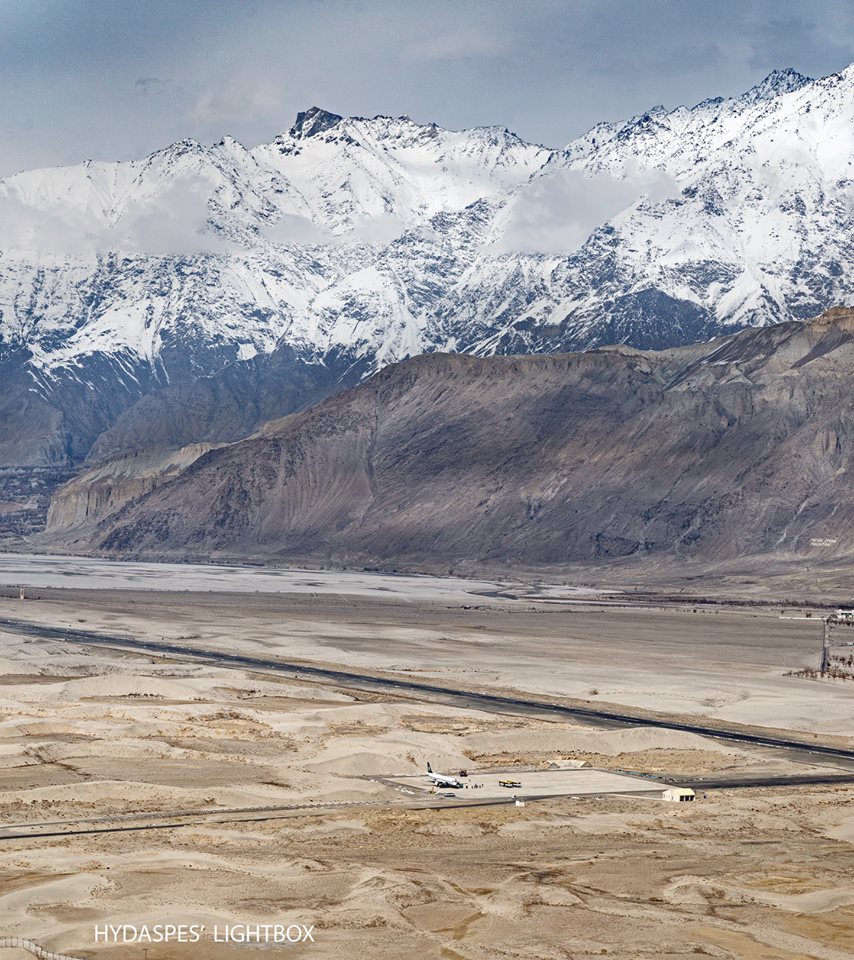
1 - Skardu Airport
Photo Credits – Hydaspes Lightbox

16 – Pakistan International Airlines has regular flights to the Skardu Airport.
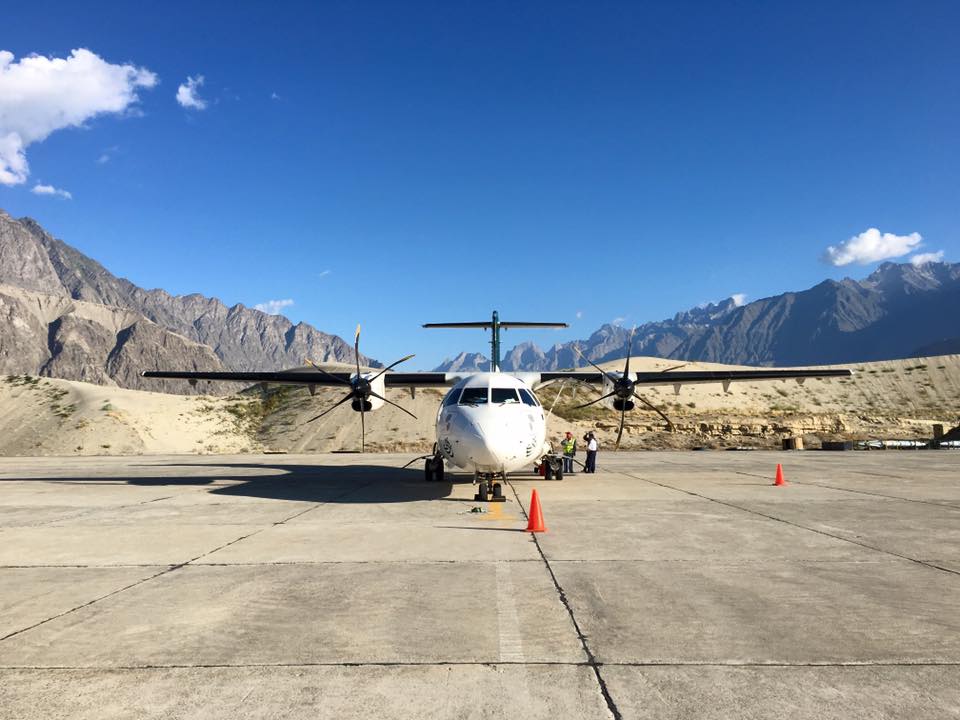
2 - A PIA ATR 42 Aircraft at the Skardu Airport

15 – It is a small airport, but a very beautiful one. Here is the control tower of the Skardu Airport.
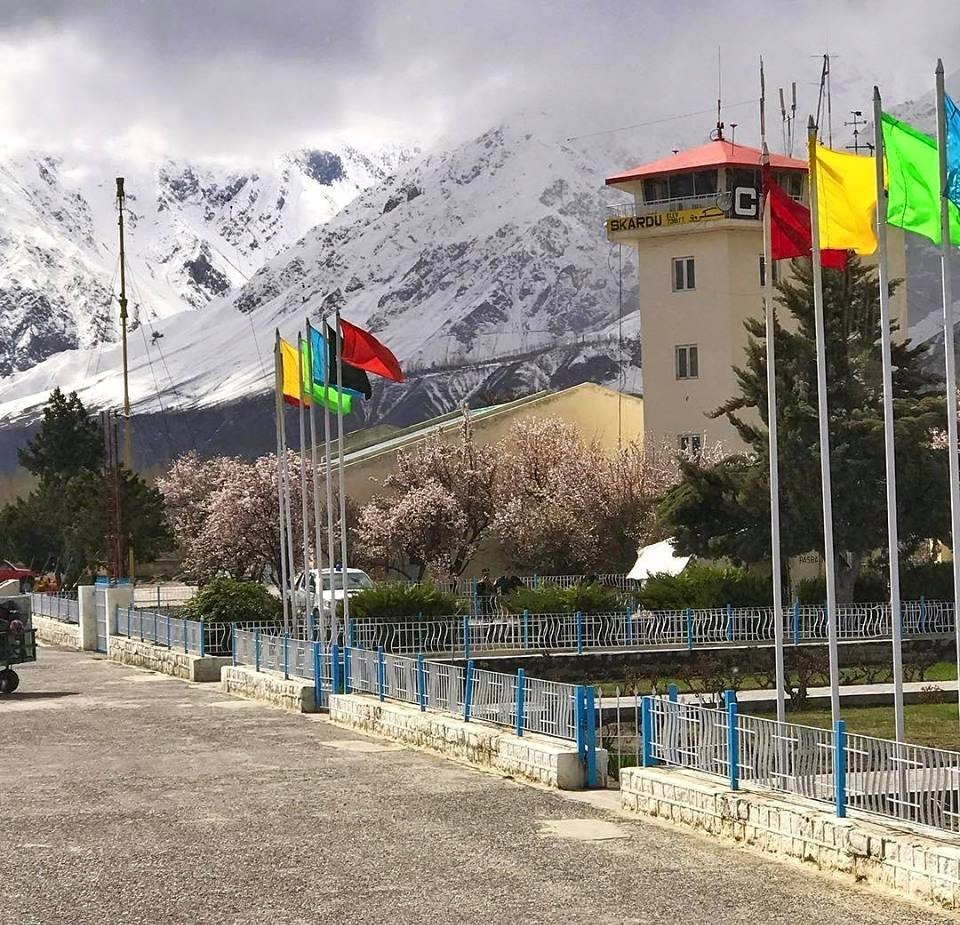
3 - Skardu Airport Control Tower

14 – Check out this amazing view of a PIA Airplane at the Skardu Airport and the mountains in the background.

4 - PIA A320 Aircraft at the Skardu Airport - Amazing Weather

13 – Here is a PIA aircraft landing at the Skardu Airport.
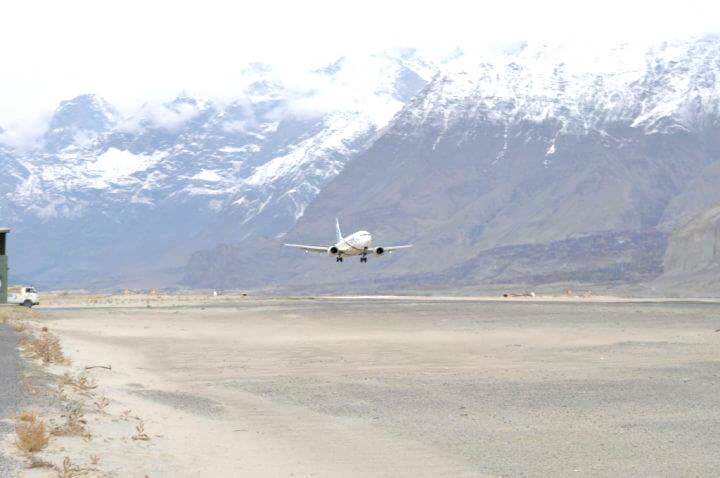
5 - An aircraft landing at the Skardu Airport

12 – The elevation of the Skardu Airport is 2,230 meters or 7,316 feet.

6 - PIA Plane at Skardu Airport

11 – The airport offers some of the most spectacular views and amazing weather to the visitors.
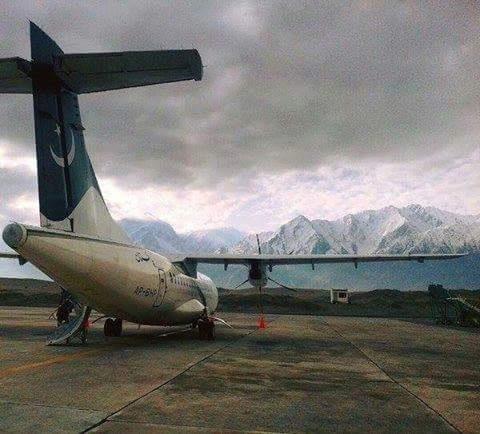
7 - The Weather

10 – The airport serves as a Forward Operating Base of Pakistan Airforce.
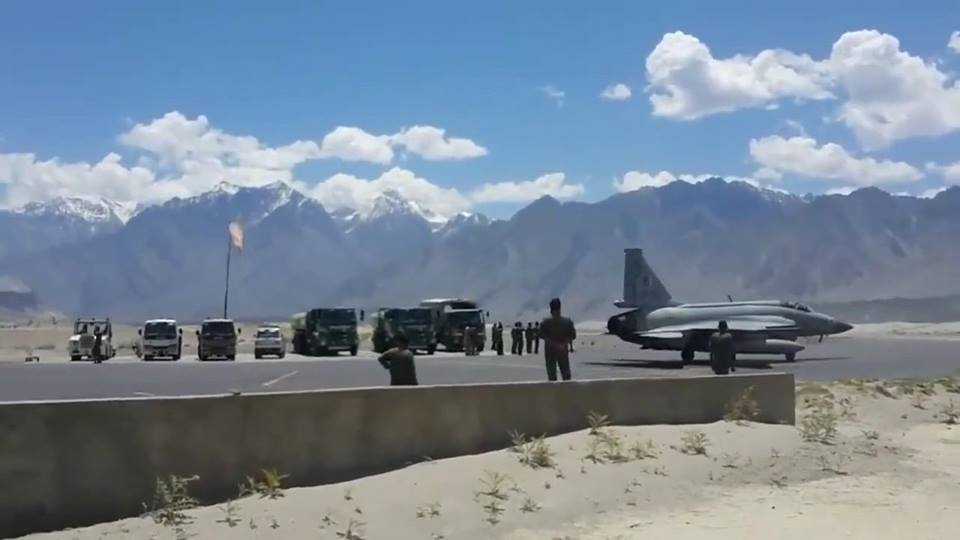
8 - JF 17 Thunder at the Skardu Airport

9 – Here are Pakistan Airforce Personel posing with a fighter jet at the scenic Skardu Airport.
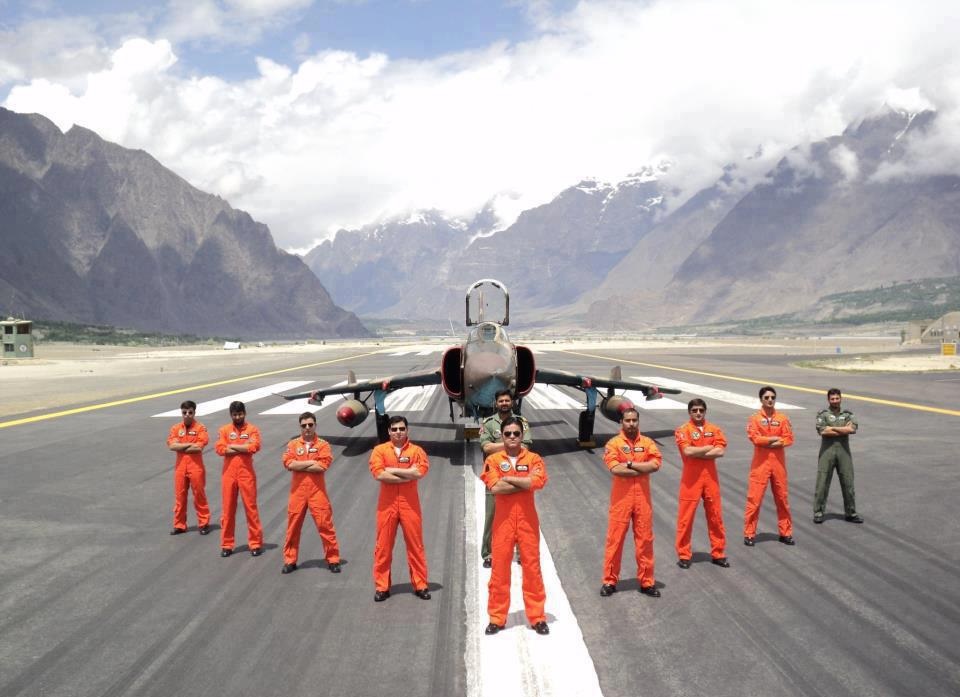
9 - Pakistan Airforce Personel at the Skardu Airport

8 – The airport sees thousands of tourists every year. Here is Australian Tourist Sophee Southall at the runway of Skardu Airport.
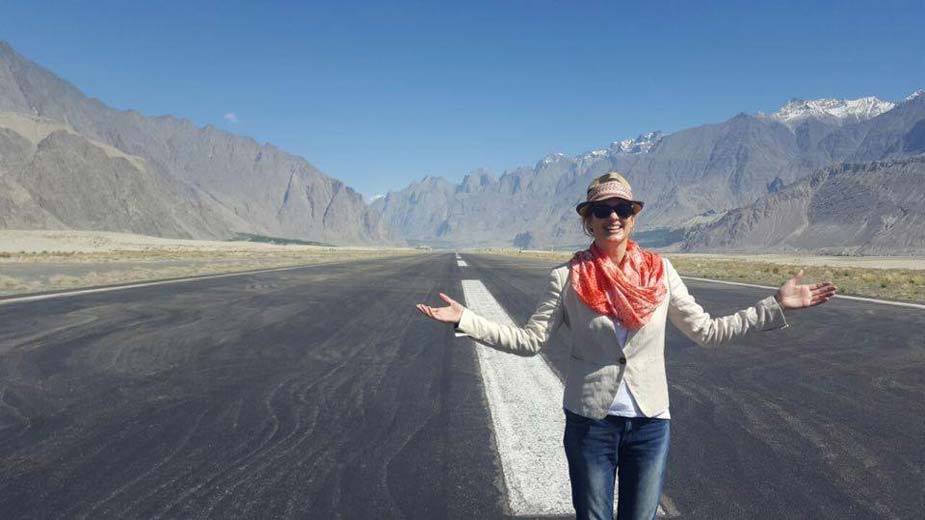
10 - Australian Tourist Sophee Southall at the runway of Skardu Airport

7 – Check out this amazing picture of a C-17 Globemaster III aircraft at the Skardu Airport.

11 - A C-17 Globemaster III at the Skardu Airport

6 – Skardu airport has two runways. One runway is 8,740 feet long and the other one is 11,944 feet long.
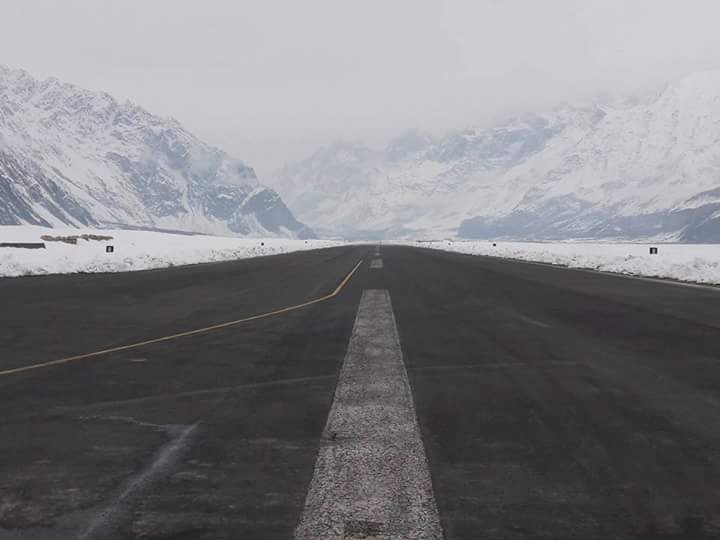
12 - Runway of Skardu Airport

5 – The view of the mountains while traveling to the Skardu airport is just amazing.
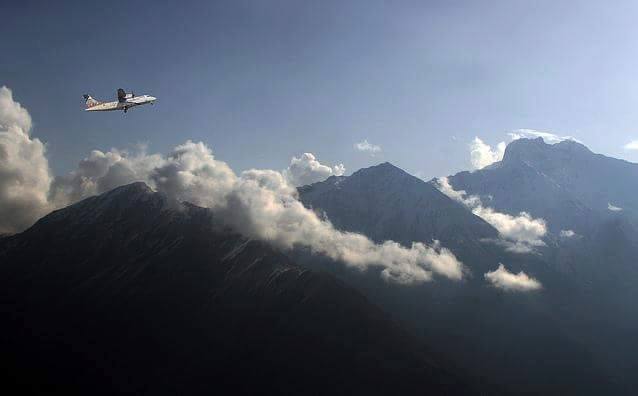
13 - You get to see some of the highest mountains in the world while flying to the Skardu Airport

4 – During winters, the weather gets really cold and it snows heavily in Skardu. Snow is being removed from the runway of the airport in this picture.
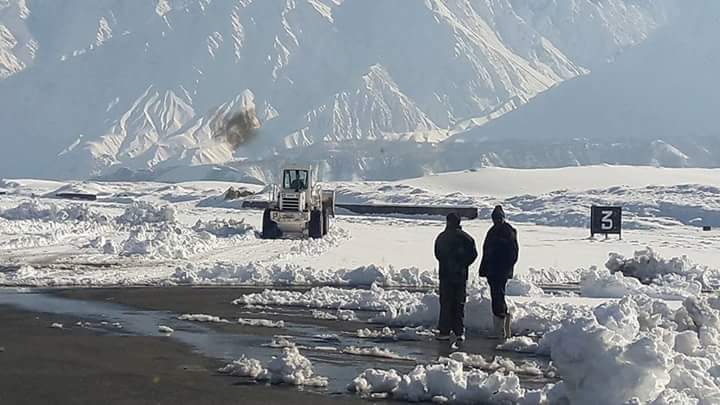
14 - Snow being removed from the runway of the Skardu Airport during winter

3 – Here is a view of the airport during summers.

15 - Tourists getting off the plane at the Skardu Airport

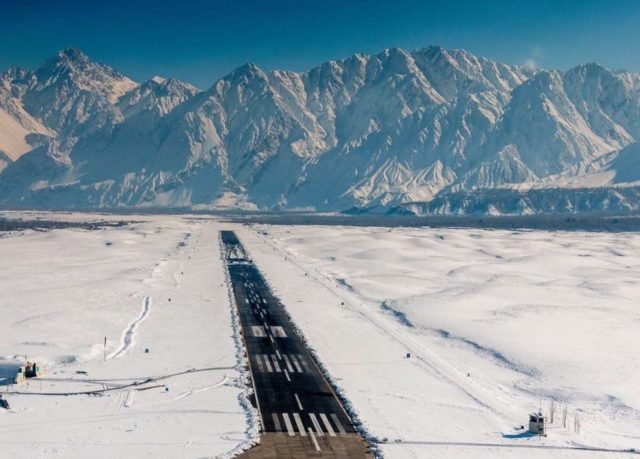
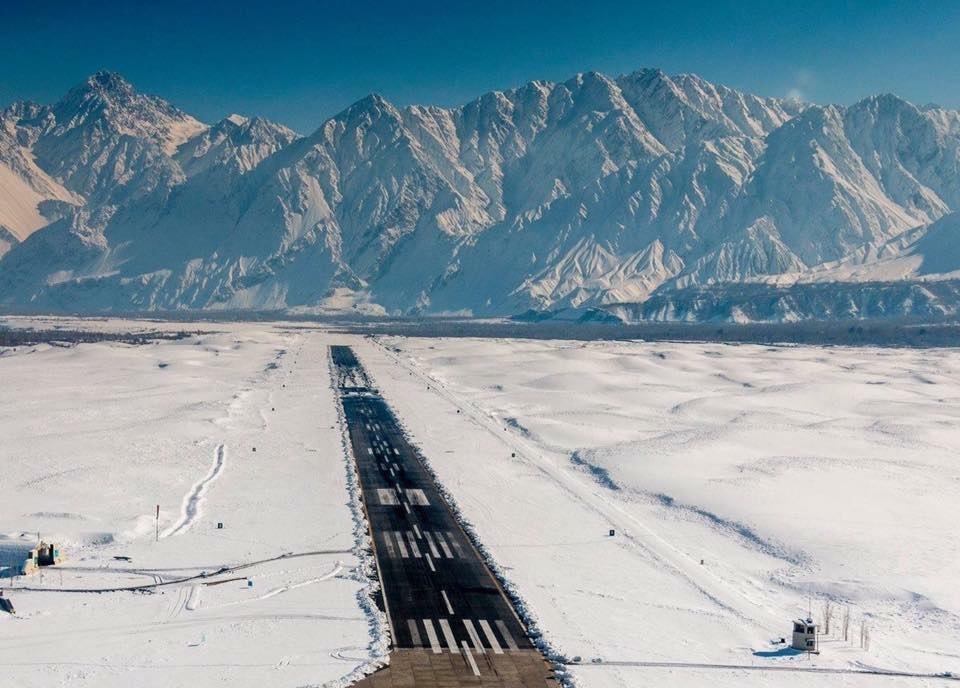
2 – Check out this stunning view of the Skardu Airport runway during the extreme winter season.
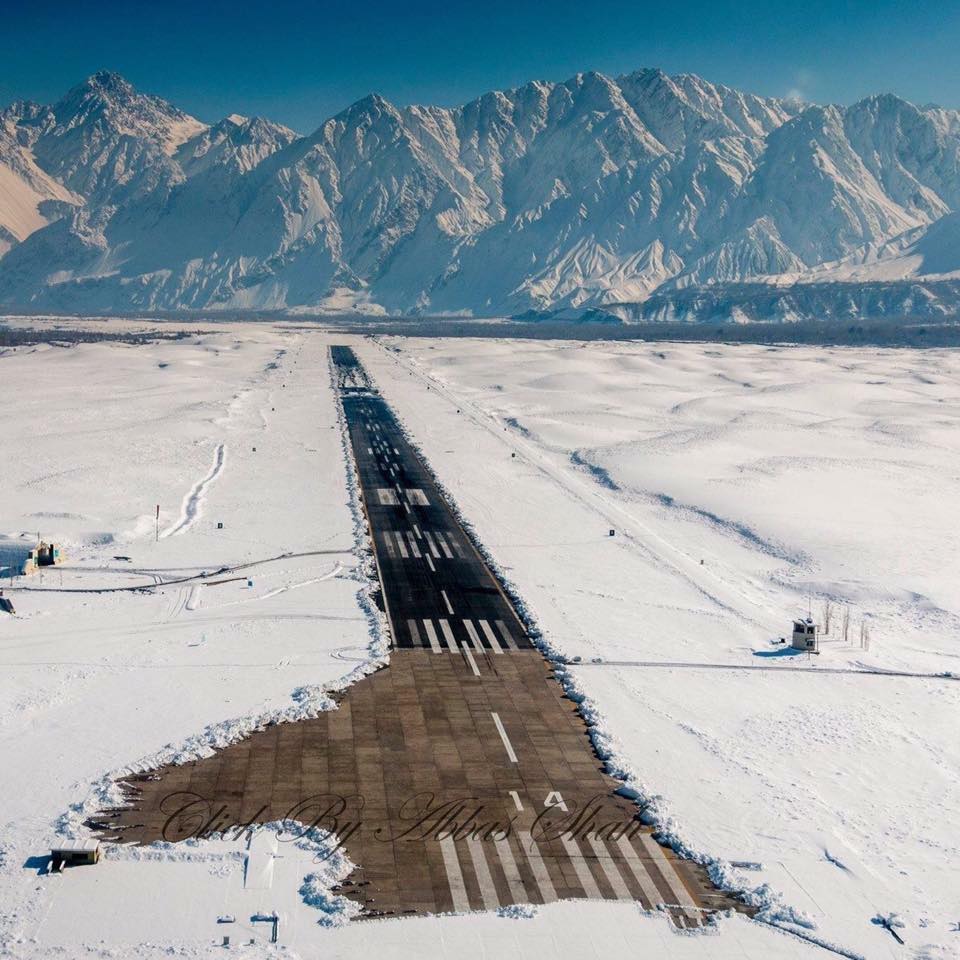
16 - Skardu Airport Runway
Photo Credits – Abbass Shah

1 – If you have not visited this amazing airport and the scenic city of Skardu, it is highly recommended that you visit it at least once in your life.
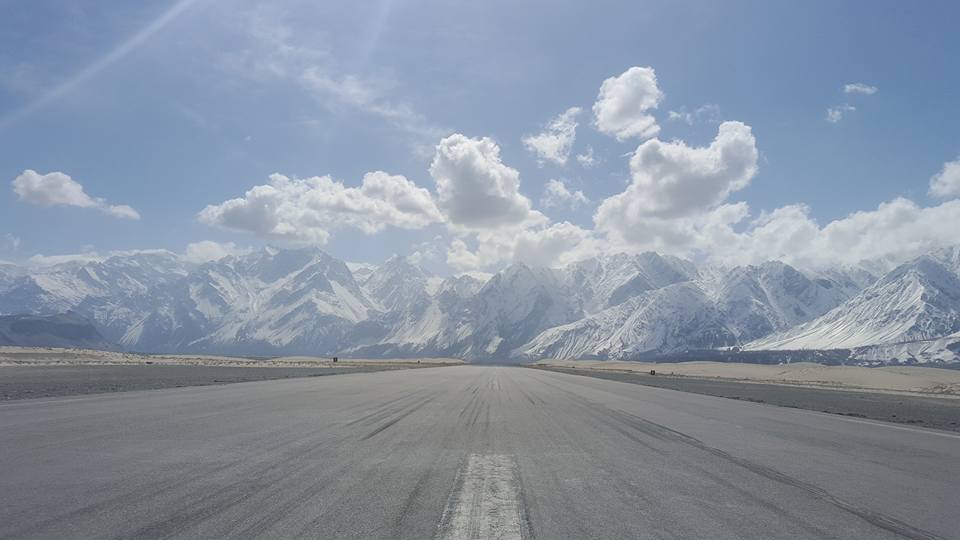
17 - This is what it looks like from the cockpit of an aircraft while taking off from the skardu airport

Share this article on your wall to let your friends and family know about this amazing airport in Pakistan.

Continue Reading

Article

Gold Stamp Commemorating the Birth Centenary of Quaid-i-Azam Muhammad Ali Jinnah (1976)

Published

on

By

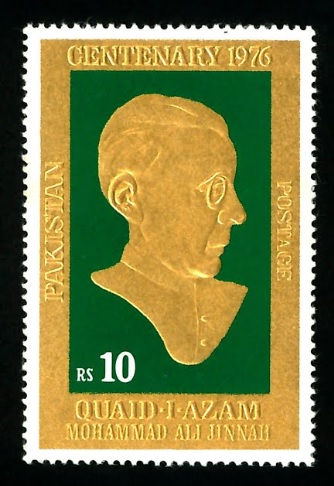
On 25th December 1976, a unique and historic postage stamp was issued to commemorate the Birth Centenary of Quaid-i-Azam Muhammad Ali Jinnah, the founding father of Pakistan. This remarkable stamp stands out as a significant milestone in Pakistan’s philatelic history, as it was the first postage stamp of the country to be manufactured using a special silk screen process.

A Golden Tribute

The Gold Stamp was created by De Cartar SA, a renowned manufacturer, and is celebrated not just for its aesthetic and commemorative value, but also for its intrinsic worth. Each stamp contains 25 milligrams of 23/24 carat gold, making it a collector’s item of both historical and material value. This distinctive feature underscores the significance of the centenary, honoring the life and legacy of Muhammad Ali Jinnah, whose leadership and vision led to the creation of Pakistan.

Design and Craftsmanship

The use of the special silk screen process allowed for intricate details to be captured in the stamp, reflecting the dignity and stature of Jinnah. The incorporation of gold adds a luxurious and solemn touch, symbolizing the esteem in which Quaid-i-Azam is held in Pakistan. The stamp was part of a series of commemorative efforts in 1976, which included national celebrations, seminars, and tributes dedicated to the memory of Jinnah.

Historical Significance

This gold stamp not only commemorates the 100th birth anniversary of Quaid-i-Azam but also marks a landmark achievement in Pakistan’s postal history. The combination of advanced manufacturing techniques and the use of precious metal sets it apart as a unique artifact of national pride.

Today, the 1976 Gold Stamp remains a treasured item among philatelists and historians, symbolizing the enduring respect for Quaid-i-Azam Muhammad Ali Jinnah and his invaluable contribution to the formation of Pakistan.

GOLD STAMP FOLDER

  • ENVELOP GOLD STAMP
  • Title: Gold Stamp
  • Creator: De Cartar SA
  • Date Created: 1976
  • Special Features: 25 mg 23/24 carat gold, manufactured using a silk screen process
Continue Reading

Article

Udren Glacier: A Hidden Gem in Chitral’s Majestic Landscape

Published

on

By

The Udren Glacier, nestled in the heart of the Chitral region in Pakistan, is a pristine natural wonder that remains relatively unknown to the broader public. Situated in the shadows of some of the most imposing peaks of the Hindu Kush mountain range, this glacier exemplifies the awe-inspiring beauty and environmental importance of the northern areas of Pakistan. Chitral, known for its diverse landscapes, offers a mix of deep valleys, towering mountains, and expansive glaciers like Udren, making it a key destination for nature lovers and mountaineers alike.

Location and Access

Udren Glacier is located in the Upper Chitral District, part of the larger Chitral valley that stretches along the western part of the Hindu Kush range. The glacier is situated in a remote region, making access challenging but rewarding for adventurous trekkers and climbers. The glacier is close to the Tirich Mir massif, the highest peak in the Hindu Kush, making it part of a larger, dramatic mountainous landscape.

The most common access point for Udren Glacier is through the village of Tirich, a base camp for mountaineers aiming to scale Tirich Mir. From here, adventurers can trek towards the glacier, passing through rugged terrain, serene meadows, and traditional Chitrali villages. The journey to Udren Glacier offers a glimpse of the region’s untouched wilderness and an opportunity to connect with the local culture.

Geographical Features

Udren Glacier is a large, perennial glacier that serves as a critical water source for the surrounding valleys. It is part of the glacial system that feeds into the Mastuj River, which in turn contributes to the Chitral River. Like many glaciers in the Hindu Kush region, Udren is a key player in the hydrological cycle, providing essential meltwater for agriculture and human consumption in the valley below.

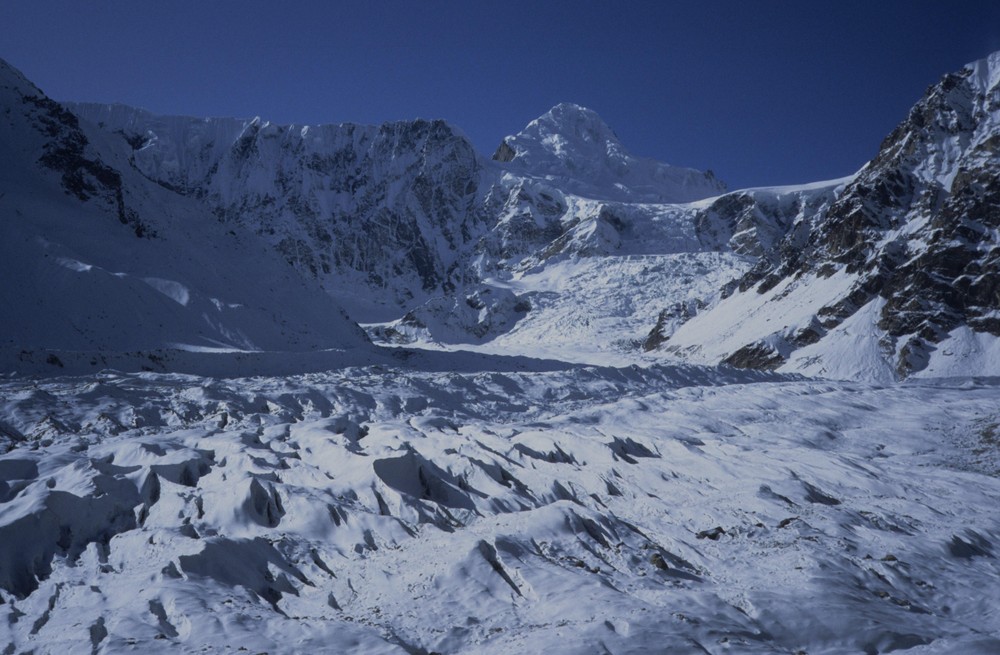
The glacier itself is characterized by its massive ice formations, crevasses, and moraines, all set against a backdrop of steep, snow-capped peaks. The area around the glacier is known for its alpine flora and fauna, offering a habitat for species adapted to the cold, high-altitude environment.

Climatic Importance

Like other glaciers in the Hindu Kush-Himalaya region, Udren Glacier is facing the impacts of climate change. Glaciers in this region act as “water towers” for millions of people, providing meltwater that sustains ecosystems, agriculture, and human populations downstream. However, rising global temperatures have led to the accelerated melting of glaciers, including Udren, which poses risks of glacial lake outburst floods (GLOFs) and long-term water scarcity in the region.

For local communities, the Udren Glacier not only provides water but also plays a role in maintaining the local microclimate. The glacier’s meltwater is crucial for irrigation, particularly in the high-altitude farming systems that are typical of the region.

Mountaineering and Adventure Tourism

The Udren Glacier is part of a broader network of glaciers and peaks that make Chitral a magnet for mountaineers. Trekkers and climbers often pass through Udren Glacier en route to Tirich Mir or other peaks in the Hindu Kush range. While not as well-known as Baltoro or Biafo glaciers in the Karakoram, Udren offers a more secluded and less-trodden path for those seeking adventure in one of the world’s most rugged mountain landscapes.

Visitors to Udren Glacier can also experience the rich cultural heritage of the Chitrali people. The region is home to a unique blend of ancient traditions, languages, and lifestyles, offering a glimpse into a way of life that has persisted for centuries in harmony with the harsh mountain environment.

Continue Reading

Article

Rupal Glacier: A Majestic Icy Giant in the Heart of the Himalayas

Published

on

By

The Rupal Glacier is a breathtaking and formidable glacier located in the Rupal Valley, in the Astore District of Pakistan’s Gilgit-Baltistan region. This massive ice flow is nestled beneath the towering Nanga Parbat, the ninth-highest mountain in the world, and is part of the greater Himalayan mountain range. The Rupal Glacier is not just a geographical marvel but also a significant contributor to the region’s ecosystem and a point of interest for mountaineers and trekkers from around the world.

Geographic Location and Surroundings

The Rupal Glacier is situated on the southern slopes of Nanga Parbat, often referred to as the “Killer Mountain” due to the challenges it poses to climbers. The glacier lies within the Rupal Valley, a pristine and remote valley that is characterized by its lush green meadows, dense forests, and the stunning backdrop of towering peaks. The valley is accessible from the town of Astore, and the journey to the glacier involves a trek that is as challenging as it is rewarding, offering spectacular views of the surrounding landscapes.

Physical Characteristics

  • Type: Valley Glacier
  • Length: Approximately 13 kilometers (8 miles)
  • Width: Varies; narrow at the head, wider at the lower end
  • Elevation: Ranges from around 3,500 meters (11,500 feet) at the terminus to over 6,000 meters (19,700 feet) near Nanga Parbat
  • Surrounding Peaks: Nanga Parbat (8,126 meters), Laila Peak, Rupal Peak

Glacial Features

  • Crevasses: Deep fissures present due to the glacier’s movement over uneven terrain.
  • Moraines: Extensive lateral and terminal moraines composed of rock debris carried by the glacier.
  • Icefall: Steeper sections of the glacier where ice movement causes it to break into blocks and form seracs.

Climate and Environment

  • Temperature: Cold alpine climate, with temperatures often dropping below freezing, particularly in the higher elevations.
  • Precipitation: Primarily snowfall, which feeds the glacier, with minimal rain due to the high altitude.
  • Retreat and Advance: The glacier has shown signs of retreat, similar to many glaciers worldwide, due to global warming and climate change.

Hydrological Importance

  • Water Source: The glacier is a crucial source of meltwater that feeds into the Rupal River, a tributary of the Astore River, which eventually contributes to the Indus River system.
  • Seasonal Flow: Melting increases in the summer, leading to higher river flows, essential for agriculture and daily use in the region.

Access and Trekking

  • Nearest Town: Astore, approximately 50 kilometers from the glacier.
  • Trekking Route: Accessed via a trek through Rupal Valley, often starting from the village of Tarashing.
  • Trek Difficulty: Moderate to strenuous, depending on weather conditions and altitude acclimatization.
  • Best Time to Visit: June to September, when the weather is relatively stable, and snow cover is minimal.

Mountaineering Significance

  • Rupal Face: The glacier is the gateway to the Rupal Face of Nanga Parbat, a 4,600-meter vertical wall that is one of the most challenging climbs in the world.
  • Historical Expeditions: The first successful ascent of the Rupal Face was made in 1970 by an Austrian team, a milestone in mountaineering history.

Ecological and Cultural Context

  • Flora and Fauna: The surrounding areas of the glacier are home to alpine flora and fauna, including rare species adapted to the harsh environment.
  • Local Communities: Inhabited by the Shina and Balti people, who have a deep cultural connection to the land and rely on its resources for sustenance.
  • Cultural Significance: The glacier and surrounding mountains hold spiritual and cultural importance for the local communities, often featuring in folklore and traditional practices.

Continue Reading

Most Popular

English اردو