Connect with us

Pakistan

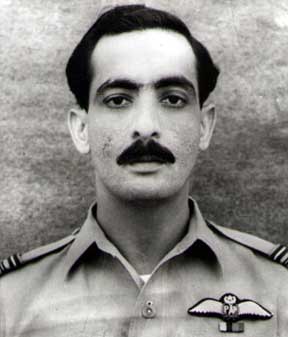
Squadron Leader Sarfaraz Ahmed Rafiqui: A Legacy of Valor and Sacrifice

Published

on

Squadron Leader Sarfaraz Ahmed Rafiqui, an iconic figure in the history of the Pakistan Air Force (PAF), is remembered for his exceptional bravery, leadership, and ultimate sacrifice during the Indo-Pakistani War of 1965. His actions have earned him a revered place among the heroes of Pakistan, and his legacy continues to inspire generations of military personnel and civilians alike. Awarded Pakistan’s highest military honor, the Hilal-e-Jurat and Sitara-e-Jurat, Rafiqui’s life and career reflect the highest ideals of service and patriotism.

Early Life and Military Career

Sarfaraz Ahmed Rafiqui was born on July 18, 1935, in Rajshahi, British India (now in Bangladesh). From an early age, Rafiqui exhibited qualities of leadership, discipline, and a strong sense of duty—traits that would later define his military career. He was accepted into the Pakistan Air Force Academy, Risalpur, where he quickly distinguished himself as an outstanding cadet, graduating with honors.

After receiving his commission as a pilot officer in 1953, Rafiqui underwent rigorous training in various aircraft, including the F-86 Sabre, which would become a key element in his operational career. His early assignments were marked by rapid promotions, reflecting his exceptional skill as a pilot and his natural aptitude for leadership.

The Indo-Pakistani War of 1965

The Indo-Pakistani War of 1965 was a critical moment in Rafiqui’s career and the history of the PAF. The conflict, which erupted over the disputed region of Kashmir, saw intense air battles between the Indian and Pakistani air forces. Squadron Leader Rafiqui was serving as a flight commander in No. 5 Squadron, known for its elite fighter pilots and strategic importance in the conflict.

September 6, 1965 – The Battle Over Indian Airspace: On September 6, 1965, Rafiqui led a formation of three F-86 Sabre jets on a strike mission against an Indian Air Force (IAF) base in Halwara, India. The mission was part of a broader effort to neutralize the IAF’s air superiority and gain a strategic advantage in the war. As the formation approached the target, they encountered a fierce defensive response from Indian fighters, leading to a dramatic dogfight in the skies over Halwara.

During the engagement, Rafiqui’s Sabre experienced a critical gun malfunction, rendering him unable to continue the fight effectively. Demonstrating exceptional courage and commitment to his mission, Rafiqui chose not to retreat but instead handed over the leadership of the formation to his wingman, Flight Lieutenant Cecil Chaudhry, and stayed in the combat zone to support his team. His decision allowed his wingman to press the attack, but it also put Rafiqui in a vulnerable position.

As the battle intensified, Rafiqui’s aircraft was hit by enemy fire, leading to his tragic martyrdom. His actions during the engagement displayed an extraordinary level of selflessness and bravery, embodying the highest standards of military conduct.

Legacy and Honors

Sarfaraz Ahmed Rafiqui’s legacy is immortalized in the annals of Pakistan’s military history. For his bravery and sacrifice, he was posthumously awarded the Nishan-e-Haider, Pakistan’s highest military award for valor. The award citation highlighted his gallantry, leadership, and willingness to sacrifice his life in the defense of his nation.

In addition to the Nishan-e-Haider, Rafiqui’s contributions have been commemorated in various other ways. The Pakistan Air Force named one of its premier airbases, Rafiqui Airbase (formerly known as Shorkot Airbase), in his honor. This base plays a critical role in Pakistan’s defense strategy and serves as a constant reminder of the values that Rafiqui embodied.

Rafiqui’s story is also a central part of the PAF’s educational and training programs, where it serves to inspire new generations of pilots and officers. His actions during the 1965 war are studied as examples of tactical brilliance, leadership under pressure, and the ultimate sacrifice for the nation.

Pakistan

Dr. Abdul Qadeer Khan: 90 Years of Legacy, Strength, and National Pride

Published

on

By

Today, April 1, 2026, marks the 90th birth anniversary of Abdul Qadeer Khan — the renowned scientist widely celebrated as the “Father of Pakistan’s Nuclear Program.”

On this day, the nation remembers not just a scientist, but a symbol of determination, resilience, and national sovereignty. His name is deeply etched in the history of Pakistan as the man who transformed the country’s strategic future and strengthened its defense.


Early Life and Education

Dr. Abdul Qadeer Khan was born on April 1, 1936, in Bhopal, then part of British India. After the partition of 1947, his family migrated to Pakistan, where his journey of excellence began.

With a strong passion for science and engineering, he pursued higher education in Europe, specializing in metallurgy and nuclear science. His academic journey equipped him with the expertise that would later change the destiny of Pakistan.


The Defining Mission

The turning point in Dr. Khan’s life came after the 1971 war, which exposed Pakistan’s strategic vulnerabilities. At a time when the nation needed strength and confidence, Dr. Khan stepped forward with a vision.

He returned to Pakistan and joined efforts to develop the country’s nuclear capability. Through his leadership, dedication, and scientific brilliance, Pakistan moved closer to achieving strategic deterrence.


Building a National Capability

Dr. Khan played a central role in establishing the Kahuta Research Laboratories, later named in his honor. His work focused on uranium enrichment, a critical component of nuclear technology.

Despite facing:

  • International pressure
  • Limited resources
  • Technological challenges

He and his team worked tirelessly, driven by a single goal: to ensure Pakistan’s security and independence.


A Historic Milestone

On May 28, 1998, Pakistan conducted its nuclear tests, becoming the first Muslim nuclear power and the seventh nuclear state in the world.

This historic achievement marked a defining moment in Pakistan’s history. It was seen as a demonstration of national strength and scientific capability, and Dr. Abdul Qadeer Khan became a national hero.


A Complex but Powerful Legacy

Dr. Khan’s life was not without controversy. His later years were marked by international scrutiny and political challenges. However, within Pakistan, he remained a deeply respected figure.

For millions, he symbolized:

  • National dignity
  • Scientific achievement
  • Strategic independence

His contributions sparked important discussions about science, ethics, and national security.


A Human Story Behind the Scientist

Beyond his scientific achievements, Dr. Khan was known for his simplicity and connection with the people. He often spoke about education, self-reliance, and national pride.

He believed that the true strength of a nation lies not only in its defense but in the character and unity of its people.


Lessons for the Future

On his 90th birth anniversary, Dr. Abdul Qadeer Khan’s life offers powerful lessons:

  • Vision can change destiny
  • Knowledge is power
  • Nations rise when their people believe in themselves

For the youth of Pakistan, his journey is a reminder that dedication and purpose can shape history.

Continue Reading

Pakistan

Nation celebrates Pakistan Day today

Published

on

By

Pakistan Day is being celebrated with great enthusiasm and national unity across the country today.

The nation is renewing its resolve today to demonstrate more hard work, unity and sacrifice for the development, stability and prosperity of Pakistan.

The day dawned with thirty-one-gun salute in the federal capital and twenty-one-gun salute in provincial capitals.

These salutes were given as a symbol of national dignity, sovereignty and the professional capabilities of the Pakistan’s armed forces.

After Fajr prayer, special prayers were offered for the security, development, prosperity and national unity of the country as well as for the elevation of the ranks of the martyrs.

The national flag was hoisted on important government buildings, which is a symbol of national dignity and cohesion.

On the occasion of Pakistan Day, the entire nation is united and adorned with the noble resolve to work together for the progress and prosperity of the country.

Continue Reading

Pakistan

MOTTO:- Iman, Taqwa, Jihad-fi-Sabilillah.

Published

on

By

AikQaum Identity Caption

“AikQaum stands on three timeless principles: Iman (Faith), Taqwa (Integrity), and Jihad-fi-Sabilillah (Striving in the path of Allah).

Iman: To have faith and trust in Allah and consider oneself a follower of none but Allah, and a follower of none but his messenger.
Taqwa: The fear of Allah. Guarding ones tongue, hands and heart from evil. Righteous, piety and good conduct.
Jihad-fi-Sabilillah: The real objective of Islam is to shift the lordship of man over man to the lordship of Allah on the earth and to stake one’s life and everything else to achieve this sacred purpose.

Source:- https://ispr.gov.pk/

Continue Reading

Most Popular

English اردو