Connect with us

Pakistan

MOTTO:- Iman, Taqwa, Jihad-fi-Sabilillah.

Published

on

AikQaum Identity Caption

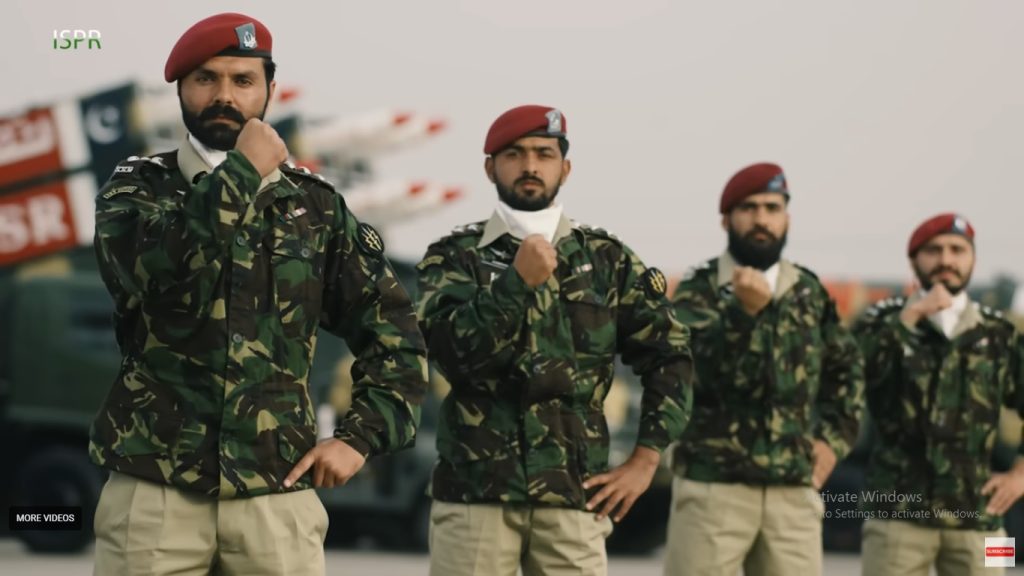
“AikQaum stands on three timeless principles: Iman (Faith), Taqwa (Integrity), and Jihad-fi-Sabilillah (Striving in the path of Allah).

Iman: To have faith and trust in Allah and consider oneself a follower of none but Allah, and a follower of none but his messenger.
Taqwa: The fear of Allah. Guarding ones tongue, hands and heart from evil. Righteous, piety and good conduct.
Jihad-fi-Sabilillah: The real objective of Islam is to shift the lordship of man over man to the lordship of Allah on the earth and to stake one’s life and everything else to achieve this sacred purpose.

Source:- https://ispr.gov.pk/

Pakistan

Defending the Sovereignty of Pakistan as “Aik Qaum” (One Nation)

Published

on

By

The concept of “Aik Qaum” (One Nation) embodies the unity, collective will, and shared responsibility of every citizen of Pakistan in safeguarding the nation’s sovereignty. Defending the sovereignty of a country goes beyond just military strength; it involves the entire nation standing united as one. In Pakistan, sovereignty is not the sole responsibility of the armed forces or the government—it is a collective duty shared by every individual, institution, and group that identifies as Pakistani.

Unity as the Core of Sovereignty

Pakistan’s strength lies in its diversity—its people come from various ethnicities, languages, and cultures, yet they are bound by the common identity of being Pakistani. This diversity, when unified under the banner of “Aik Qaum”, becomes the true force that defends and upholds the sovereignty of the country.

Quaid-e-Azam Muhammad Ali Jinnah, the founder of Pakistan, emphasized Unity, Faith, and Discipline as the guiding principles for the nation. In today’s world, these principles remain as relevant as ever. By standing as “Aik Qaum,” the people of Pakistan can collectively counter any external threats, internal challenges, or ideological battles that may undermine the nation’s integrity.

1. The Role of the Armed Forces and Security Institutions

While the Pakistan Armed Forces are the physical defenders of the country’s territorial integrity, their strength comes from the support they receive from the nation. As “Aik Qaum,” the people of Pakistan proudly stand behind their military, providing unwavering moral and emotional support. The army, navy, air force, and security agencies, including the Inter-Services Intelligence (ISI), work tirelessly to defend the borders, skies, and seas from external threats.

However, the armed forces are not alone in this mission. Citizens, civil society, and government institutions are equally vital in supporting these defense efforts by fostering national unity and solidarity. When every individual sees themselves as part of the collective defense of the nation, the country becomes stronger.

2. Sovereignty in the Face of Internal Challenges

Sovereignty isn’t just threatened by external forces. Pakistan has, at times, faced internal challenges such as sectarianism, political instability, and economic hardships that have tested the fabric of national unity. However, when Pakistanis rise above their differences and work toward the common good, they become a resilient force capable of defending the country’s sovereignty from within.

As “Aik Qaum,” Pakistanis can overcome internal divisions by promoting tolerance, justice, and harmony. Defending sovereignty also means ensuring that the values of peace, democracy, and social justice are upheld within the country. Only when the people are united internally can they effectively defend the nation from external threats.

3. Civic Responsibility: A Duty of Every Pakistani

Defending the sovereignty of Pakistan isn’t limited to soldiers on the battlefield; it is also the duty of every citizen. Civic responsibility plays a crucial role in maintaining national integrity. This includes:

  • Participating in the Democratic Process: Voting in elections, staying informed about national policies, and holding leaders accountable are vital in ensuring that Pakistan remains a strong and sovereign state. As “Aik Qaum,” citizens must engage actively in the country’s political system to strengthen democratic governance.
  • Countering Misinformation: In the age of information warfare and fifth-generation warfare, misinformation, and disinformation can erode national unity and undermine sovereignty. By being responsible citizens, verifying information, and promoting accurate narratives, Pakistanis defend the nation’s sovereignty against psychological and ideological warfare.
  • Supporting National Causes: Whether it’s contributing to national development, supporting Pakistan’s armed forces, or participating in social welfare, every citizen has a role to play. From students to professionals, from farmers to business leaders—each individual’s contributions strengthen the fabric of the nation.

4. Youth and the Future of Pakistan’s Sovereignty

Pakistan is blessed with a youthful population, full of energy, creativity, and potential. The youth, as the future of Pakistan, hold a significant role in defending the nation’s sovereignty. Their participation in nation-building, education, technology, and innovation will help Pakistan face modern challenges with confidence and competence.

Programs like National Digital Cadet Corps in schools and colleges can inspire the younger generation to take an active interest in the defense and technological advancement of the country. Through education and civic engagement, young Pakistanis can carry forward the mission of “Aik Qaum” to protect and strengthen the nation’s sovereignty for generations to come.

5. Economic Sovereignty and National Unity

A truly sovereign state is also economically independent. By promoting economic growth, creating jobs, and encouraging local industry, Pakistan can reduce its reliance on external forces and strengthen its national resilience. The China-Pakistan Economic Corridor (CPEC) and other infrastructure projects are examples of how Pakistan is taking steps toward economic sovereignty. However, it is the collective effort of every Pakistani—whether as a laborer, entrepreneur, or policy-maker—that will turn economic sovereignty into a reality.

When the people work as “Aik Qaum,” they contribute to the country’s economic progress, which in turn enhances Pakistan’s sovereignty on the global stage.

6. Cultural and Ideological Sovereignty

Cultural identity and ideological sovereignty are also important pillars in defending Pakistan’s overall sovereignty. Pakistan’s rich history, values, and traditions must be preserved and promoted. As “Aik Qaum,” the nation must resist external cultural and ideological influences that could erode its core values.

By fostering patriotism, promoting national heritage, and celebrating Islamic values alongside tolerance and inclusivity, Pakistan can ensure that its sovereignty extends beyond borders to the hearts and minds of its people.

Conclusion

The defense of Pakistan’s sovereignty as “Aik Qaum” is not just the responsibility of the military or the government, but a shared responsibility among all Pakistanis. From the armed forces and intelligence agencies to the everyday citizen, everyone has a role to play in ensuring that the country remains strong, united, and free from external and internal threats.

As one united nation, Pakistan can overcome any challenge, secure its borders, uphold its values, and ensure a prosperous future. The spirit of “Aik Qaum” represents the essence of national unity and the unwavering commitment of the people to defend the sovereignty of their beloved homeland, Pakistan. Pakistan Zindabad!

Continue Reading

Pakistan

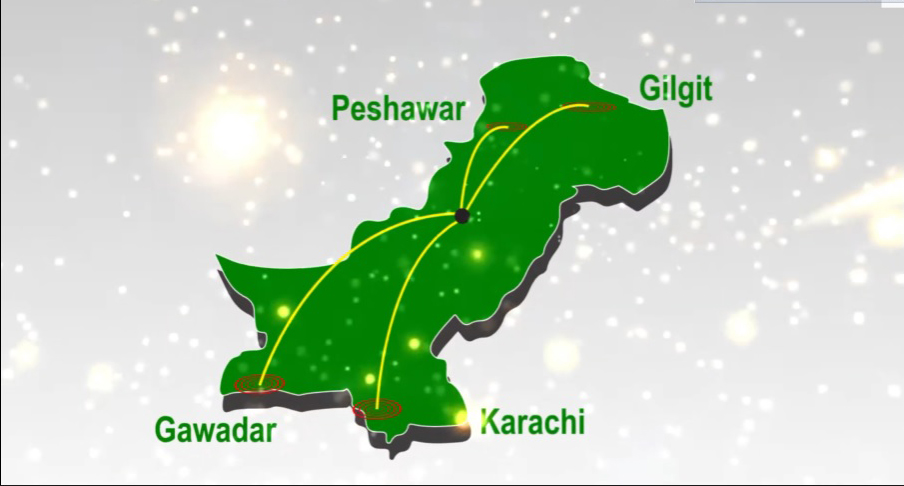
Gilgit Say Gwadar, Karachi Say Peshawar, Aik Qaum

Published

on

United Pakistan

Gilgit Say Gwadar, Karachi Say Peshawar, Aik Qaum is a perfect phrase to describe the concept of united Pakistan. The lining of the map is zigzag but a stream of patriotism flows straight from the top point to the bottom and then rises from the bottom to the top. People at one end of this country hold differences like that of culture, climate, and adaptation. And this distinction remains the same at every end of the country. However, all the diversities are fully respected and enjoyed by the people of Pakistan. Because all belong to one nation (AikQaum) and that is Pakistani.

 Gilgit Baltistan is the northern end of Pakistan that is a bouquet of various ethnic groups with variations in lifestyle and tradition. But all of them love and care for each other. This part of Pakistan is a hub of tourism. It connects the rest of the country with China and that makes it strategic. The talented masses have always been presenting Pakistan internationally. The people never wait for a second when there is a chance of sacrifices. There are hundreds of Lalak Jans who are ready to protect this land at any cost. And millions of them are fearless to climb the height. Their determination towards destinies takes us to the storyline from Ali Sadpara to Samina Baig.

However, Gwadar is the hub of natural resources and a strategic connector. It is the womb to CPEC. And CPEC is the game changer and key to the progress of not just Pakistan and China but also to the neighboring countries. The strategic location of the Gwadar makes Pakistan the strategic connector and presents it as a route to reach out to most of the world. The under-construction projects of Gwadar have created opportunities for overall Pakistanis, especially for the lower class.

Whereas Karachi is home to a range of industries that generate the revenue of the country. The city of light is the capital of Sindh province. It is a transport hub and is home to Pakistan’s two largest seaports, the Port of Karachi and Port Bin Qasim, as well as Pakistan’s busiest airport, the Jinnah International Airport. Karachi serves the country with the influx of goods and foreign visitors.

Moreover, the Punjab province connects the city of light with the city of flowers. The second-largest province of Pakistan in the field of agriculture. It makes Pakistan the agricultural land and provides nutrients not just to its own people but also to the world. Further, this province is the center of attraction for people because of its historical importance. This part has preserved the old heritage. It invites from all over the country for getting top-class education.

Besides this, KPK province completes the circle. As it connects back to Gilgit Baltistan. This province is the tourist hotspot for adventurers and explorers. The province has a varied landscape ranging from rugged mountains, valleys, hills, and dense agricultural farms. Pakhtoons are famous for their bravery and loyalty. They have always played a keen role in the protection of this country’s borders. It shares borders with Afghanistan that makes it strategic.

Despite the difference Pakistanis are one nation (AikQaum) and Pakistan is from Gilgit Say Gwadar, Karachi Say Peshawar. As a nation “We keep integrity closest to our heart and patriotism at the top of our mind.” And this is how we are a united nation and this is united Pakistan.

Continue Reading

Pakistan

Literary Figures are the narrator of the History

Published

on

By

Languages and cultures are true representatives of any nation. They speak out louder even after many centuries when they are preserved. But it depends upon their preservation. They cannot be enclosed in some closet or sealed packs but in form of verses, prose, fiction, and scripts. Literary figures are the people who preserved them in pages and generations after generations keep reading them to understand their past and to plan their present and future. Therefore literary people are the most honorable and important models of any society. They are the actual high-profile people.

However, every region is blessed with such high-profile people who can replicate histories for hundreds of years. Likewise, Balochi literature is also preserved by some of the great names. Among all those literary legends Syed Zahoor Shah Hashmi is one who made tremendous contributions.

About

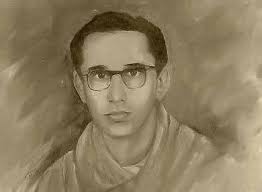
Syed Zahoor Shah Hashmi was born in the port city of Gwadar, on the 21st of April in 1926. He grew up to be an extraordinary poet, an intellectual, an academic, and a notable philosopher. He has made noteworthy contributions to Balochi literature. He is considered to be one of the most important Baloch figures. The talented figure had a strong grip on other languages like Urdu, Arabic, Persian, and Sanskrit apart from Balochi. Syed Zahoor Shah Hashmi is among the few who had been bestowed with the award of pride of performance which is considered to be the prestigious award in the Islamic Republic of Pakistan. This award is awarded to such people who have marked outstanding contributions in the fields of art, science, literature, education and sports.

Moreover, Syed Zahoor Shah Hashmi received his early education from the Saeedia School and also learned from his father. The learning atmosphere developed a keen interest in literature and writing at an early age. His first serenade by the name of “nagumani chist bant darkayant oparag mani” as a result of his hard work and encouragement from his peer Qasim Hoot. He was having an extraordinary attachment and love for his mother tongue that led him to dedicate his entire for the revival of the Balochi Language.

His Journey as a writer

His affection towards the preservation of Baloch culture and literature persuaded him to learn different dialects of the Balochi language. For that, he traveled and learned different stylistics and presented them outstandingly.  His aim was to master his language so that he could truly revive it for the coming generation. He found the words that had not been in use anymore and used them in his works. He also worked to eradicate common mistakes that people made while learning and writing Balochi. In order to do this, he wrote about Balochi grammar in his noteworthy book called “Balochi Syahag-e-rast nibisag”.

Furthermore, one of his greatest achievements in this respect was the first-ever Balochi dictionary called “Syed Ganj”. This dictionary carried within it, hundreds of thousands of Balochi words with their meanings, illustrations, and even the antonyms with examples of how they can be used. This dictionary was later published by the Hashmi Academy in Lyari, Karachi.

A novel of Syed got fame in Pakistan as it was adopted by Pakistan Television (PTV) Bolan. This novel is called “Nazuk” which is one of his amazing literary works. In his novel, he shed light on the lives of the women of Gwadar and the people who live near the coast. The lives of women have not been highlighted by many writers. So, writing specifically about women who lived near the coast was an initiative to reckon with. Urdu scholar Ghaos Bakhsh Sabir later translated his novel to Urdu which was then published by the Pakistan Academy of Letters in Islamabad.

The writing style of Syed encapsulated his love for his motherland and his mother tongue. It encouraged the youth of his land to stand together in love and unity for their nation. He has preserved the real culture of Balochistan that is open for every culture lover.

Continue Reading

Most Popular

English اردو