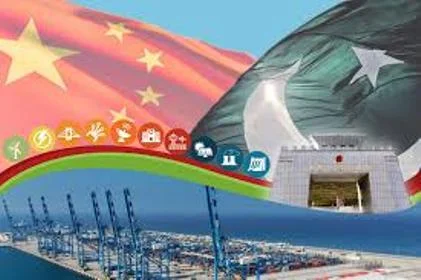
ISLAMABAD, May 17 (APP): The four Special Economic Zones (SEZs), work on which is continuing at full swing, would create as many as 1.47 million jobs besides playing an important role in promoting local industry to lead the country towards sustainable economic growth.
“The four SEZs including Rashakai M-1 Nowshera; Dhabeji Thatta; Allama Iqbal Industrial City Faisalabad and Bostan Balochistan would create around 475,000 direct and 1,000,000 indirect jobs all across the country,” senior official of Board of Investment (BoI) told APP here Monday.
Talking to APP, the official said these SEZ, which are part of China Pakistan Economic Corridor (CPEC) would promote overall industrial growth in the country, adding that development of these four zones was top priority of the government.
He was of the view that Pak-China industrial cooperation would make Pakistan a manufacturing hub in the region while the establishment of industrial zones would create vast investment opportunities for local industrialists.
The 1000 acre Rashkai Economic Zone has attracted at more than 2,000 domestic and foreign investments in different sectors of economy, hence promote rapid industrialization.
He said that the zone would be developed in three phases and as per the plan 247 acres of land would be developed in the first phase, 355 acres in the second phase and 399 acres in the third phase.
Likewise, the federal government would provide 210 MW electricity to the zone in three phases while it had also earmarked Rs 1203 million for gas for this zone.
The zone will provide employment to 80% locals, he said adding that Rashakai has the potential to become a hub of economic activity.
He said Rashakai Special Economic Zone is connected to all the provinces of Pakistan through airports, dry ports, railway stations, motorways and highways. The zone is located at the confluence of the five major districts of KPK, Nowshera, Mardan and Swabi, Charsadda and Peshawar.
He said that there is fertile land in the adjoining districts, which is suitable for growing a variety of cash crops and vegetables. The SEZ would cover more than 400 industries, including garments and textile products, home appliances, general commercial goods, electronics and electrical appliances, automobiles and mechanical equipment.
Meanwhile, talking to APP the Adviser to Commerce and Investment, Abdul Razak Dawood said the Special Economic Zones (SEZs) was a milestone for economic and industrial development in Pakistan.
The Special Economic Zone would pave the way for foreign investment, setting a milestone in industrial modernization and diversification in the country, the Adviser said.
He said that the Rashakai Special Economic Zone (SEZ) would set a new direction for modern industrialization in Pakistan and bring huge Foreign Direct Investment (FDI) in the country.
Replying to a question on shift of industries from China to Pakistan, he said that “We are looking to welcome the Chinese industries in our SEZs to Joint Venture (JVs) with local investors and also share the mutual experience for benefiting the local industries.
He said the government was prioritising development of special economic zones (SEZs) for attracting foreign direct investment (FDI) and transfer of technology into the country.
“The SEZs are primarily focused on industrialization that result in export promotion, import substitution, transfer of technologies and employment generation, which are the primary targets of our government as well,” he said.
The advisor said the establishment of SEZs was critical to resolving balance of payment issues as ”we tend to give priority to enterprises which are involved in export generation or import substitution” he said.
He said that Rashakai SEZ is the flagship project of CPEC and its success will further strengthen Industrial Cooperation between Pakistan and China.
He said the development of Rashakai SEZ had a huge strategic implication, because it is closer to resource rich Central Asian Republics (CARs) and also plays a role for economic integration of the region.
He said that all of these SEZs would have far-reaching socio-economic impact in the region by attracting more investment, spurring industrialization, creating employment in the industry and ensuring export led-growth.
He said that Pakistan’s proximity with China would allow these SEZs to foster economic interdependence for mutual economic advantage.
Replying to another question, he said that Rashakai SEZ held a unique competitive advantage due to its proximity to the first juncture of CPEC route, and significant resource and manufacturing base in the region.
Replying to another question about the most priority sector for future investment in Pakistan, he said that textiles value addition, Information Technology, Logistic, Tourism and housing are the major sectors for the government to bring foreign investment in these areas.
As summer deepens across Pakistan, a much-awaited delight arrives with it—the mango season. Revered as the “King of Fruits,” the mango is more than just a seasonal treat; it is a symbol of Pakistan’s agricultural strength, cultural richness, and global identity.
A Natural Bond Between Pakistan and Mangoes
Pakistan ranks among the world’s leading mango-producing countries. The fertile lands of Punjab and Sindh, combined with an ideal climate, create perfect conditions for cultivating premium-quality mangoes. Regions like Multan, Rahim Yar Khan, Mirpur Khas, and Hyderabad are internationally recognized for producing some of the finest varieties.
Iconic Varieties — Every Taste Tells a Story
Pakistan offers an extraordinary range of mango varieties, each with its own flavor profile, aroma, and texture:
Chaunsa — exceptionally sweet, juicy, and globally loved
Sindhri — large in size, aromatic, and smooth-textured
Anwar Ratol — small but intensely sweet and flavorful
Dussehri — soft, fragrant, and delicately textured
Langra — unique taste with a balanced sweet-tangy note
These varieties are cherished both locally and internationally, making Pakistani mangoes a global favorite.
Exports — Sharing Pakistan’s Sweetness with the World
Every year, Pakistan exports thousands of tons of mangoes to the Middle East, Europe, the United Kingdom, and North America. Their natural sweetness, rich aroma, and superior quality give them a competitive edge in international markets.
For overseas Pakistanis, mangoes are more than fruit—they are a taste of home, a memory of childhood, and a connection to their roots.
Agricultural Value and Farmers’ Dedication
Mango cultivation is a labor-intensive process that requires:
Careful orchard management
Protection from extreme weather
Timely harvesting
Proper packaging and logistics
Pakistani farmers are increasingly adopting modern techniques to improve yield and maintain global quality standards, ensuring sustainability and competitiveness.
Cultural Significance — More Than Just a Fruit
In Pakistan, mangoes are not merely eaten—they are celebrated:
Family gatherings often revolve around mango feasts
Traditional “mango parties” are a seasonal highlight
Generations share memories tied to this beloved fruit
Mangoes hold a special place in the country’s cultural fabric.
Health Benefits
Beyond their irresistible taste, mangoes offer numerous health benefits:
Rich in Vitamins A and C
Boost immunity
Aid digestion
Provide natural energy
A Season of Celebration
From June to August, Pakistan transforms into a vibrant mango hub:
Markets overflow with golden hues
The fragrance fills streets and homes
People travel far to buy the best quality mangoes
“This is not just a mango—it is the taste of Pakistan, reaching the world.”
Today, April 1, 2026, marks the 90th birth anniversary of Abdul Qadeer Khan — the renowned scientist widely celebrated as the “Father of Pakistan’s Nuclear Program.”
On this day, the nation remembers not just a scientist, but a symbol of determination, resilience, and national sovereignty. His name is deeply etched in the history of Pakistan as the man who transformed the country’s strategic future and strengthened its defense.
Early Life and Education
Dr. Abdul Qadeer Khan was born on April 1, 1936, in Bhopal, then part of British India. After the partition of 1947, his family migrated to Pakistan, where his journey of excellence began.
With a strong passion for science and engineering, he pursued higher education in Europe, specializing in metallurgy and nuclear science. His academic journey equipped him with the expertise that would later change the destiny of Pakistan.
The Defining Mission
The turning point in Dr. Khan’s life came after the 1971 war, which exposed Pakistan’s strategic vulnerabilities. At a time when the nation needed strength and confidence, Dr. Khan stepped forward with a vision.
He returned to Pakistan and joined efforts to develop the country’s nuclear capability. Through his leadership, dedication, and scientific brilliance, Pakistan moved closer to achieving strategic deterrence.
Building a National Capability
Dr. Khan played a central role in establishing the Kahuta Research Laboratories, later named in his honor. His work focused on uranium enrichment, a critical component of nuclear technology.
Despite facing:
International pressure
Limited resources
Technological challenges
He and his team worked tirelessly, driven by a single goal: to ensure Pakistan’s security and independence.
A Historic Milestone
On May 28, 1998, Pakistan conducted its nuclear tests, becoming the first Muslim nuclear power and the seventh nuclear state in the world.
This historic achievement marked a defining moment in Pakistan’s history. It was seen as a demonstration of national strength and scientific capability, and Dr. Abdul Qadeer Khan became a national hero.
A Complex but Powerful Legacy
Dr. Khan’s life was not without controversy. His later years were marked by international scrutiny and political challenges. However, within Pakistan, he remained a deeply respected figure.
For millions, he symbolized:
National dignity
Scientific achievement
Strategic independence
His contributions sparked important discussions about science, ethics, and national security.
A Human Story Behind the Scientist
Beyond his scientific achievements, Dr. Khan was known for his simplicity and connection with the people. He often spoke about education, self-reliance, and national pride.
He believed that the true strength of a nation lies not only in its defense but in the character and unity of its people.
Lessons for the Future
On his 90th birth anniversary, Dr. Abdul Qadeer Khan’s life offers powerful lessons:
Vision can change destiny
Knowledge is power
Nations rise when their people believe in themselves
For the youth of Pakistan, his journey is a reminder that dedication and purpose can shape history.
Pakistan Day is being celebrated with great enthusiasm and national unity across the country today.
The nation is renewing its resolve today to demonstrate more hard work, unity and sacrifice for the development, stability and prosperity of Pakistan.
The day dawned with thirty-one-gun salute in the federal capital and twenty-one-gun salute in provincial capitals.
These salutes were given as a symbol of national dignity, sovereignty and the professional capabilities of the Pakistan’s armed forces.
After Fajr prayer, special prayers were offered for the security, development, prosperity and national unity of the country as well as for the elevation of the ranks of the martyrs.
The national flag was hoisted on important government buildings, which is a symbol of national dignity and cohesion.
On the occasion of Pakistan Day, the entire nation is united and adorned with the noble resolve to work together for the progress and prosperity of the country.