Connect with us

Pakistan

Beauty is in the eye of the Beholder while Pakistan comes into every Eye (Episode 4)

Published

on

Hello Antiquarian…!

What’s up? Is everything okay? I hope you all are bigger than the small problems. Because you are more courageous and you have the ability to do anything. Moreover, if you have a country like Pakistan then there is nothing to worry about. Just disclose all your worries in the lap of the beautiful spots. Because nature and beauty are the best healers. So for today, I invite you all to have our visual tour of some beautiful forts of Pakistan. All of them dispense a great taste of history. And are stunning to look upon.

I don’t want you to wait so let’s begin with the visit of Noor Mahal of Bahawalpur.

 Noor Mahal

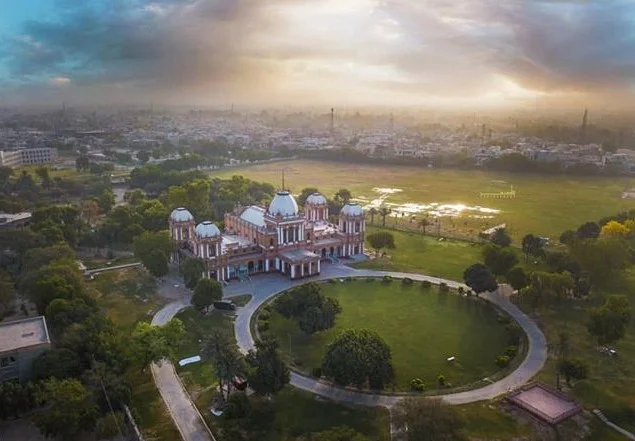
Wow, how to explain this white and off-white body. Look at the domes how perfectly they have been crafted. Do you know about the history of this building? I think you do not as it idea so let be narrate a little about it. This Mahal in Bahawalpur belonged to the Nawab of Bahawalpur princely state, during British Raj. It was built in 1872 like an Italian chateau on neoclassical lines, at a time when modernism had set in. The construction of Noor Palace was undertaken by Nawab Subah Sadiq IV. He made this palace for his wife. Wow, how a loving husband he might be. Anyhow, we can assume about his love. However, she spent only one night there, when she see the adjoining graveyard from her balcony, she refused to spend another night there, and so it remained unused during his reign. This is too much, isn’t it? Noor Mehal is one of the hidden gems of Bahawalpur. Now it is open to the public and currently is the property of the Pakistan Army and is used as a state guest house. You can see in the roof the beautiful thematic painting.

We are already in Bahawalpur so why not visit Derawar Fort. Yes, it is lovely and you all will enjoy it.

Derawar Fort

Don’t you think one cannot be blessed more than us? Now we are in into Derawar Fort. You will be surprised to know about the history of Derawar fort. Let’s have a look over the history as well.

Derawar fort was first built in the 9th century AD by Rai Jajja Bhati, a Hindu Rajput ruler of the Bhati clan as a tribute to Rawal Deoraj Bhati the king of Jaisalmer and Bahawalpur. The fort was initially known as Dera Rawal and later referred to as Dera Rawar, which with time came to be pronounced Derawar. Then in the 18th century, the fort was taken over by Muslim Nawabs of Bahawalpur from the Shahotra tribe. It was later rebuilt in its current form in 1732 by the Abbasi ruler Nawab Sadeq Muhammad.

These are our assets and their visit takes us to the time back. I believe you all are history lovers. So stay there we will visit all the forts and historical places in our country.

Pakistan

Pakistan’s “King of Fruits” — Mango Season Begins

Published

on

By

As summer deepens across Pakistan, a much-awaited delight arrives with it—the mango season. Revered as the “King of Fruits,” the mango is more than just a seasonal treat; it is a symbol of Pakistan’s agricultural strength, cultural richness, and global identity.

A Natural Bond Between Pakistan and Mangoes

Pakistan ranks among the world’s leading mango-producing countries. The fertile lands of Punjab and Sindh, combined with an ideal climate, create perfect conditions for cultivating premium-quality mangoes. Regions like Multan, Rahim Yar Khan, Mirpur Khas, and Hyderabad are internationally recognized for producing some of the finest varieties.

Iconic Varieties — Every Taste Tells a Story

Pakistan offers an extraordinary range of mango varieties, each with its own flavor profile, aroma, and texture:

  • Chaunsa — exceptionally sweet, juicy, and globally loved
  • Sindhri — large in size, aromatic, and smooth-textured
  • Anwar Ratol — small but intensely sweet and flavorful
  • Dussehri — soft, fragrant, and delicately textured
  • Langra — unique taste with a balanced sweet-tangy note

These varieties are cherished both locally and internationally, making Pakistani mangoes a global favorite.

Exports — Sharing Pakistan’s Sweetness with the World

Every year, Pakistan exports thousands of tons of mangoes to the Middle East, Europe, the United Kingdom, and North America. Their natural sweetness, rich aroma, and superior quality give them a competitive edge in international markets.

For overseas Pakistanis, mangoes are more than fruit—they are a taste of home, a memory of childhood, and a connection to their roots.

Agricultural Value and Farmers’ Dedication

Mango cultivation is a labor-intensive process that requires:

  • Careful orchard management
  • Protection from extreme weather
  • Timely harvesting
  • Proper packaging and logistics

Pakistani farmers are increasingly adopting modern techniques to improve yield and maintain global quality standards, ensuring sustainability and competitiveness.

Cultural Significance — More Than Just a Fruit

In Pakistan, mangoes are not merely eaten—they are celebrated:

  • Family gatherings often revolve around mango feasts
  • Traditional “mango parties” are a seasonal highlight
  • Generations share memories tied to this beloved fruit

Mangoes hold a special place in the country’s cultural fabric.

Health Benefits

Beyond their irresistible taste, mangoes offer numerous health benefits:

  • Rich in Vitamins A and C
  • Boost immunity
  • Aid digestion
  • Provide natural energy

A Season of Celebration

From June to August, Pakistan transforms into a vibrant mango hub:

  • Markets overflow with golden hues
  • The fragrance fills streets and homes
  • People travel far to buy the best quality mangoes

“This is not just a mango—it is the taste of Pakistan, reaching the world.”

Continue Reading

Pakistan

Dr. Abdul Qadeer Khan: 90 Years of Legacy, Strength, and National Pride

Published

on

By

Today, April 1, 2026, marks the 90th birth anniversary of Abdul Qadeer Khan — the renowned scientist widely celebrated as the “Father of Pakistan’s Nuclear Program.”

On this day, the nation remembers not just a scientist, but a symbol of determination, resilience, and national sovereignty. His name is deeply etched in the history of Pakistan as the man who transformed the country’s strategic future and strengthened its defense.


Early Life and Education

Dr. Abdul Qadeer Khan was born on April 1, 1936, in Bhopal, then part of British India. After the partition of 1947, his family migrated to Pakistan, where his journey of excellence began.

With a strong passion for science and engineering, he pursued higher education in Europe, specializing in metallurgy and nuclear science. His academic journey equipped him with the expertise that would later change the destiny of Pakistan.


The Defining Mission

The turning point in Dr. Khan’s life came after the 1971 war, which exposed Pakistan’s strategic vulnerabilities. At a time when the nation needed strength and confidence, Dr. Khan stepped forward with a vision.

He returned to Pakistan and joined efforts to develop the country’s nuclear capability. Through his leadership, dedication, and scientific brilliance, Pakistan moved closer to achieving strategic deterrence.


Building a National Capability

Dr. Khan played a central role in establishing the Kahuta Research Laboratories, later named in his honor. His work focused on uranium enrichment, a critical component of nuclear technology.

Despite facing:

  • International pressure
  • Limited resources
  • Technological challenges

He and his team worked tirelessly, driven by a single goal: to ensure Pakistan’s security and independence.


A Historic Milestone

On May 28, 1998, Pakistan conducted its nuclear tests, becoming the first Muslim nuclear power and the seventh nuclear state in the world.

This historic achievement marked a defining moment in Pakistan’s history. It was seen as a demonstration of national strength and scientific capability, and Dr. Abdul Qadeer Khan became a national hero.


A Complex but Powerful Legacy

Dr. Khan’s life was not without controversy. His later years were marked by international scrutiny and political challenges. However, within Pakistan, he remained a deeply respected figure.

For millions, he symbolized:

  • National dignity
  • Scientific achievement
  • Strategic independence

His contributions sparked important discussions about science, ethics, and national security.


A Human Story Behind the Scientist

Beyond his scientific achievements, Dr. Khan was known for his simplicity and connection with the people. He often spoke about education, self-reliance, and national pride.

He believed that the true strength of a nation lies not only in its defense but in the character and unity of its people.


Lessons for the Future

On his 90th birth anniversary, Dr. Abdul Qadeer Khan’s life offers powerful lessons:

  • Vision can change destiny
  • Knowledge is power
  • Nations rise when their people believe in themselves

For the youth of Pakistan, his journey is a reminder that dedication and purpose can shape history.

Continue Reading

Pakistan

Nation celebrates Pakistan Day today

Published

on

By

Pakistan Day is being celebrated with great enthusiasm and national unity across the country today.

The nation is renewing its resolve today to demonstrate more hard work, unity and sacrifice for the development, stability and prosperity of Pakistan.

The day dawned with thirty-one-gun salute in the federal capital and twenty-one-gun salute in provincial capitals.

These salutes were given as a symbol of national dignity, sovereignty and the professional capabilities of the Pakistan’s armed forces.

After Fajr prayer, special prayers were offered for the security, development, prosperity and national unity of the country as well as for the elevation of the ranks of the martyrs.

The national flag was hoisted on important government buildings, which is a symbol of national dignity and cohesion.

On the occasion of Pakistan Day, the entire nation is united and adorned with the noble resolve to work together for the progress and prosperity of the country.

Continue Reading

Most Popular

English اردو